
LIVE NEWS
  • An ode to craftsmanship in software development
  • Global economy must stop pandering to ‘frivolous desires of ultra-rich’, says UN expert | Environment
  • Some Middle East Flights Resume but Confusion Reigns From Iran Strikes
  • Clinton Deposition Videos Released in Epstein Investigation
  • Elevance stock tumbles as CMS may halt Medicare enrollment
  • Wild spaces for butterflies to be created in Glasgow
  • You can now adjust how your caller card looks for calls on Android phones
  • TRON DAO expands TRON Academy initiative with Dartmouth, Princeton, Oxford, and Cambridge
Prime Reports
  • Home
  • Popular Now
  • Crypto
  • Cybersecurity
  • Economy
  • Geopolitics
  • Global Markets
  • Politics
  • See More
    • Artificial Intelligence
    • Climate Risks
    • Defense
    • Healthcare Innovation
    • Science
    • Technology
    • World
Prime Reports
  • Home
  • Popular Now
  • Crypto
  • Cybersecurity
  • Economy
  • Geopolitics
  • Global Markets
  • Politics
  • Artificial Intelligence
  • Climate Risks
  • Defense
  • Healthcare Innovation
  • Science
  • Technology
  • World
Home»Science»1,800-year-old ‘piggy banks’ full of Roman-era coins unearthed in French village
Science

1,800-year-old ‘piggy banks’ full of Roman-era coins unearthed in French village

primereportsBy primereportsDecember 6, 2025No Comments3 Mins Read
Share Facebook Twitter Pinterest LinkedIn Tumblr Reddit Telegram Email
1,800-year-old ‘piggy banks’ full of Roman-era coins unearthed in French village
Share
Facebook Twitter LinkedIn Pinterest Email


Archaeologists in France have discovered three ancient storage jars brimming with tens of thousands of Roman coins. The vessels were buried in pits 1,700 years ago in the house floor of an ancient settlement, possibly as a type of safe or piggy bank.

These three jugs, known as amphorae, were uncovered during excavations run by the National Institute for Preventive Archaeological Research (INRAP) in the village of Senon in northeastern France, and may contain a total of more than 40,000 Roman coins.

The first hoard held an estimated 83 pounds (38 kilograms) of coins, which “corresponds to approximately 23,000 to 24,000 coins,” Vincent Geneviève, a numismatist with INRAP who is analyzing the hoards, told Live Science in an email.


You may like

The second jug and its coins weighed about 110 pounds (50 kg), “and, based on the 400 coins recovered from the neck, which was broken at the time of discovery, it could contain 18,000 to 19,000 coins,” Geneviève said. The third jug was retrieved in ancient times and only three coins were left in the pit where the vessel once sat.

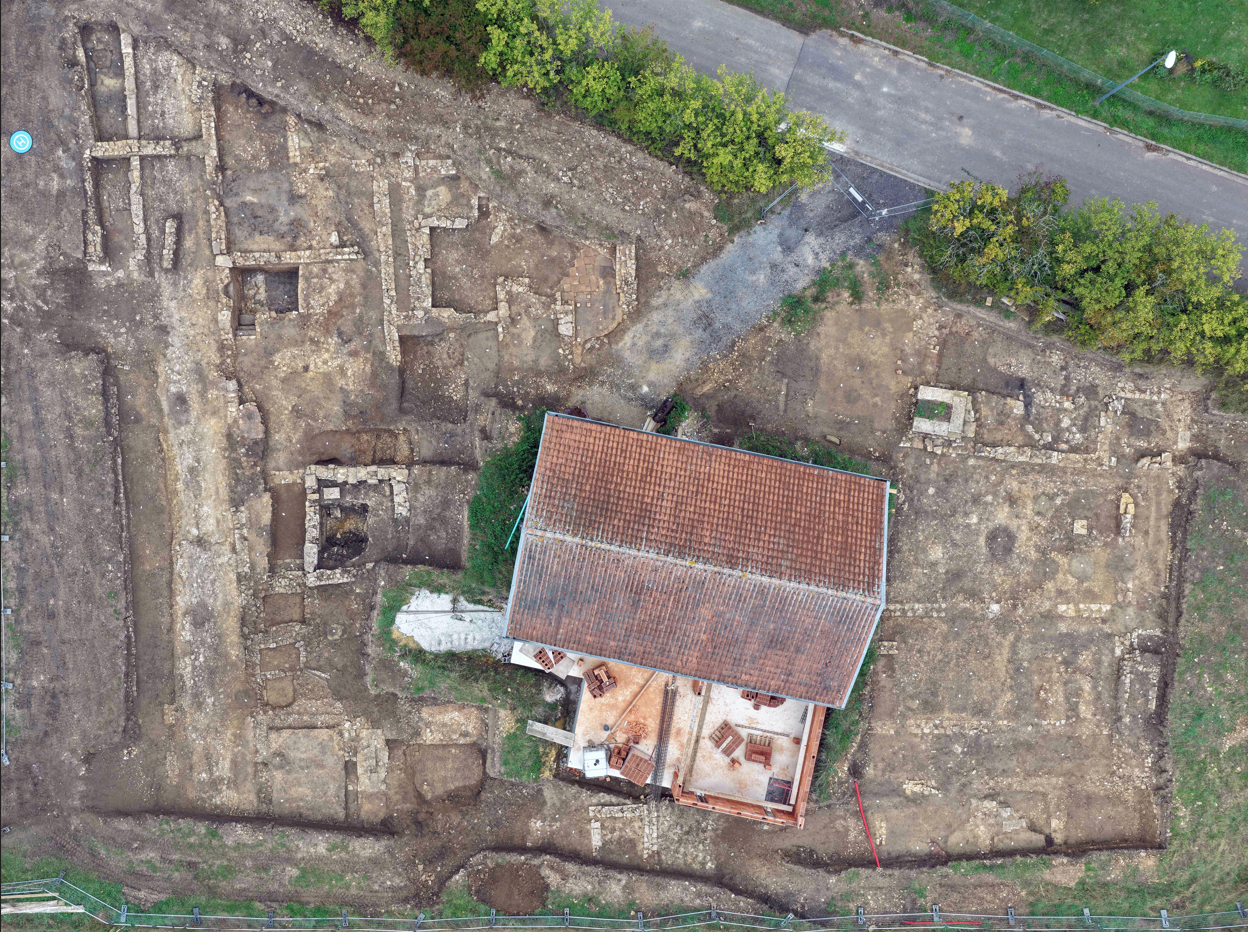
A bird's-eye view of the excavated area in Senon, France.

A bird’s-eye view of the excavated area in Senon, France. It was excavated by Regional Archaeology Services (SRA) and INRAP, and led by Simon Ritz at INRAP. (Image credit: © Anthony Robin, Inrap)

Around 30 coin hoards are already known in this area, so the real significance of this find lies not in the sheer number of coins but in the detailed information about where the hoards were found.

“Contrary to what one might think at first look, it is not certain that these are ‘treasures’ that were hidden during a period of insecurity,” according to a Nov. 26 translated statement from INRAP. Experts believe based on the dates on the coins that the amphoras were buried between A.D. 280 and 310.

Among the hoard are coins that feature busts of the emperors Victorinus, Tetricus I, and his son Tetricus II, the emperors of the so-called Gallic Empire, which ruled Gaul and the surrounding provinces independently of the rest of the Roman Empire from 260 to 274, until it was reintegrated by emperor Aurelian in 274.

Get the world’s most fascinating discoveries delivered straight to your inbox.

Hastily hidden treasures or long-term savings?

A researcher excavates.

A researcher excavates one of the 1,800-year-old coin hoards. (Image credit: © Lino Mocci, Inrap)

The coin-stuffed amphoras had been carefully sunk into well-constructed pits within the living room of a residence. The jugs’ openings were level with the ground and therefore easily accessible as a kind of ancient piggy-bank.

“In two cases, the presence of a few coins found stuck to the rim of the jar clearly indicate that they were deposited after the vase was buried, when the pit had not yet been filled with sediment,” according to the statement.

The accessible jars suggest the owners were using them as a long-term savings vehicle rather than a hastily hidden hoard. Within this residential district were stone buildings with underfloor heating, basements and workshops with stoves. There was also a Roman fortification nearby.

At the beginning of the fourth century, a large fire destroyed the settlement. Although the settlement was re-established before a second fire led to its permanent abandonment, the coin deposits were lost for nearly two millennia.


Roman emperor quiz: Test your knowledge on the rulers of the ancient empire

Share. Facebook Twitter Pinterest LinkedIn Tumblr Email
Previous ArticleHow European battery startups can thrive alongside Asian giants
Next Article Biden once called for ‘strike force’ against drug lords in 1989 speech
primereports
  • Website

Related Posts

Science

Wild spaces for butterflies to be created in Glasgow

March 2, 2026
Science

Rapamycin can add years to your life, or none at all – it’s a lottery

February 25, 2026
Science

2,800-year-old mass grave of women and children discovered in Serbia reveals ‘brutal, deliberate and efficient’ violence

February 24, 2026
Add A Comment
Leave A Reply Cancel Reply

Top Posts

Global Resources Outlook 2024 | UNEP

December 6, 20255 Views

The D Brief: DHS shutdown likely; US troops leave al-Tanf; CNO’s plea to industry; Crowded robot-boat market; And a bit more.

February 14, 20264 Views

German Chancellor Merz faces difficult mission to Israel – DW – 12/06/2025

December 6, 20254 Views
Stay In Touch
  • Facebook
  • YouTube
  • TikTok
  • WhatsApp
  • Twitter
  • Instagram
Latest Reviews

Subscribe to Updates

Get the latest tech news from FooBar about tech, design and biz.

PrimeReports.org
Independent global news, analysis & insights.

PrimeReports.org brings you in-depth coverage of geopolitics, markets, technology and risk – with context that helps you understand what really matters.

Editorially independent · Opinions are those of the authors and not investment advice.
Facebook X (Twitter) LinkedIn YouTube
Key Sections
  • World
  • Geopolitics
  • Artificial Intelligence
  • Popular Now
  • Cybersecurity
  • Crypto
All Categories
  • Artificial Intelligence
  • Climate Risks
  • Crypto
  • Cybersecurity
  • Defense
  • Economy
  • Geopolitics
  • Global Markets
  • Healthcare Innovation
  • Politics
  • Popular Now
  • Science
  • Technology
  • World
  • About Us
  • Contact Us
  • Privacy Policy
  • Terms & Conditions
  • Disclaimer
  • Cookie Policy
  • DMCA / Copyright Notice
  • Editorial Policy

Sign up for Prime Reports Briefing – essential stories and analysis in your inbox.

By subscribing you agree to our Privacy Policy. You can opt out anytime.
Latest Stories
  • An ode to craftsmanship in software development
  • Global economy must stop pandering to ‘frivolous desires of ultra-rich’, says UN expert | Environment
  • Some Middle East Flights Resume but Confusion Reigns From Iran Strikes
© 2026 PrimeReports.org. All rights reserved.
Privacy Terms Contact

Type above and press Enter to search. Press Esc to cancel.