
LIVE NEWS
  • News Wrap: Patel sues The Atlantic over story alleging excessive drinking and absences
  • AACR in 30 Seconds: CAR-T promise, Merck’s new move, rural health
  • Motorola Moto G (2026) review: Why I’d pick this $200 phone over competing models
  • ‘Predators’: Amnesty slams Netanyahu, Putin, Trump as human rights decline | Human Rights News
  • OpenAI Scales Trusted Access for Cyber Defense With GPT-5.4-Cyber: a Fine-Tuned Model Built for Verified Security Defenders
  • A new force of nature is reshaping the planet, study finds
  • Unicoin Foundation Debuts, Aligning Social Impact with the Future of Responsible Crypto By Chainwire
  • Canadian Tourist Is Shot Dead in Shooting at Mexico’s Pyramids
Prime Reports
  • Home
  • Popular Now
  • Crypto
  • Cybersecurity
  • Economy
  • Geopolitics
  • Global Markets
  • Politics
  • See More
    • Artificial Intelligence
    • Climate Risks
    • Defense
    • Healthcare Innovation
    • Science
    • Technology
    • World
Prime Reports
  • Home
  • Popular Now
  • Crypto
  • Cybersecurity
  • Economy
  • Geopolitics
  • Global Markets
  • Politics
  • Artificial Intelligence
  • Climate Risks
  • Defense
  • Healthcare Innovation
  • Science
  • Technology
  • World
Home»World»3.3 billion-year-old crystals reveal a shockingly active early Earth
World

3.3 billion-year-old crystals reveal a shockingly active early Earth

primereportsBy primereportsDecember 6, 2025No Comments3 Mins Read
Share Facebook Twitter Pinterest LinkedIn Tumblr Reddit Telegram Email
3.3 billion-year-old crystals reveal a shockingly active early Earth
Share
Facebook Twitter LinkedIn Pinterest Email


The Hadean Eon, which stretched from 4.6 to 4.0 billion years ago, represents one of the least understood periods in Earth’s past. This era opened with the birth of the planet and was quickly followed by a dramatic collision with a Mars-sized object. The impact produced the Moon and left Earth’s interior completely molten. A solid crust began forming around 4.5 billion years ago, although scientists have long debated what unfolded after that point.

For many years, researchers believed that Earth remained in a “stagnant lid” state until at least the end of the Hadean. According to this idea, the planet was capped by a stiff, unmoving outer shell while heat-driven convection took place deeper in the mantle. In this scenario, the early planet lacked subduction (the process in which crust sinks into the interior) and did not yet produce the continental crust seen in today’s plate tectonic system.

A New Challenge to the Stagnant Lid Hypothesis

Now, scientists from the ERC Synergy Grant Project “Monitoring Earth Evolution through Time” (MEET) — a collaboration between geochemists from Grenoble (France) and Madison (USA), and geodynamic modelers from GFZ Helmholtz Centre for Geosciences in Potsdam (Germany) — are offering a different interpretation.

Ancient Crystals Reveal Evidence of Early Subduction

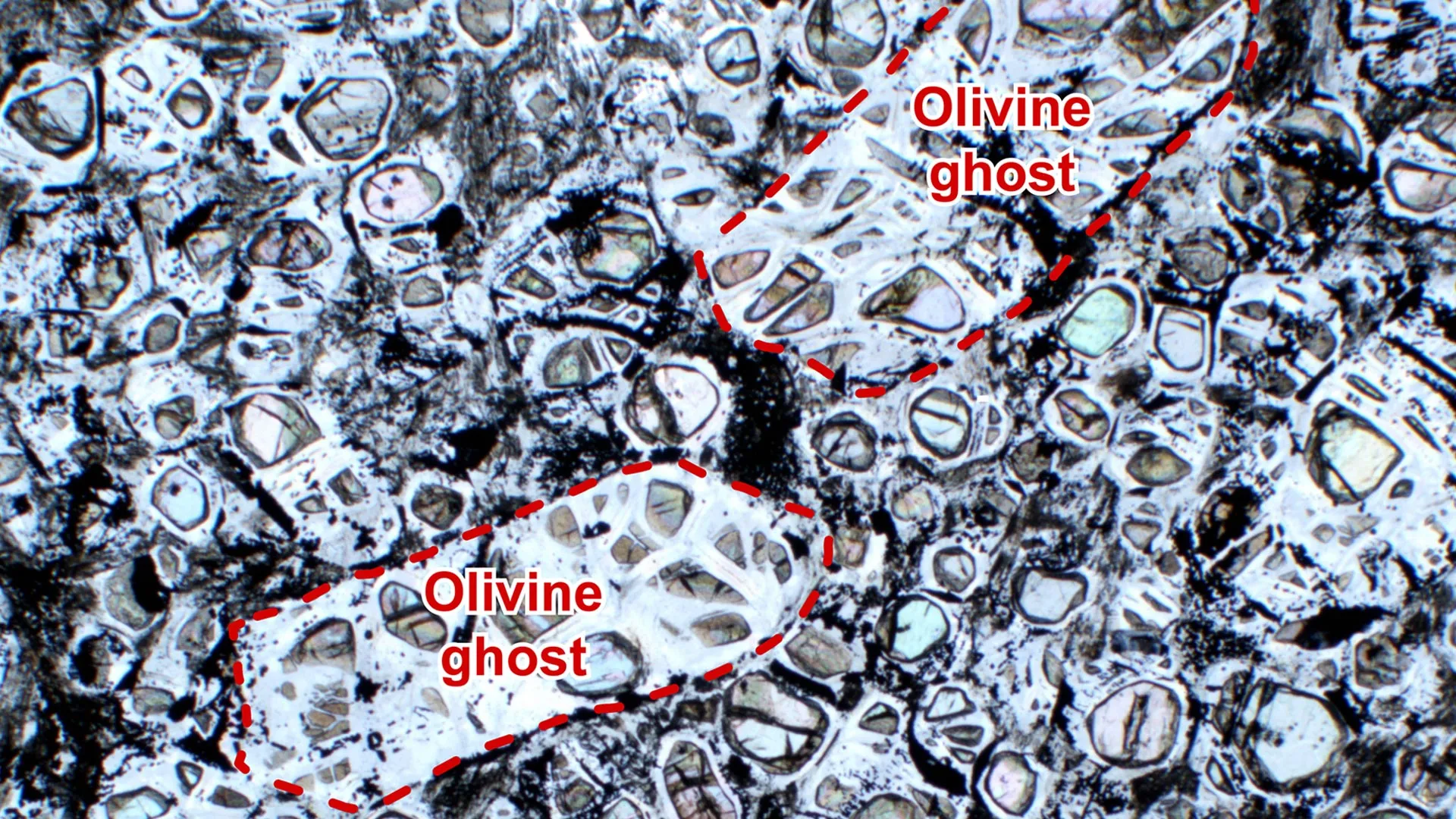
In a study published in Nature Communications, the MEET research team reports evidence that both subduction and continental crust formation were not only active during the Hadean but may have been more intense than previously assumed. The Grenoble group analyzed strontium isotopes and trace elements in melt inclusions trapped inside 3.3-billion-year-old olivine crystals, providing rare geochemical snapshots of early Earth. At the same time, the GFZ group applied advanced geodynamic models to understand how these geochemical patterns relate to ancient tectonic activity.

Their combined results point to a far livelier early Earth, suggesting that widespread subduction and the growth of continental crust may have begun several hundred million years earlier than earlier theories proposed.

Glossary of Key Terms

Hadean Eon: The earliest chapter of Earth’s history (4.6 to 4.0 billion years ago), beginning with the planet’s formation and characterized by extreme heat and frequent impacts.

Subduction: A tectonic process in which one piece of Earth’s crust sinks beneath another and moves downward into the mantle.

Stagnant lid: A tectonic state where the planet’s outer shell is rigid and unmoving, with very little surface recycling compared to modern plate tectonics.

Mantle convection: The slow, heat-driven movement of material within Earth’s mantle that transports energy from the interior toward the surface.

Continental crust: The thick, buoyant type of crust that forms Earth’s continents, distinct from the thinner oceanic crust.

Melt inclusions: Tiny pockets of trapped molten material found inside crystals, preserving chemical information about the environment in which the crystals formed.

Olivine crystals: Greenish mineral grains commonly found in Earth’s mantle and volcanic rocks; they can preserve ancient geochemical clues.

Strontium isotopes: Different forms of the element strontium used by scientists to determine the origin and history of rocks and magmas.

Geodynamic simulations: Computer models that recreate how Earth’s interior moves and evolves over time.

Crustal solidification: The process by which Earth’s once-molten surface cooled and hardened into a solid crust.

Share. Facebook Twitter Pinterest LinkedIn Tumblr Email
Previous ArticleMeta Delays Release of New Mixed Reality Glasses Code-Named ‘Phoenix’
Next Article How UPI Changed Digital Payments in India
primereports
  • Website

Related Posts

World

A new force of nature is reshaping the planet, study finds

April 21, 2026
World

Australia news live: Ed Husic condemns ‘obscenely sweet’ gas deals; Anthony Albanese says national cabinet to discuss ‘long tail’ of fuel crisis | Australia news

April 20, 2026
World

More than 200 rescued from IS-linked group in DR Congo

April 20, 2026
Add A Comment
Leave A Reply Cancel Reply

Top Posts

Global Resources Outlook 2024 | UNEP

December 6, 20258 Views

The D Brief: DHS shutdown likely; US troops leave al-Tanf; CNO’s plea to industry; Crowded robot-boat market; And a bit more.

February 14, 20264 Views

German Chancellor Merz faces difficult mission to Israel – DW – 12/06/2025

December 6, 20254 Views
Stay In Touch
  • Facebook
  • YouTube
  • TikTok
  • WhatsApp
  • Twitter
  • Instagram
Latest Reviews

Subscribe to Updates

Get the latest tech news from FooBar about tech, design and biz.

PrimeReports.org
Independent global news, analysis & insights.

PrimeReports.org brings you in-depth coverage of geopolitics, markets, technology and risk – with context that helps you understand what really matters.

Editorially independent · Opinions are those of the authors and not investment advice.
Facebook X (Twitter) LinkedIn YouTube
Key Sections
  • World
  • Geopolitics
  • Popular Now
  • Artificial Intelligence
  • Cybersecurity
  • Crypto
All Categories
  • Artificial Intelligence
  • Climate Risks
  • Crypto
  • Cybersecurity
  • Defense
  • Economy
  • Geopolitics
  • Global Markets
  • Healthcare Innovation
  • Politics
  • Popular Now
  • Science
  • Technology
  • World
  • About Us
  • Contact Us
  • Privacy Policy
  • Terms & Conditions
  • Disclaimer
  • Cookie Policy
  • DMCA / Copyright Notice
  • Editorial Policy

Sign up for Prime Reports Briefing – essential stories and analysis in your inbox.

By subscribing you agree to our Privacy Policy. You can opt out anytime.
Latest Stories
  • News Wrap: Patel sues The Atlantic over story alleging excessive drinking and absences
  • AACR in 30 Seconds: CAR-T promise, Merck’s new move, rural health
  • Motorola Moto G (2026) review: Why I’d pick this $200 phone over competing models
© 2026 PrimeReports.org. All rights reserved.
Privacy Terms Contact

Type above and press Enter to search. Press Esc to cancel.