

By Shivam Shekhawat
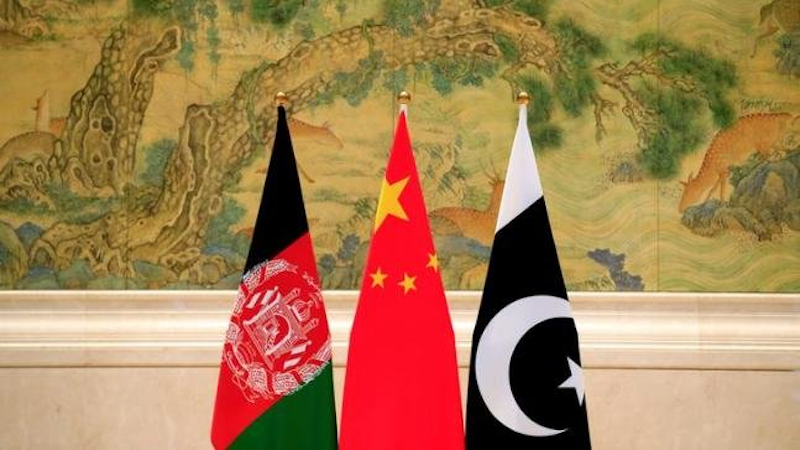
Last month, when Pakistan and Afghanistan engaged in their most intense clashes in the last four years, the spokesperson of the Chinese Ministry of Foreign Affairs called on both sides to exercise restraint and resolve their differences through dialogue and consultation. Urging them to focus on the ‘broader picture’, he also offered China’s mediating role to ameliorate their differences. For Beijing, this broader picture includes the security of its own strategic and economic interests in the region and its relationship with both Kabul and Islamabad.
From Early Leverage to Waning Influence
The re-establishment of the Islamic Emirate in Afghanistan in August 2021 heralded a major overhaul of the region’s dynamics. In the immediate aftermath of the Taliban’s return, countries, including China, scrambled to adopt a coherent strategy that would secure their interests, oscillating between engaging with the Taliban and maintaining a strong posture against granting the group de jure recognition. Amidst this dilly-dallying, China was one of the first countries to adopt a linear approach towards the Taliban-led regime. The withdrawal of the US-led NATO forces also gave China the space to manoeuvre, even as the development exacerbated its security concerns. Beijing urged Western countries to take stock of the mess they had made and called for more economic investments in the country, making a case for Afghanistan’s (re)integration into the world. The Taliban also regarded China as their most important partner because of Beijing’s willingness to work with them. Subsequently, China became the first country to appoint a new ambassador to Afghanistan and also accept the credentials of a Taliban-appointed ambassador.
Four years later, the leeway that China had gained vis-à-vis being the first player to capitalise on the West’s withdrawal has petered down, failing to materialise into tangible benefits as concerns regarding its security interests remain largely unchanged. On the security front, China’s fears about the presence of members of the East Turkestan Islamic Movement (ETIM) in Afghanistan — a group composed of Uyghurs from China’s western Xinjiang and with the potential to destabilise the region — persist, even as it has urged Kabul to intensify its crackdown. There are reports about the Islamic State Khorasan Province’s (ISKP) recruitment efforts targeted at the members of ETIM. Chinese nationals have frequently been caught in the crosshairs of attacks, both in Afghanistan and Pakistan. ISKP claimed an attack on a Chinese worker in January 2025, which followed the 2022 attack on a hotel frequented by Chinese businessmen. In addition, Chinese personnel, projects, and interests have been targeted by the Tehrik-i-Taliban Pakistan (TTP) and the Balochistan Liberation Army (BLA) in Pakistan, particularly at the Dasu hydropower project.
These security vulnerabilities have also derailed progress on the economic front. In August 2025, the Islamic Emirate’s Ministry of Mines and Petroleum terminated the contract of a Chinese company, Afchin, for its failure to deliver the guaranteed investments and employ Afghan nationals, among other reasons, at the Amu Darya oil field. Even as discussions of extending the China-Pakistan Economic Corridor (CPEC) into Afghanistan and increasing Chinese investments in mining and other sectors are seen as indicators of growing Chinese economic interests in the country, the spectre of the security threat posed by militant groups in Afghanistan has rendered such progress very difficult, with projects failing to take off.
Meddling in the Middle
A major point of contention between the regimes in Kabul and Islamabad is the presence of TTP members in Afghanistan and the Taliban’s unwillingness and inability to control them. After the attack on Chinese workers last year, Pakistan claimed that militants from Afghanistan were responsible for the attack. The Taliban categorically rejected these assertions, blaming Islamabad for deliberately sowing distrust between the two countries. China also refrained from openly supporting these claims, asking the two sides to instead focus on finding the perpetrators.
As tensions between Pakistan and Afghanistan increased in the last year, China has been instrumental in seeking to create avenues for the two to return to the negotiating table. On 21 May 2025, China’s Foreign Minister Wang Yi chaired an informal meeting between the foreign ministers of the three countries, followed by the sixth edition of the Foreign Ministers’ meeting in August. Through the Foreign Ministers’ meeting, which was revived in 2022, the three countries have consistently committed to expanding the CPEC to Afghanistan and furthering cooperation on countering cross-border terrorism. This year, as ties hit their nadir, China urged the two countries to expand security cooperation, counter external interference, and not let their territories be used to undermine the interests of others. Pakistan and Afghanistan also elevated their relationship to the ambassadorial level following China’s mediation. In recent meetings with his counterparts from the Central Asian Republics of Tajikistan and Uzbekistan, Wang Yi has made the case for increased cooperation on Afghanistan in security-related matters. In June, the leaders of all five Central Asian Republics issued a joint statement with China for a peaceful, stable and prosperous Afghanistan, and agreed to cooperate on combating terrorism.
Many assessments view China’s attempts to forge these ‘initiatives’ as a part of a broader strategy to create mechanisms that protect its interests and reinforce its primacy in the region, rather than merely ad hoc reactions to fast-changing regional dynamics. This was also reflected in the meeting between China, Pakistan, and Bangladesh in Kunming in June. China has tried to secure commitments, both bilaterally and trilaterally, to counter the threat of terrorism in the region.
While China deems its role as an intermediary important in the current circumstances, Islamabad also sees value in having China on its side to counter the TTP threat by positioning it as a common enemy. But the leverage that Beijing has right now is rather limited. In November last year, a Chinese delegation intended to meet the Taliban’s reclusive Supreme Leader Haibatullah Akhundzada in Kandahar to make a case for stopping the TTP’s unceasing attacks on Pakistan. The meeting with the emir in Kandahar failed to materialise, and the delegation could only meet the governor and the Taliban’s spokesperson. This reflects China’s limited influence over registering their grievances with the emir.
No Longer a Major Player?
China’s dominance in the discourse surrounding the Taliban’s second emirate was previously predicated on its role in enabling Kabul’s engagement with other countries. While Beijing still commits to supporting Afghanistan’s normalisation, the Taliban has been successful in leveraging the current security situation in the region to their own advantage. Kabul has been consistently engaging with other countries and diversifying its partnerships based on the Taliban’s conceptualisation of an economy-centred, transactional foreign policy approach.
At the beginning of 2025, India’s Foreign Secretary met the Taliban’s acting Foreign Minister, Amir Khan Muttaqi, in Dubai, marking a significant breakthrough in ties between the two sides. This received more momentum after the deterioration of ties between India and Pakistan in the aftermath of the attack in Pahalgam and the ensuing hostilities in May. The telephonic conversation between Muttaqi and India’s External Affairs Minister and the former’s visit to India in October all signify a major restructuring of the relationship. The commitments made during the recently concluded visit of the Taliban’s minister for trade and the consensus to expand cooperation on the economic front have also contributed to this restructuring. The Taliban has also increased its engagement with the Central Asian republics, furthering economic and other forms of cooperation.
For both China and Pakistan, India’s growing engagement with Afghanistan has made the reality of working with the Taliban starker. While China stands to benefit if the Taliban delivers on its security commitments to countries, including India, a growing Indian influence will be perceived as a loss of strategic space for Beijing. The fallout of the Afghanistan-Pakistan relationship could have far-reaching consequences. In the near term, as Kabul and Islamabad continue to engage in escalatory actions, Beijing’s efforts to mediate a long-term solution seem difficult. In the absence of a ceasefire, its interests in both Afghanistan and Pakistan will remain in limbo.
- About the author: Shivam Shekhawat is a Junior Fellow with the Strategic Studies Programme at the Observer Research Foundation.
- Source: This article was published by the Observer Research Foundation.
