
LIVE NEWS
  • The US border runs straight through the World Cup | Football
  • Moonshot AI Releases Kimi K2.7-Code: a Coding Model Reporting +21.8% on Kimi Code Bench v2 Over K2.6
  • DeBriefed 12 June 2026: El Niño begins | COP31 hosts eye electrification | Atlantic current monitoring at risk
  • News Wrap: Judge says Kennedy Center must remove Trump’s name by Friday deadline
  • The septuagenarian just starting residency in family medicine
  • Andrew Yang thinks the next big startup opportunity is lowering the cost of living
  • Dutch far-right party pays damages to court artist after changing image with AI | Netherlands
  • Smarter Summer Vacations: The Best AI Travel Gadgets to Pack This Year
Prime Reports
  • Home
  • Popular Now
  • Crypto
  • Cybersecurity
  • Economy
  • Geopolitics
  • Global Markets
  • Politics
  • See More
    • Artificial Intelligence
    • Climate Risks
    • Defense
    • Healthcare Innovation
    • Science
    • Technology
    • World
Prime Reports
  • Home
  • Popular Now
  • Crypto
  • Cybersecurity
  • Economy
  • Geopolitics
  • Global Markets
  • Politics
  • Artificial Intelligence
  • Climate Risks
  • Defense
  • Healthcare Innovation
  • Science
  • Technology
  • World
Home»World»The Indian Ocean disaster is a climate tragedy — and needs more attention
World

The Indian Ocean disaster is a climate tragedy — and needs more attention

primereportsBy primereportsDecember 6, 2025No Comments3 Mins Read
Share Facebook Twitter Pinterest LinkedIn Tumblr Reddit Telegram Email
The Indian Ocean disaster is a climate tragedy — and needs more attention
Share
Facebook Twitter LinkedIn Pinterest Email


The Indian Ocean disaster is a climate tragedy — and needs more attention

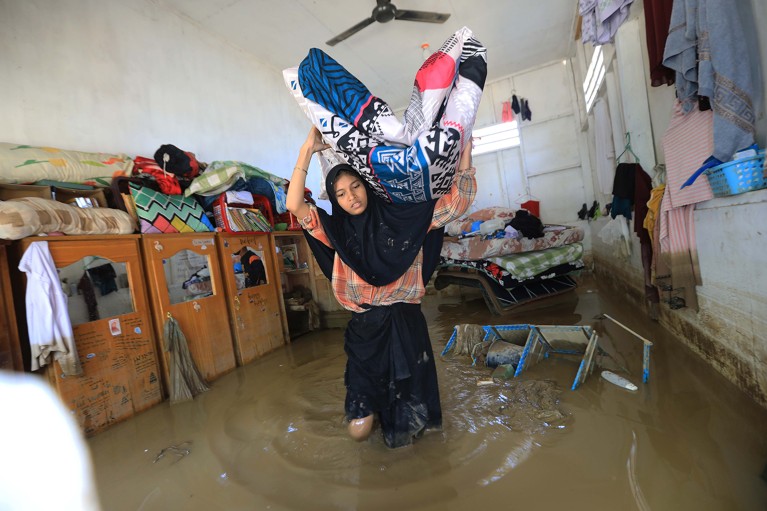
Residents remove their belongings from flood-damaged homes in Meureudu, Indonesia.Credit: Hotli Simanjuntak/EPA/Shutterstock

In late November, three tropical cyclones — Senyar, Ditwah and Koto — devastated cities and villages in countries around the Indian Ocean. In Indonesia’s Sumatra, Malaysia, Vietnam, Thailand, India’s Andaman and Nicobar Islands, the Philippines and Sri Lanka, torrential rains, high winds, landslides and flash floods killed at least 1,000 people, buried homes beneath metres of mud and destroyed roads and bridges.

The storms’ destructive scale is close to that of the 2004 Indian Ocean tsunami, as Muzakir Manaf, the governor of Aceh, Indonesia, said in a statement. However, the world has mostly overlooked this emergency. Millions of people have been displaced, and many are sick or starving, yet aid has been slow to arrive. Few people have recognized the cyclones’ unusual nature and what they herald for the world’s future.
Disaster early-warning systems are ‘doomed to fail’ — only collective action can plug the gaps

The rainfall was so intense that it created ‘a rough sea on the land’, as my friend in the Sumatran city of Langsa told me before we lost contact. One week of non-stop deluges induced a powerful tsunami-like river current that washed away concrete bridges, dragged giant timber trees from encroached forests and inundated people in their homes.

But with these horrifying scenes also comes frustration. Some countries, such as Sri Lanka, have declared a national emergency and asked for international help. Others, including Indonesia, have not even acknowledged that this is a crisis. Indonesia’s President Prabowo Subianto held his first cabinet meeting about the disaster on 27 November, ten days after the first heavy rains and landslides in North Sumatra. As this article went to press, the government has still not declared a national emergency.

I’m baffled by the slow response. Many villages and cities in West Sumatra, North Sumatra and Aceh are disconnected from the rest of the world. Food is scarce and prices are soaring; hospitals have collapsed. Local governments have sent some aid, but damaged infrastructure has hampered the process.

Indonesia not declaring this to be a national emergency means international aid is slow in coming. The issue is exacerbated by the silence of much of the international community. Some world leaders have expressed condolences and the United Nations has offered help. But no word has yet come from the European Union or United States.
Hurricane risk in a changing climate — the role of uncertainty

Perhaps one reason for the delays is the sparse coverage of the crisis in the global media, which has failed to portray the vast scale of this catastrophe. Initially, news outlets reported a series of floods on a country-by-country basis, ignoring the connection between them. The disaster is now being reported as ‘southeast Asia floods’, a shift that is welcome, but that still misses the root of the problem.

The Indian Ocean region is especially vulnerable to extreme weather, owing to a combination of climate change and severe environmental degradation, including from deforestation and mining. The fact that most international climate activists are also failing to call the situation out as a climate tragedy is another troubling omission.

Share. Facebook Twitter Pinterest LinkedIn Tumblr Email
Previous ArticleOn Our Radar
Next Article Frontier AI agents replace chatbots
primereports
  • Website

Related Posts

World

DeBriefed 12 June 2026: El Niño begins | COP31 hosts eye electrification | Atlantic current monitoring at risk

June 13, 2026
World

European, island states seek clear future for global roadmap to cut fossil fuels

June 13, 2026
World

Alaska’s glaciers have a startling response to rising temperatures

June 13, 2026
Add A Comment
Leave A Reply Cancel Reply

Top Posts

Paxton’s win over Cornyn sets up high-stakes Texas clash with Talarico

May 28, 202616 Views

Global Resources Outlook 2024 | UNEP

December 6, 202510 Views

Texas Democrat Talarico claims voting laws are rigged ahead of Paxton race

May 28, 20269 Views
Stay In Touch
  • Facebook
  • YouTube
  • TikTok
  • WhatsApp
  • Twitter
  • Instagram
Latest Reviews

Subscribe to Updates

Get the latest tech news from FooBar about tech, design and biz.

PrimeReports.org
Independent global news, analysis & insights.

PrimeReports.org brings you in-depth coverage of geopolitics, markets, technology and risk – with context that helps you understand what really matters.

Editorially independent · Opinions are those of the authors and not investment advice.
Facebook X (Twitter) LinkedIn YouTube
Key Sections
  • World
  • Geopolitics
  • Popular Now
  • Artificial Intelligence
  • Cybersecurity
  • Crypto
All Categories
  • Artificial Intelligence
  • Climate Risks
  • Crypto
  • Cybersecurity
  • Defense
  • Economy
  • Geopolitics
  • Global Markets
  • Healthcare Innovation
  • Politics
  • Popular Now
  • Science
  • Technology
  • World
  • About Us
  • Contact Us
  • Privacy Policy
  • Terms & Conditions
  • Disclaimer
  • Cookie Policy
  • DMCA / Copyright Notice
  • Editorial Policy

Sign up for Prime Reports Briefing – essential stories and analysis in your inbox.

By subscribing you agree to our Privacy Policy. You can opt out anytime.
Latest Stories
  • The US border runs straight through the World Cup | Football
  • Moonshot AI Releases Kimi K2.7-Code: a Coding Model Reporting +21.8% on Kimi Code Bench v2 Over K2.6
  • DeBriefed 12 June 2026: El Niño begins | COP31 hosts eye electrification | Atlantic current monitoring at risk
© 2026 PrimeReports.org. All rights reserved.
Privacy Terms Contact

Type above and press Enter to search. Press Esc to cancel.