

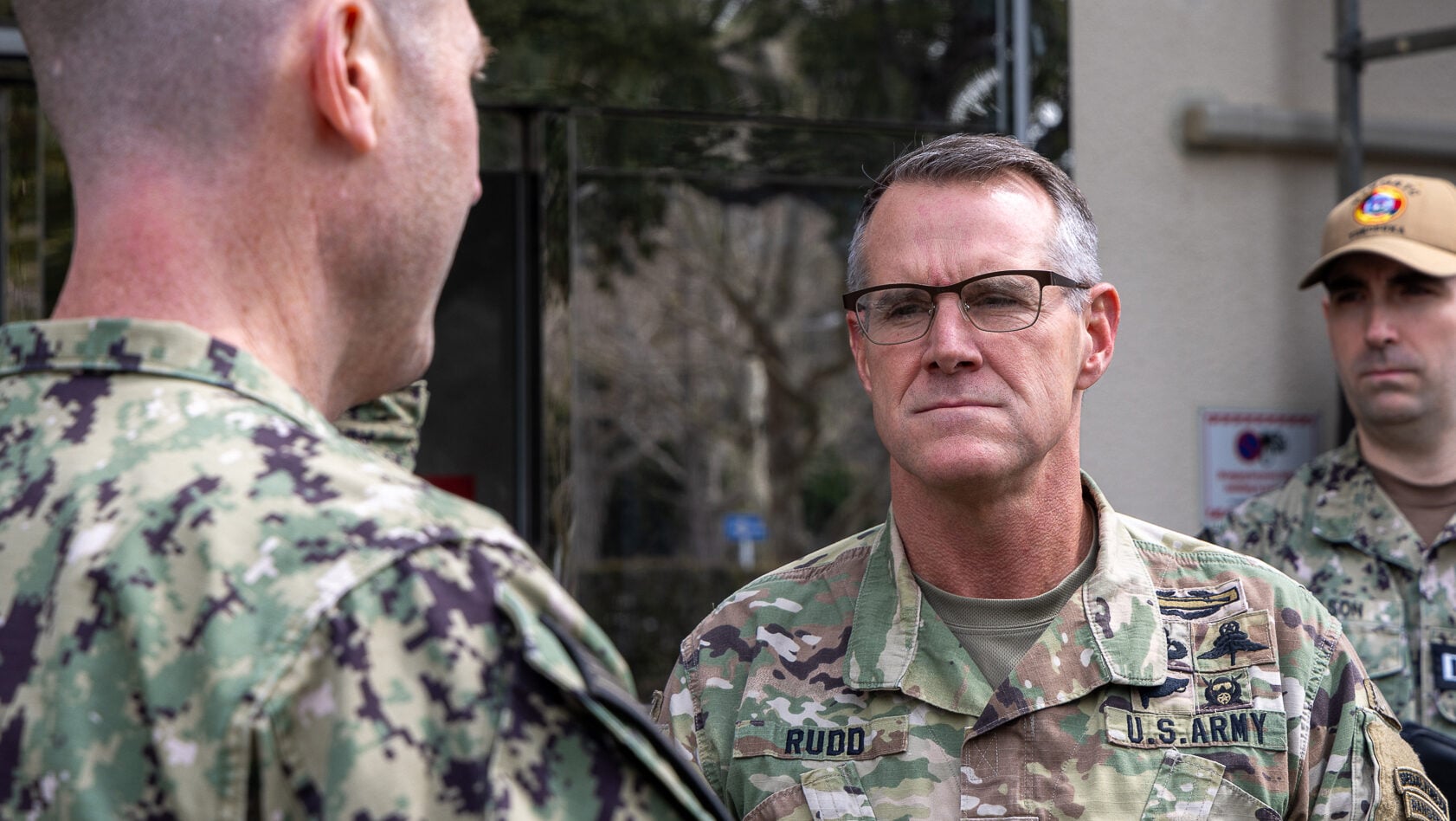
WASHINGTON — The Senate has confirmed Lt. Gen. Joshua Rudd to be the next commander of U.S. Cyber Command and director of the National Security Agency.
The 71-29 vote, means Rudd will pin on his fourth star and the two organizations will have a permanent leader after nearly a year with an acting commander. The Trump administration fired Gen. Timothy Haugh in early April just over a year into the job, still without public reasoning.
Rudd comes into the job with virtually no direct experience in the signals intelligence and cyber world, having been a career special operations officer. However, he has touted his prior leadership roles and exposure to intelligence and cyber capabilities in the shadowy world of special operations.
The relative lack of exprience, however, did prompt some drama for Rudd’s ascension to CYBERCOM chief. Sen. Ron Wyden, D-Ore., objected to Rudd’s confirmation and placed a hold.
“General Rudd, despite his service, does not have the background that would allow him to immediately step into this role. He is not qualified for this job. And, when it comes to the cybersecurity of this country, there is simply no time for on-the-job learning. The threat is just too urgent for that,” Wyden wrote in a submission to the Congressional Record.
Sen. Roger Wicker, R-Miss., spoke in favor of Rudd on the floor Monday, noting his committee voted unanimously by voice vote to send Rudd to the full Senate.
He also implored his colleagues to approve Rudd given the ongoing operations in Iran.
“Our capabilities in the cyber domain, in that regard, have never been more important. So we need this gentleman in office,” he said.
Rudd takes over during active combat operations in Iran, where senior government officials described CYBERCOM as the “first movers” when the conflict kicked off Feb. 28. Cyber capabilities will likely continue to have an ongoing role in the campaign. Iran is also thought of as a sophisticated cyber actor that has been engaged in digital conflict with the US for years. Experts believe it will likely retaliate in cyberspace, meaning CYBERCOM will have its shields up to defend military networks from potential attacks.
It is unclear when Rudd will assume the role. Once he does, he will have two experienced deputies at each organization to lean on, Lt. Gen. Lorna Mahlock at CYBERCOM and Tim Kosiba at NSA.
