
LIVE NEWS
  • Trump Signs Order Inviting Voluntary Review of Frontier AI Models
  • Bitcoin slides to two-month low at $67k after Strategy sale, Iran uncertainty By Investing.com
  • Farage’s call for ‘rage’ at Nowak’s murder an ‘unforgivable’ snub to his family, says Starmer – UK politics live | Politics
  • Can the stockmarket swallow Anthropic, SpaceX and OpenAI?
  • A Cyber Force budget would require at least $10 billion, new commission report says
  • This blood-feeding fly sacrifices its sight after finding a host
  • Germany seizes tons of cocaine and suspects are arrested in Spain
  • George Santos Referred to DOJ, CFTC Over State of the Union Kalshi Trades: Report
Prime Reports
  • Home
  • Popular Now
  • Crypto
  • Cybersecurity
  • Economy
  • Geopolitics
  • Global Markets
  • Politics
  • See More
    • Artificial Intelligence
    • Climate Risks
    • Defense
    • Healthcare Innovation
    • Science
    • Technology
    • World
Prime Reports
  • Home
  • Popular Now
  • Crypto
  • Cybersecurity
  • Economy
  • Geopolitics
  • Global Markets
  • Politics
  • Artificial Intelligence
  • Climate Risks
  • Defense
  • Healthcare Innovation
  • Science
  • Technology
  • World
Home»World»Early-career researchers reflect on influential papers
World

Early-career researchers reflect on influential papers

primereportsBy primereportsApril 13, 2026No Comments3 Mins Read
Share Facebook Twitter Pinterest LinkedIn Tumblr Reddit Telegram Email
Early-career researchers reflect on influential papers
Share
Facebook Twitter LinkedIn Pinterest Email


My early research focused on estimating plant-level carbon emissions from energy-intensive industries, including thermal power, iron and steel, and cement, at the global scale. Working at the level of individual facilities fundamentally changed my understanding of emissions. They were no longer abstract sectoral aggregates, but the direct outcome of specific technologies operating in specific locations. However, this focus on technology choices led me to overlook whether proposed solutions were scalable, timely and economically realistic in practice.

A turning point in my thinking came from Mac Dowell et al. (2017)3, a Perspective article discussing the role of carbon capture and utilization (CCU) in climate mitigation. This insight naturally pushed my research beyond emissions accounting towards a deeper question: how energy-intensive industries can decarbonize in ways that are not only technically feasible, but also scalable, timely and economically realistic in practice.

Rather than focusing on technological readiness, the paper reframed mitigation as a problem of scale and rate. It made clear that a technology’s climate relevance depends on whether it can be deployed rapidly and at volumes comparable to existing energy systems. This insight reshaped how I view CCU: as a stage-dependent option, the prospects of which hinge on whether early deployment can be enabled — most notably through economic incentives such as CO2-enhanced oil recovery.

This Perspective article also prompted me to think more carefully about the spatial dimension of mitigation, as a natural extension of questions about scale and deployment. More specifically, where such options can realistically be deployed at scale. That question was later reinforced by Wei et al. (2021)4. What I took from this study was a clearer understanding that mitigation feasibility is inseparable from where emissions and resources are located. By linking emissions clusters with geological storage basins, the paper highlighted how geology and transport distance act as binding constraints, demonstrating that mitigation pathways are inherently place-dependent.

Together, these papers led me to a broader realization: decarbonization pathways are not simply functions of emissions and abatement costs. They emerge from the interaction of infrastructure scale, spatial configuration, sectoral complementarity and resource endowments. Whether certain technology can contribute meaningfully in the near to medium term depends on whether it can be deployed at sufficient scale, within realistic spatial constraints and under credible economic conditions.

This perspective has since guided my own work on plant-level decarbonization pathways and carbon capture, utilization and storage (CCUS) deployment strategies. More importantly, it has shaped how I think about energy transitions more broadly. Many low-carbon options — geological storage for CO2, wind and solar resources, and hydrogen production potential — are inherently spatial. Designing credible mitigation pathways therefore requires moving beyond technology-centric comparisons, towards approaches that explicitly account for physical, geological and spatial realities. In this sense, these studies shaped not only my view of CCUS, but my broader approach to studying climate mitigation itself.

Early-career researchers reflect on influential papers


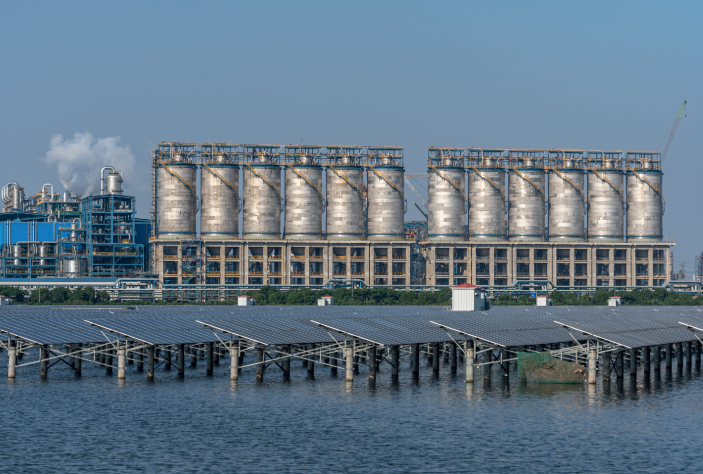
Credit: sinology / Moment / Getty Images

Share. Facebook Twitter Pinterest LinkedIn Tumblr Email
Previous ArticleTrump lambasts Pope Leo XIV : NPR
Next Article How robust AI governance protects enterprise margins
primereports
  • Website

Related Posts

World

Germany seizes tons of cocaine and suspects are arrested in Spain

June 3, 2026
World

A hidden pollutant is changing how the world’s forests breathe

June 3, 2026
World

Antarctic science operations must account for climate change and extreme environmental events

June 3, 2026
Add A Comment
Leave A Reply Cancel Reply

Top Posts

Paxton’s win over Cornyn sets up high-stakes Texas clash with Talarico

May 28, 202616 Views

Global Resources Outlook 2024 | UNEP

December 6, 202510 Views

Texas Democrat Talarico claims voting laws are rigged ahead of Paxton race

May 28, 20269 Views
Stay In Touch
  • Facebook
  • YouTube
  • TikTok
  • WhatsApp
  • Twitter
  • Instagram
Latest Reviews

Subscribe to Updates

Get the latest tech news from FooBar about tech, design and biz.

PrimeReports.org
Independent global news, analysis & insights.

PrimeReports.org brings you in-depth coverage of geopolitics, markets, technology and risk – with context that helps you understand what really matters.

Editorially independent · Opinions are those of the authors and not investment advice.
Facebook X (Twitter) LinkedIn YouTube
Key Sections
  • World
  • Geopolitics
  • Popular Now
  • Artificial Intelligence
  • Cybersecurity
  • Crypto
All Categories
  • Artificial Intelligence
  • Climate Risks
  • Crypto
  • Cybersecurity
  • Defense
  • Economy
  • Geopolitics
  • Global Markets
  • Healthcare Innovation
  • Politics
  • Popular Now
  • Science
  • Technology
  • World
  • About Us
  • Contact Us
  • Privacy Policy
  • Terms & Conditions
  • Disclaimer
  • Cookie Policy
  • DMCA / Copyright Notice
  • Editorial Policy

Sign up for Prime Reports Briefing – essential stories and analysis in your inbox.

By subscribing you agree to our Privacy Policy. You can opt out anytime.
Latest Stories
  • Trump Signs Order Inviting Voluntary Review of Frontier AI Models
  • Bitcoin slides to two-month low at $67k after Strategy sale, Iran uncertainty By Investing.com
  • Farage’s call for ‘rage’ at Nowak’s murder an ‘unforgivable’ snub to his family, says Starmer – UK politics live | Politics
© 2026 PrimeReports.org. All rights reserved.
Privacy Terms Contact

Type above and press Enter to search. Press Esc to cancel.