

Marine protected areas are designed to conserve coral reefs and other ocean ecosystems by restricting human activity within their boundaries. But most don’t account for one of the most severe and widespread threats to marine life that originates on land: sewage.
A new study by the Wildlife Conservation Society (WCS) and the University of Queensland in Australia found that more than 70 percent of marine protected areas worldwide are contaminated by untreated, or poorly treated, wastewater.
In places with extensive coral reefs, like the Coral Triangle—a 2 million square mile marine area spanning six countries in Southeast Asia, including Indonesia, Malaysia, the Philippines and Papua New Guinea—contamination is even more widespread.
According to the study, published this month in the journal Ocean & Coastal Management, more than 90 percent of coastal protected areas in the Coral Triangle are affected by high levels of sewage pollution—up to 10 times highter than in nearby unprotected waters.
“What we found was striking,” said David E. Carrasco Rivera, the study’s lead author and a doctoral candidate at the University of Queensland. “In region after region, the areas set aside for conservation were actually receiving more pollution than the areas with no protection at all.”
Many marine protected areas are established near coastlines to help fragile and overburdened ecosystems that people depend on for food, tourism and livelihoods recover, rebuild and thrive. But their nearshore locations make them particularly vulnerable to contamination that can undermine their purpose, said Amelia Wenger, co-author of the study and global water pollution lead at the Wildlife Conservation Society, a global nonprofit dedicated to protecting wildlife, based at the Bronx Zoo in New York.
“Even a perfectly managed marine protected area will fail to achieve benefits for conservation and for people if wastewater keeps flowing in from upstream,” she said.
For the study, Wenger and Carrasco Rivera analyzed pollution exposure in more than 16,000 marine protected areas across Australasia and Melanesia, Mesoamerica and the Caribbean, the Coral Triangle, East Africa, the Indian Ocean, the Middle East and North Africa. About 12,000 had been contaminated by sewage, Wenger said.
Wastewater reaches the ocean in many ways. In some places, it starts with the absence of toilets, where rivers and beaches become the default option out of necessity, and waste is left to be washed away by rain and tides. In others, sanitation systems exist but do not contain the waste. Septic tanks leak. Pit latrines overflow. And not all sewage treatment centers adequately remove harmful nutrients, such as nitrogen and phosphorus, Wenger said.
“Even a perfectly managed marine protected area will fail to achieve benefits for conservation and for people if wastewater keeps flowing in from upstream.”
— Amelia Wenger, Wildlife Conservation Society
Excessive nutrients can impede corals’ ability to grow properly and withstand increasing pressures from climate change. They make the animals less tolerant to rising ocean temperatures and more vulnerable to bleaching—a stress response triggered by warmer waters that causes corals to expel the colorful algae living in their tissues, turning them white. Polluted waters also make it harder for corals to recover from such bleaching events and more susceptible to disease caused by pathogens in wastewater, including bacteria, viruses and fungi.
Mangroves are also affected. In contaminated areas, these saltwater-tolerant trees, which provide critical protection to coastlines from storms and flooding, are more likely to die during periods of drought. Nutrient-rich wastewater can also spark toxic algal blooms, creating oxygen-depleted “dead zones” in the ocean that cause mass die-offs of fish, seagrass and other marine life.
Chemicals from pharmaceuticals and cleaning products that have been flushed down the drain or dumped directly into nearby waterways can also negatively impact marine ecosystems.
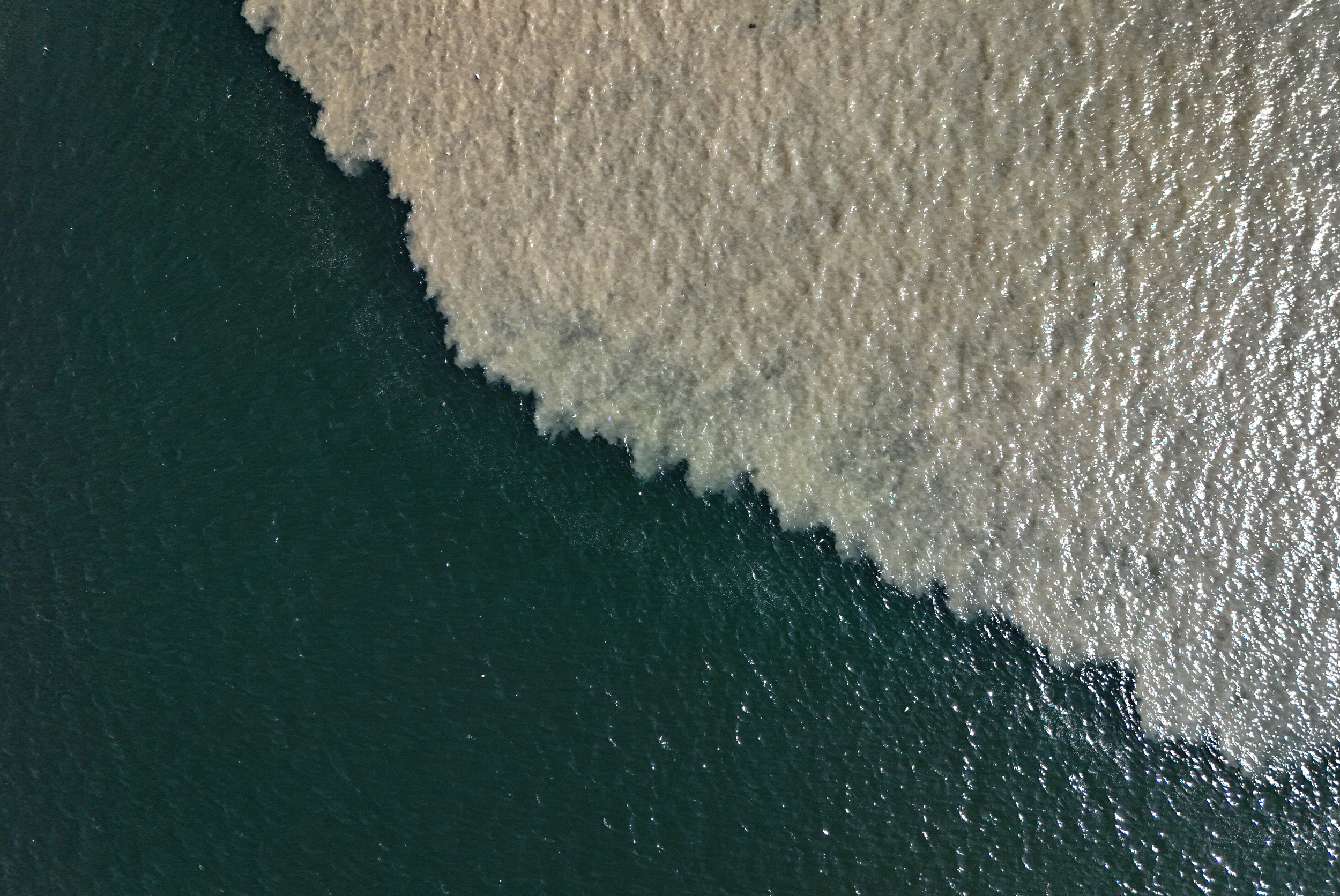
“We need to actively address and tackle these threats as a priority, equally alongside addressing climate,” said Rachel Sapery James, who leads World Wildlife Fund’s Coral Reef Rescue Initiative and was not affiliated with the study.
Currently, ocean policymakers are pushing to expand the number and size of marine protected areas to meet a global biodiversity target known as “30 by 30,” which aims to protect 30 percent of the world’s land and ocean by 2030. These areas have been shown to help ecosystems recover from pressures like overfishing and destructive fishing practices. But simply creating ocean zones that restrict or prohibit fishing—as many marine protected areas do—is not enough to achieve conservation goals, Wenger said. Effective management of marine protected areas, she said, also needs to account for land-based threats, like sewage pollution, that can compromise their effectiveness.
“This study really sort of shines a spotlight on the fact that here is a huge threat that will undermine our big effort and all of our investment in ‘30 by 30’ that we just aren’t considering at all,” she said.
This story is funded by readers like you.
Our nonprofit newsroom provides award-winning climate coverage free of charge and advertising. We rely on donations from readers like you to keep going. Please donate now to support our work.
To date, the issue of wastewater pollution has been largely left out of ocean policy discussions, James said. “Sewage wastewater pollution remains under-recognized, under-funded and insufficiently addressed.”
More than 40 percent of the world’s population lacks access to well-managed sanitation services, according to the World Health Organization. And more than 80 percent of the world’s industrial and municipal wastewater is discharged without being treated properly. But in many places, James said, people don’t want to discuss the issue.
Sewage is considered a “dirty” discussion topic in many places, she said—even a “cultural taboo.” “We don’t talk about sewage wastewater pollution enough, and we need to.”
Tackling the issue also demands unprecedented collaboration between governments, conservation, public health and humanitarian aid groups, which too often operate in silos, James said. “We need integrated, cross-sector approaches that tackle land-based threats alongside active conservation.”
“Sewage wastewater pollution remains under-recognized, under-funded and insufficiently addressed.”
— Rachel Sapery James, Coral Reef Rescue Initiative
Addressing this problem will also require significant investment. “The solution has to happen on land, upstream, and it has to be part of how governments plan and fund ocean protection,” Wenger said. “We need funding to go into this so that organizations can support governments and communities to help work towards fixing the sanitation system.”
That includes building and maintaining effective wastewater treatment systems, improving sanitation infrastructure and preventing untreated waste from entering rivers and coastal waters, the study says. It also requires governments and conservation managers to consider how they will monitor and mitigate the impacts of sewage and other sources of land-based pollution in marine protected areas.
“It is our best local management strategy that we can implement to make reefs more resilient to climate change,” Wenger said.
About This Story
Perhaps you noticed: This story, like all the news we publish, is free to read. That’s because Inside Climate News is a 501c3 nonprofit organization. We do not charge a subscription fee, lock our news behind a paywall, or clutter our website with ads. We make our news on climate and the environment freely available to you and anyone who wants it.
That’s not all. We also share our news for free with scores of other media organizations around the country. Many of them can’t afford to do environmental journalism of their own. We’ve built bureaus from coast to coast to report local stories, collaborate with local newsrooms and co-publish articles so that this vital work is shared as widely as possible.
Two of us launched ICN in 2007. Six years later we earned a Pulitzer Prize for National Reporting, and now we run the oldest and largest dedicated climate newsroom in the nation. We tell the story in all its complexity. We hold polluters accountable. We expose environmental injustice. We debunk misinformation. We scrutinize solutions and inspire action.
Donations from readers like you fund every aspect of what we do. If you don’t already, will you support our ongoing work, our reporting on the biggest crisis facing our planet, and help us reach even more readers in more places?
Please take a moment to make a tax-deductible donation. Every one of them makes a difference.
Thank you,

Oceans Correspondent
Teresa Tomassoni is an environmental journalist covering the intersections between oceans, climate change, coastal communities and wildlife for Inside Climate News. Her previous work has appeared in The Washington Post, NPR, NBC Latino and the Smithsonian American Indian Magazine. Teresa holds a master’s degree in Journalism from the Craig Newmark Graduate School of Journalism. She is also a recipient of the Stone & Holt Weeks Social Justice Reporting Fellowship. She has taught journalism for Long Island University and the School of the New York Times. She is an avid scuba diver and spends much of her free time underwater.
