

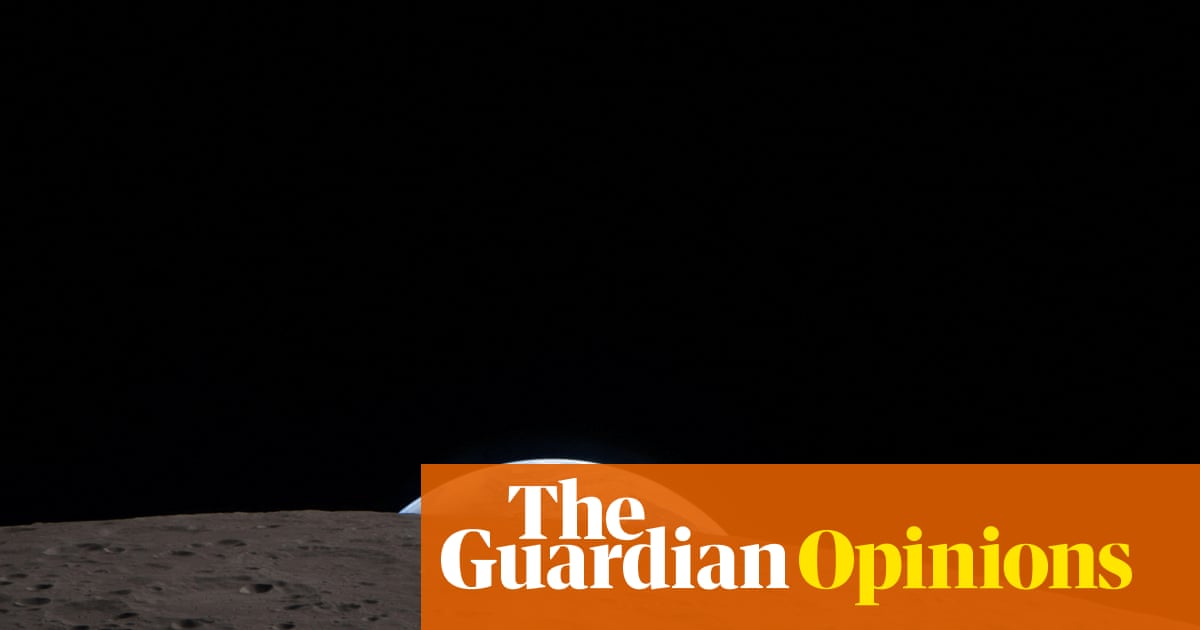
This month’s splashdown of Artemis II was rightly celebrated as a technical achievement. Four astronauts traveled farther from Earth than any humans in history and returned safely. It is an extraordinary thing to send people into deep space and bring them home again. Nobody should deny that.
But the real significance of Artemis II lies elsewhere.
The mission is a rehearsal for Artemis III, which aims to return humans to the lunar surface for the first time in more than half a century. Beyond that lie plans for a sustained human presence on the moon: infrastructure, industry and eventually a staging ground for Mars. These are not small or reversible steps. They are the opening moves in a long-term transformation of another world.
And yet the decisions behind them – about what the moon is for, how it should be used and what risks are acceptable – have been made with remarkably little public deliberation.
Governments and private actors are moving quickly. Nasa and its international partners are advancing agreements and missions. Companies led by figures such as Elon Musk and Jeff Bezos are investing heavily in the technologies that will make large-scale activity beyond Earth possible. The Artemis Accords set out principles for how this expansion will unfold.
For all their importance, these developments have unfolded largely outside public view. There has been no sustained democratic conversation about whether we should establish a permanent presence on the moon, what form it should take or what limits should govern it. These are, in effect, civilizational decisions. And they are being made by a narrow set of institutional, political and commercial actors, with little meaningful public scrutiny or democratic mandate.
Instead, something closer to the opposite has taken place. The mission is presented as a spectacle in which we are audience members – the technological, military and commercial powers on stage, the rest of humanity watching from the dark.
Supporters of the Artemis program often frame it as a natural continuation of human exploration. But what is now being proposed is not exploration but transformation: the introduction of industry, resource extraction and potentially military infrastructure to a world that has, until now, remained largely untouched by human activity. That shift requires justification. And it is not enough to gesture at “progress”, “innovation” or “the next frontier”.
There are, to be sure, compelling scientific reasons to return to the moon. A radio telescope on the lunar far side, shielded from Earth’s electromagnetic interference, could open an unprecedented window on to the early universe. Carefully designed scientific missions could deepen our understanding of planetary history and the origins of the solar system. I support these wholeheartedly.
But they do not require a permanent industrial presence. They do not require mining operations or a race for strategic advantage. Those developments reflect a different set of priorities – geopolitical competition, commercial opportunity, national prestige – and they deserve to be debated as such, honestly and in public.
There is also a more fundamental question that has barely been asked: what, if anything, do we owe the moon itself?
The moon is not just another resource waiting to be exploited. It has been a constant in human life across cultures and centuries – a source of orientation, meaning and wonder, woven into our calendars, our poetry and our sense of time and tide. Many traditions have treated it as sacred – and they may be right to do so. To treat the moon as simply the next site of industrial expansion is to make a significant moral choice, one that cannot be undone. It is not obvious that it is the right one.
The longer-term rationale for lunar development is often framed in terms of Mars: the moon as a stepping stone to becoming a multi-planetary species. But here, too, the case is far weaker than it is usually presented. There is no realistic prospect of a self-sustaining human settlement on Mars in any timeframe that would make it a meaningful backup for Earth. The idea that we can hedge against planetary catastrophe by spreading to other worlds is more fantasy than plan – a way of feeling ambitious without confronting the harder work of saving the world we already have.
This matters because it shapes how we allocate attention, resources and political will. Every hour of effort directed toward building infrastructure off Earth is an hour not spent addressing the crises that threaten the only habitable world we know we have.
We already know we are capable of extraordinary technical feats. The harder question – the one that deserves the same seriousness and resources we give to rocket engineering – is what we choose to do with that capability, and who gets to decide.
Before Artemis III launches, before permanent infrastructure is established on the moon, there should be a serious and inclusive public conversation about these questions. Not a celebration. Not a marketing campaign. A genuine reckoning with the stakes.
We are moving quickly on the question of what we can do to the moon, and almost not at all on the question of whether we should do it.
Ben Bramble is lecturer in philosophy in the Fenner School of Environment and Society at the Australian National University and a mission specialist at ANU’s Institute for Space. His book Lunacy: Ten False Promises of the New Space Age will be published on 14 July
