

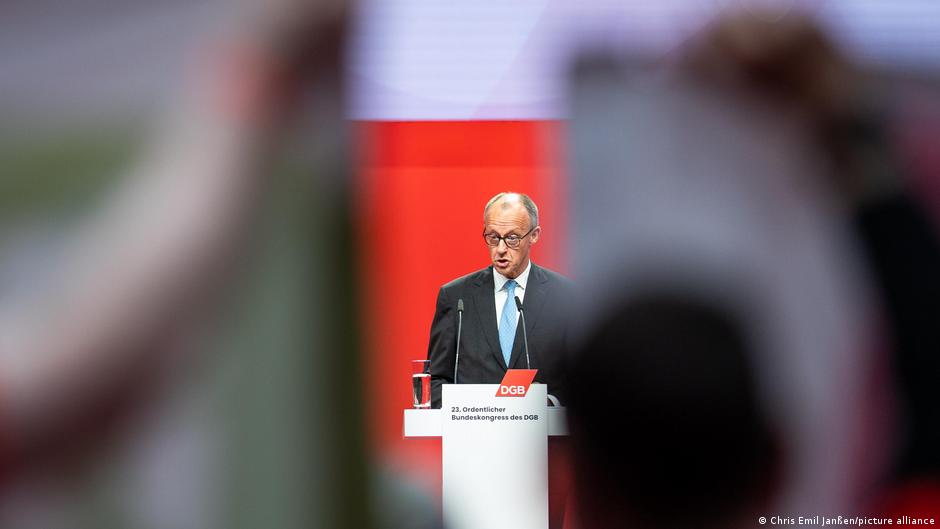
The chancellor took his reform message directly into the lion’s den — the conference of the German Trade Union Confederation (DGB), writes DW’s Chief Political Editor Michaela Küffner.
And things unfolded exactly as expected: ranging from frosty to heated.
“Everyone will have to give something, and in return, we will gain a great deal”—this was a message no one here wanted to hear, let alone “share the burden” as the Chancellor had urged.
There were whistles, along with a few boos and shouts of “Tax the rich!”
Merz remained composed, explaining — amidst the occasional murmuring — why Germany’s prosperity urgently requires greater economic growth in the near future — growth which, in his view, necessarily entails a degree of sacrifice.
Merz refused to be provoked. He vowed to continue seeking compromise — even in the face of resistance — in order to tackle healthcare, pension, and tax reforms designed to remain effective “for a decade.”
DGB Chairwoman Yasmin Fahimi took the opportunity to remind the audience that the DGB had established its own pension commission after being denied access to the Federal Government’s commission. It was a sore point.
The very evening before, at the unions’ conference hotel, Social Democrat (SPD) Vice-Chairman Lars Klingbeil had already received a stern reminder that “the SPD emerged from the labor movement, not the other way around.”
The pressure on the SPD — the chancellor’s coalition partner — to offer a counterproposal to Merz’s reform plans is intense.
Whether this deeply ingrained and carefully nurtured class animosity remains mere political theater — or even derails this government’s reform agenda entirely — will be judged not by the noise it generates, but ultimately by the concrete results it yields. Proposals regarding pension reform are expected before the summer recess.
