
LIVE NEWS
  • AI is being used to resurrect the voices of dead pilots
  • Canadian Grand Prix 2026: George Russell takes pole for sprint race
  • SHIB Burn Rate Explodes 1,034% But Rejects at Hard Resistance
  • Scientists discover towering red auroras reaching deep into space above Japan
  • Trump's week in Washington marked by wins at the ballot box and headaches on the Hill
  • Trump wants to expand Medicaid cuts, building on tax cut bill
  • Physics explains why gold stays pristine
  • Protester with ‘Trump is a war criminal’ banner removed from Trump rally in New York state – US politics live | Donald Trump
Prime Reports
  • Home
  • Popular Now
  • Crypto
  • Cybersecurity
  • Economy
  • Geopolitics
  • Global Markets
  • Politics
  • See More
    • Artificial Intelligence
    • Climate Risks
    • Defense
    • Healthcare Innovation
    • Science
    • Technology
    • World
Prime Reports
  • Home
  • Popular Now
  • Crypto
  • Cybersecurity
  • Economy
  • Geopolitics
  • Global Markets
  • Politics
  • Artificial Intelligence
  • Climate Risks
  • Defense
  • Healthcare Innovation
  • Science
  • Technology
  • World
Home»World»Scientists discover towering red auroras reaching deep into space above Japan
World

Scientists discover towering red auroras reaching deep into space above Japan

primereportsBy primereportsMay 23, 2026No Comments3 Mins Read
Share Facebook Twitter Pinterest LinkedIn Tumblr Reddit Telegram Email
Scientists discover towering red auroras reaching deep into space above Japan
Share
Facebook Twitter LinkedIn Pinterest Email


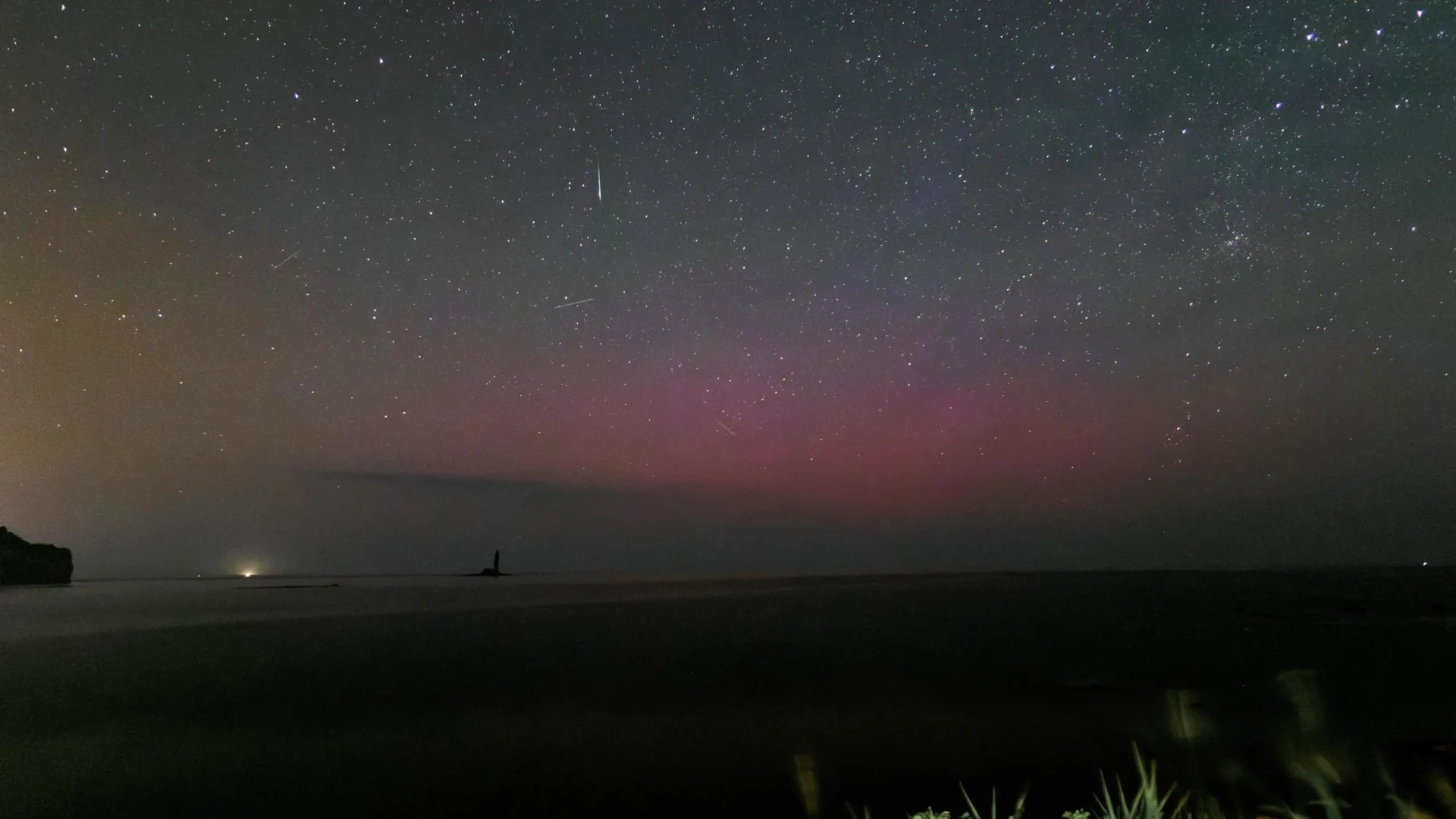
On certain nights in Japan, people may notice a faint red glow spreading low across the horizon. The dim crimson haze can be easy to overlook, but it is created by powerful activity taking place far above Earth. Streams of charged particles from the Sun travel toward our planet and interact with Earth’s magnetic field. When these particles collide with oxygen atoms high in the atmosphere, the atoms release energy as soft red light, producing rare auroras visible from the ground.

A new study published in the Journal of Space Weather and Space Climate reports that researchers from Hokkaido University and the Okinawa Institute of Science and Technology observed unusual red auroras above Japan at far greater heights than expected. The glowing displays extended roughly 500 to 800 kilometers above Earth’s surface.

Rare Red Auroras Reach Extreme Heights

Auroras are most commonly seen near the polar regions, where charged solar particles interact with Earth’s atmosphere to create shimmering lights in the sky. In Japan and other areas farther south, auroras are much less common and are usually linked to powerful geomagnetic storms. These events typically occur at altitudes of around 200 to 400 kilometers.

The new findings challenge that understanding.

“We found that red auroras can extend to extremely high altitudes even during those storms that are measured as moderately intense. I was really surprised because I didn’t expect such tall auroras to appear even during moderately intense storms,” says Tomohiro M. Nakayama, lead author of the study. “This suggests that these storms may actually be stronger than conventional indices indicate.”

The research team studied five auroral events recorded in Hokkaido between June 2024 and March 2025. During those periods, bursts of charged particles from the Sun compressed Earth’s magnetosphere, the invisible magnetic shield surrounding the planet. Although standard measurements classified the storms as moderate, the compression itself appeared unusually intense.

Solar Wind May Be Hiding Stronger Storms

Researchers believe dense streams of solar wind squeezed Earth’s magnetic field so strongly that the upper atmosphere became heated and expanded upward. This may have pushed the region where red auroras form to much higher altitudes than scientists normally expect.

At the same time, the movement of charged particles may have masked the true intensity of the storms, making them appear weaker according to traditional space weather measurements.

To investigate the phenomenon, scientists combined satellite observations with photographs captured by citizen scientists across Japan. By studying the angles of the auroras in those images and mapping them along Earth’s magnetic field lines, the researchers were able to estimate how high the glowing structures reached into the atmosphere.

The participation of skywatchers across the country proved especially valuable. Observations from multiple locations allowed the team to study rare auroral events in greater detail than would have been possible using conventional monitoring networks alone.

Why These Auroras Matter for Satellites

The findings may have important implications beyond the visual spectacle of auroras. When Earth’s upper atmosphere heats up and expands, satellites orbiting the planet experience greater atmospheric drag. This extra resistance can gradually alter satellite trajectories and cause some spacecraft to lose altitude faster than expected.

“As the number of satellites in low Earth orbit continues to grow, understanding these effects is increasingly important,” says Nakayama. “Our results could help improve space weather forecasting and support safer satellite operations.”

Share. Facebook Twitter Pinterest LinkedIn Tumblr Email
Previous ArticleTrump's week in Washington marked by wins at the ballot box and headaches on the Hill
Next Article SHIB Burn Rate Explodes 1,034% But Rejects at Hard Resistance
primereports
  • Website

Related Posts

World

Protester with ‘Trump is a war criminal’ banner removed from Trump rally in New York state – US politics live | Donald Trump

May 22, 2026
World

Ebola risk raised to 'very high' in DR Congo

May 22, 2026
World

What to know about the death of Congolese man in Ireland

May 22, 2026
Add A Comment
Leave A Reply Cancel Reply

Top Posts

Global Resources Outlook 2024 | UNEP

December 6, 20258 Views

The D Brief: DHS shutdown likely; US troops leave al-Tanf; CNO’s plea to industry; Crowded robot-boat market; And a bit more.

February 14, 20265 Views

German Chancellor Merz faces difficult mission to Israel – DW – 12/06/2025

December 6, 20254 Views
Stay In Touch
  • Facebook
  • YouTube
  • TikTok
  • WhatsApp
  • Twitter
  • Instagram
Latest Reviews

Subscribe to Updates

Get the latest tech news from FooBar about tech, design and biz.

PrimeReports.org
Independent global news, analysis & insights.

PrimeReports.org brings you in-depth coverage of geopolitics, markets, technology and risk – with context that helps you understand what really matters.

Editorially independent · Opinions are those of the authors and not investment advice.
Facebook X (Twitter) LinkedIn YouTube
Key Sections
  • World
  • Geopolitics
  • Popular Now
  • Artificial Intelligence
  • Cybersecurity
  • Crypto
All Categories
  • Artificial Intelligence
  • Climate Risks
  • Crypto
  • Cybersecurity
  • Defense
  • Economy
  • Geopolitics
  • Global Markets
  • Healthcare Innovation
  • Politics
  • Popular Now
  • Science
  • Technology
  • World
  • About Us
  • Contact Us
  • Privacy Policy
  • Terms & Conditions
  • Disclaimer
  • Cookie Policy
  • DMCA / Copyright Notice
  • Editorial Policy

Sign up for Prime Reports Briefing – essential stories and analysis in your inbox.

By subscribing you agree to our Privacy Policy. You can opt out anytime.
Latest Stories
  • AI is being used to resurrect the voices of dead pilots
  • Canadian Grand Prix 2026: George Russell takes pole for sprint race
  • SHIB Burn Rate Explodes 1,034% But Rejects at Hard Resistance
© 2026 PrimeReports.org. All rights reserved.
Privacy Terms Contact

Type above and press Enter to search. Press Esc to cancel.