

The first day of the Dell
Technologies World 2026 conference in Las Vegas this week had a faintly
familiar vibe to it, an echo from several years ago, before the broad adoption
of cloud computing had OEMs talking as much about optimization software and
similar tools as they did hardware.
But AI – particularly agentic AI and inferencing – has
changed the game, swinging the pendulum back to infrastructure, in the
datacenter and at the edge. And Dell founder and chief executive officer
Michael Dell let it be known that his company is ready for the moment.
“In companies across every industry, AI is accelerating from
proof-of-concept into production,” Dell said during his keynote address. “It’s
flipping the traditional buy-vs-build
equation. For years, the trend was off-the-shelf software and public cloud. But
now, AI is collapsing the cost and time to express your competitive advantage
through software. So guess what? There’s going to be way more software
everywhere.”
This is a position Dell started to lay
out at last year’s show. And, editor’s note butting in here, what it
amounts to is an admission that for many enterprises, the cloud is too costly
compared to squeezing five, six, or seven years out of hardware that you buy.
We have been saying this as long as Amazon Web Services existed, that in the
fullness of time, everybody will not move everything to the cloud. Certainly
not legacy back office workloads.
This year, Dell, the man, pointed to a Dell, the company, survey
about AI adoption that found that 67 percent of AI workloads run outside the
cloud – either on premises, on devices, at the edge, or in co-location facility
– and 88 percent of those surveyed said they are running at least one AI
workload on premises. This trend is being driven by the surging use by
organizations of AI agents – “They have memory and credentials and access and
the ability to take action, and this requires a new architecture for work
itself,” Dell said – enterprise demand for sovereign AI, and the desire to
bring AI closer to where the data is being created and stored.
The expected sharp growth in AI infrastructure spending is backing
up this vision. Dell said that projections say spending could rise to $3
trillion to $4 trillion by 2030, though others show an even broader range, from
$1.4
trillion to as
much as $7 trillion by that year. (Another editor’s note: We believe
these are cumulative numbers from 2025 or 2026 through 2030. That is not the
spending rate for a single year in 2030.)
“CIOs are aggressively pivoting to hybrid AI,” the CEO said.
“The risk is not the cloud. The risk is losing control of your data, your cost,
your security, your intellectual property, and your speed. In the agent era,
lock-in does more than slow innovation. It actually limits what your company
can become. Soon, every company will deploy fleets of agents, composing
workflows on infrastructure that they control.”
Dell, of course, is big on selling on-premises AI
architecture, since that is in fact what it does for a living. None of the
hyperscalers and major clouds buy its PowerEdge and PowerStore iron, and they
never will. They can design and have made their own gear for a lot less money,
and keep the gap between what iron costs and what cloud charges as profit.
A few years back, the company introduced the Dell AI Factory
with Nvidia, which provides its riff on the racks and servers and storage for
Nvidia AI systems, aimed at companies looking to create a sovereign AI
environment. The company now has some 5,000 customers running Dell AI workloads
in their Dell AI factories that include not only the technology but design and
innovation, engineering, supply chain, services, support, and financing.
Dell featured three companies that are using its AI
technologies at scale and on premises. Pharmaceutical giant Eli Lilly in
February launched its LillyPod supercomputer, a Nvidia DGX SuperPOD powered by
1,016 Blackwell GPUs (below) that generates more than 9,000 petabytes of
performance. The system, used for drug discovery, also includes Dell storage
systems that provide almost 2 TB/sec of read bandwidth for the massive data
sets is uses.
Samsung is using Dell AI technology in its semiconductor
design, manufacturing, and automation work, while Honeywell began partnering
with Dell and Nvidia last year for some of its AI operations.
“AI is fueling a renaissance in enterprise hardware, a shift
from bits back to atoms,” Dell said. “The question is, how do you deploy the
world’s best models, where you need them with security and governance built in?”
Dell laid out his company’s plan to answer that question, a
collection of moves that ranged from new capabilities in its AI Factory by
Nvidia to bringing AI models into the enterprise to enhancements to its AI Data
Platform.
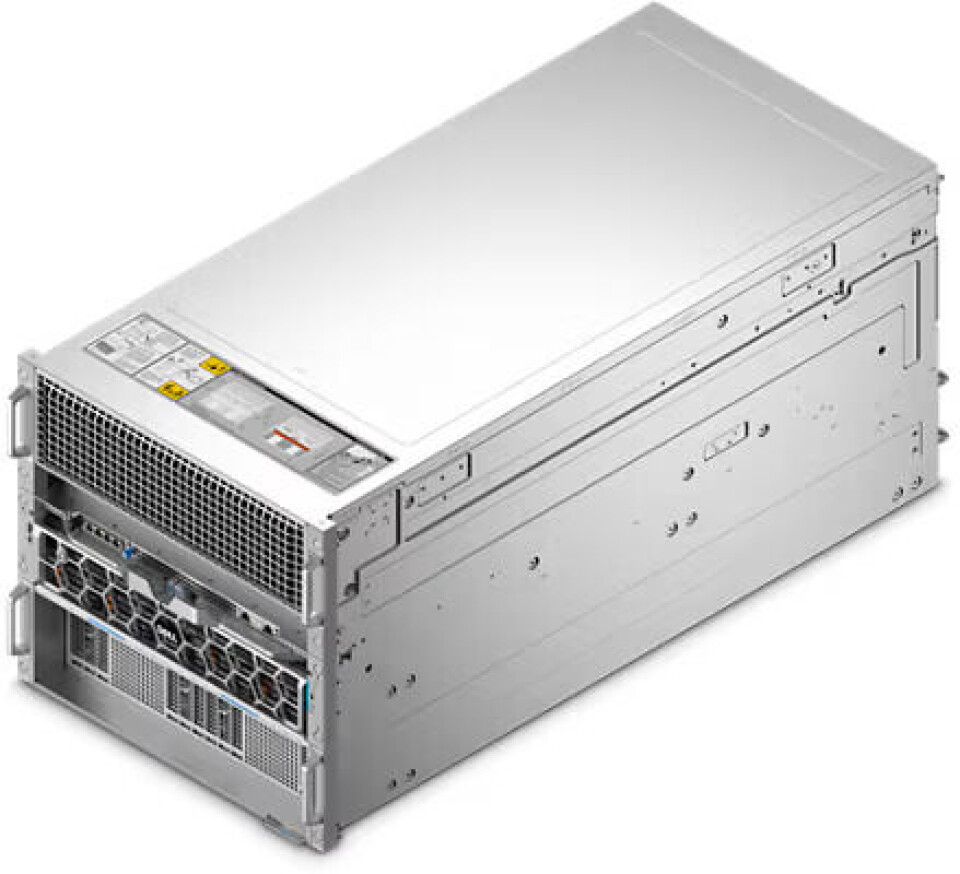
The company is bringing Google’s Gemini 3 Flash AI models to
enterprise on-premises via its PowerEdge XE9780 servers (below) to run
generative AI workloads in confidential computing environment that includes
secure BIOS and security attestations, and is connecting OpenAI’s Codex coding
model to its AI Data Platform and is working to connect it to the Dell AI
Factory.
Dell also is bringing Palantir’s Foundry and Artificial
Intelligence Platform (AIP) and Reflection’s open source frontier models on
premises through Dell AI Factory, and will provider SpaceXAI’s Grok reasoning
and multimodal capabilities as AI assistants that can be deploy on premises or
in a hybrid environment.
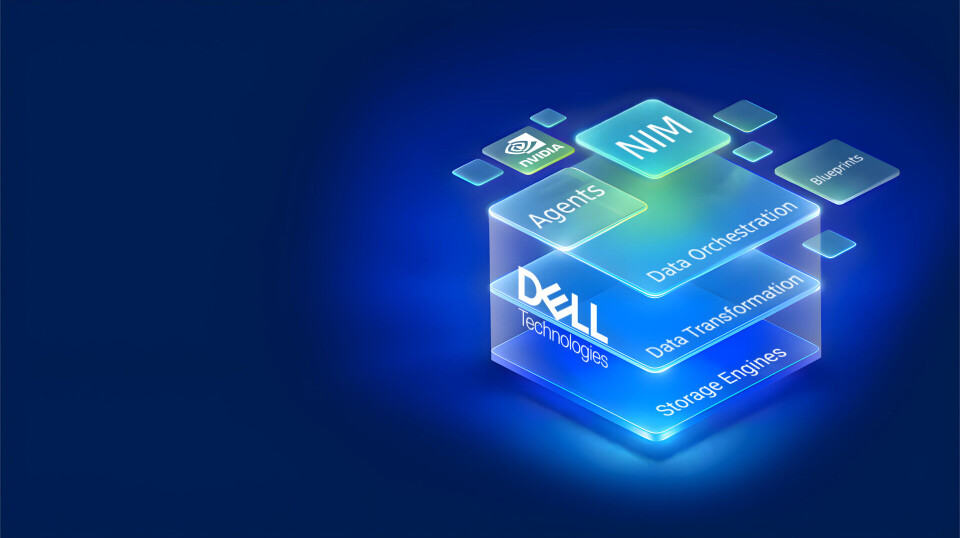
Dell is working with Starburst to accelerate its AI analytics
platform for SQL workloads in AI Data Platform (below). Starburst’s technology
powers Dell’s Data Analytics Engine and Dell uses Nvidia’s Blackwell GPUs to
speed up SQL analytics by six times, and down the line the improvement will be
three-fold with Nvidia’s Vera CPUs. The vendor is adding its PowerFlex block
storage to its Dell Exascale Storage offering that already includes PowerScale
and Lightning File System for file storage and ObjectScale for AI, HPC, and
similar workloads.
The ObjectScale X7700 is an ultra-dense system that includes
up to 45 percent more HDD capacity than its predecessor and an upcoming 245 TB
all-flash drive will more than triple its flash density.
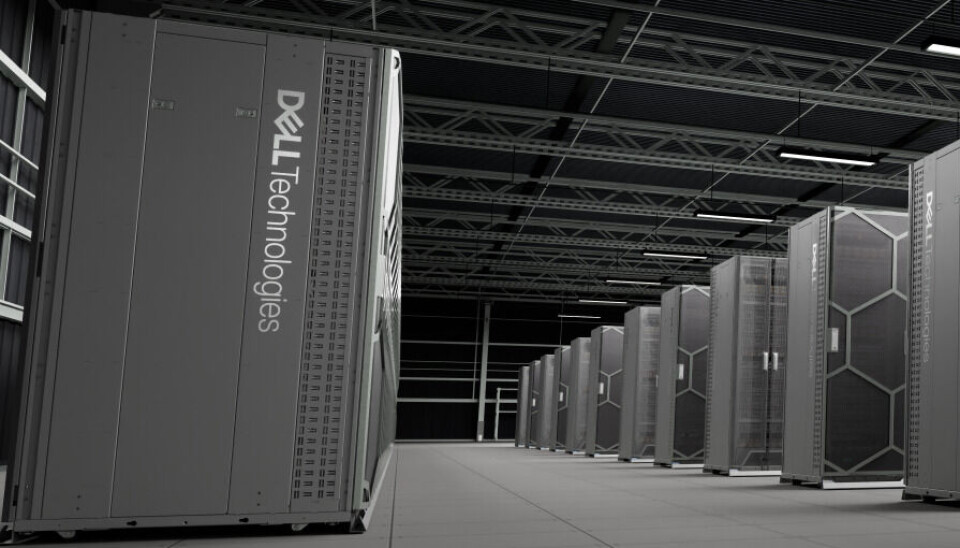
Dell’s PowerRack, below, integrates compute, networking, and
storage to accelerate AI and HPC workloads and give enterprises an
infrastructure they can they can easily add to with additional PowerRack
systems.
The Deskside Agentic AI is powered by Dell’s high-end Pro
Precision workstations and Nvidia’s NemoClaw, an open source reference stack
that adds security and privacy controls to the OpenClaw, a highly popular open
source agent that users have run autonomously on their systems to act as a
personal AI assistant but that has generated worries in the cybersecurity
industry.
It’s another boost for the on-premises AI argument, with
Dell saying that users can “test, build, and fine tune agents locally while
running the latest open-weight models in the 70 billion to 250 billion
parameter range [and] up to a trillion parameters. And you can do it without
unpredictable cloud costs, bandwidth costs, or risks of IP leak. This is
unmetered intelligence, and you could break even vs. public cloud APIs in as
little as three months.”
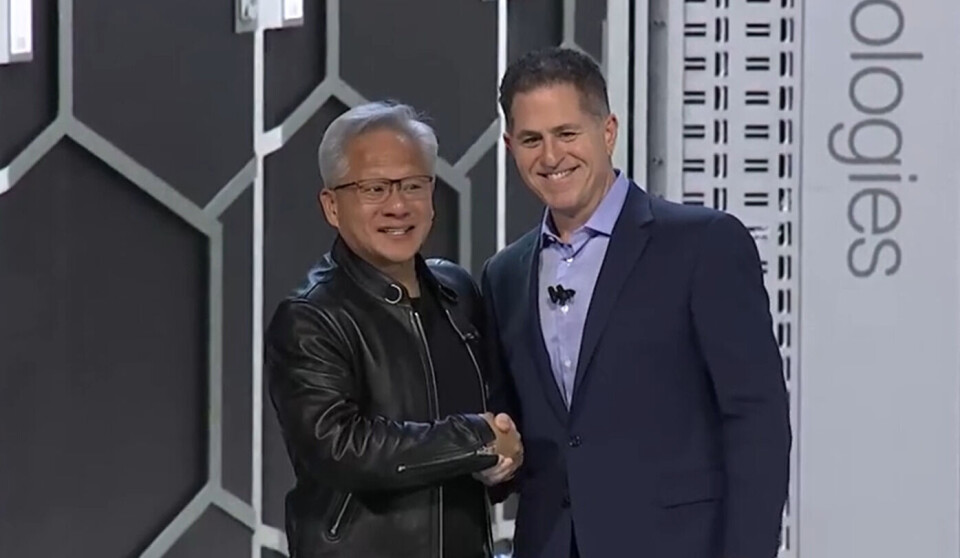
Nvidia co-founder and chief executive officer
Jensen Huang joined Dell on stage to talk about the rapidly evolving AI world,
saying that with agentic AI, saying that “what took months now takes weeks,
what took weeks now takes days, and what takes days now takes hours. Things
that would take an hour, you and I pretty much expect it instantly now. We’ve
now arrived at the era of useful AI.”
