
LIVE NEWS
  • Underground drug smuggling tunnel discovered from Tijuana to San Diego | US-Mexico Border
  • XRP Is The Clear Winner For Transactions, According To Peter Brandt
  • How AI-Native Security Will Reshape Enterprise Defense
  • Berkshire Hathaway buys Taylor Morrison for $6.8 billion. Buffett touts Abel’s deal-making
  • Learning from the Global South — Global Issues
  • Stocks Close Higher on Hopes for Continued US-Iran Ceasefire Negotiations
  • US court blocks Pentagon from removing transgender troops, for now
  • Paralympian could become first astronaut with disability to live and work in space
Prime Reports
  • Home
  • Popular Now
  • Crypto
  • Cybersecurity
  • Economy
  • Geopolitics
  • Global Markets
  • Politics
  • See More
    • Artificial Intelligence
    • Climate Risks
    • Defense
    • Healthcare Innovation
    • Science
    • Technology
    • World
Prime Reports
  • Home
  • Popular Now
  • Crypto
  • Cybersecurity
  • Economy
  • Geopolitics
  • Global Markets
  • Politics
  • Artificial Intelligence
  • Climate Risks
  • Defense
  • Healthcare Innovation
  • Science
  • Technology
  • World
Home»Geopolitics»Learning from the Global South — Global Issues
Geopolitics

Learning from the Global South — Global Issues

primereportsBy primereportsJune 2, 2026No Comments6 Mins Read
Share Facebook Twitter Pinterest LinkedIn Tumblr Reddit Telegram Email
Learning from the Global South — Global Issues
Share
Facebook Twitter LinkedIn Pinterest Email


Learning from the Global South — Global Issues
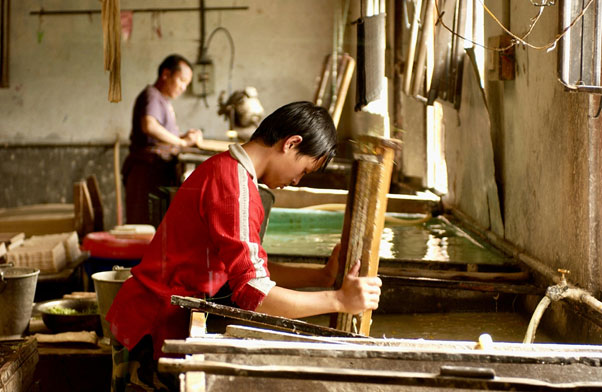
Male employees were working in a paper factory in Thimpu, Bhutan. Accession to WTO will enhance business opportunities for local SMEs. Credit: Unsplash/Bradford Zak
  • Opinion by Jing Huang, Mikiko Tanaka and Rajan Ratna (thimpu, bhutan)
  • Tuesday, June 02, 2026
  • Inter Press Service

THIMPU, Bhutan, June 2 (IPS) – Bhutan’s decision to restart its accession to the World Trade Organization (WTO) comes at an important junction. Since graduating from Least Developed Country (LDC) status in 2023, the country is entering a new phase of development, which requires stronger competitiveness, deeper global engagement and greater economic resilience.

Yet Bhutan’s experience is not only about joining a global institution. It also offers an important lesson on why South-South cooperation matters in an increasingly uncertain world.

Global trade today is becoming more fragmented and unpredictable. Geopolitical tensions, supply chain disruptions and shifting trade alliances are reshaping the engagement of countries with the global economy. For small developing economies, the challenge is particularly complex.

Accessing international markets is no longer only about expanding exports, it is also about navigating changing rules, building institutional readiness and strengthening resilience against external shocks.

Based on this, the decision to restart the WTO accession from Bhutan is particularly significant. After years of standstill, Bhutan has resumed discussions on the terms of accession under the WTO Working Party process.

For a small economy transitioning beyond LDC status, WTO accession represents an opportunity to strengthen long-term economic foundations, improve investor confidence and integrate more effectively into regional and global markets.

However, the WTO accession is never easy, particularly for small economies with limited institutional capacity. Negotiating accession requires the readiness of the domestic market and industry, but also government capacities to navigate highly technical issues and in-house analysis for self and competitors’ assessments, from market access commitments and regulatory reforms to notification obligations and legal frameworks.

Officials must understand not only the rules themselves but also the practical implications of commitments that will shape national economic policy for years to come.

For many developing countries, the most useful policy lessons often come from peers facing similar realities. Countries across the Global South frequently operate under comparable constraints: limited institutional resources, competing development priorities and the need to balance openness with domestic policy space.

In these contexts, learning from neighbouring and comparable economies can often be more practical and relatable than relying solely on textbook models or distant examples. Bhutan’s WTO preparations offer a good example of the approach can work in practice.

In response to a request from the Royal Government of Bhutan, the United Nations Economic and Social Commission for Asia and the Pacific (ESCAP) through its Subregional Office for South and South-West Asia, partnered with Indian think tanks to support Bhutanese officials as they prepare for WTO accession.

Rather than focusing solely on theoretical understanding, the initiative emphasized practical learning, negotiation experiences and peer exchanges with experts and former trade negotiators who had worked directly on WTO processes.

The approach responded directly to Bhutan’s needs. Officials serving on Bhutan’s WTO Negotiating Team and Technical Working Groups were able to deepen their understanding of complex accession issues, including market access negotiations, institutional reforms, scheduling commitments and post-accession obligations. More importantly, they engaged directly with practitioners who understood the realities of policymaking and negotiations in developing country settings.

Peer learning also brought an important practical pillar. Discussions moved beyond legal provisions and technical terminology to focus on real experiences what challenges emerge during accession, how governments navigate difficult trade-offs and what institutional arrangements work in practice.

Exchanges on economic diversification, including lessons related to Special Economic Zones (SEZs), also offered useful reflections for Bhutan as it considers pathways to sustainable economic growth.

At a time when multilateralism faces growing pressures and geopolitical divisions increasingly influence trade relations, regional cooperation and peer learning are becoming more important. Small and developing economies often face similar structural constraints and often attempt to navigate major transitions in isolation.

Trusted regional partnerships can help countries access practical expertise, reduce learning costs and build confidence in undertaking complex reforms.

Bhutan’s WTO journey reminds us that successful South-South cooperation is not simply about technical assistance or transferring knowledge. It works best when countries define their own priorities, partnerships respond to genuine demand and peers contribute practical experiences with humility and mutual respect.

As Bhutan moves forward in its WTO accession process, its experience offers an important lesson for the wider region. In a fragmented and uncertain global economy, developing countries are often strongest when they learn from one another.

South-South cooperation may not remove every challenge, but it can help countries navigate difficult transitions with greater confidence, stronger institutions and more practical solutions.

Jing Huang is Economic Affairs Officer, ESCAP Subregional Office for South and South-West Asia; Mikiko Tanaka is Head of ESCAP Subregional Office for South and South-West Asia & Rajan Ratna is Coordinator, DAKSHIN-Global South Centre of Excellence.

IPS UN Bureau

© Inter Press Service (20260602070501) — All Rights Reserved. Original source: Inter Press Service

Where next?

Related news

Browse related news topics:

Latest news

Read the latest news stories:

  • Bhutan’s WTO Path: Learning from the Global South Tuesday, June 02, 2026
  • As Three COPs Converge, Leaders at GEF Council Call for Unified Global Action Tuesday, June 02, 2026
  • Afghan Women Complete Medical Studies but Are Barred From Practicing Monday, June 01, 2026
  • Delegates Push for Greater Accountability, Community Inclusion as GEF Crosses Major Environmental Milestones Monday, June 01, 2026
  • Africa’s Water is its Future. Who will Govern it? Monday, June 01, 2026
  • UN stresses the need for de-escalation in Ukraine war as attacks rise Monday, June 01, 2026
  • Security Council LIVE: Emergency meeting on Lebanon as Israeli attacks casts pall over Iran-US negotiations Monday, June 01, 2026
  • World News in Brief: Updates from Gaza, the West Bank and Afghanistan, UN development reforms, change at the top of WFP Monday, June 01, 2026
  • From Libyan deserts to 3D-printed guns: The weapons that never go away Monday, June 01, 2026
  • Lebanon: Families flee Beirut as Israel threatens renewed strikes on Hezbollah Monday, June 01, 2026

In-depth

Learn more about the related issues:

Share this

Bookmark or share this with others using some popular social bookmarking web sites:

Link to this page from your site/blog

Add the following HTML code to your page:

Bhutan’s WTO Path: Learning from the Global South, Inter Press Service, Tuesday, June 02, 2026 (posted by Global Issues)

… to produce this:

Bhutan’s WTO Path: Learning from the Global South, Inter Press Service, Tuesday, June 02, 2026 (posted by Global Issues)

Share. Facebook Twitter Pinterest LinkedIn Tumblr Email
Previous ArticleStocks Close Higher on Hopes for Continued US-Iran Ceasefire Negotiations
Next Article Berkshire Hathaway buys Taylor Morrison for $6.8 billion. Buffett touts Abel’s deal-making
primereports
  • Website

Related Posts

Geopolitics

Iran War Live Updates: Trump Says Israel and Hezbollah Will Hold Off on New Strikes

June 1, 2026
Geopolitics

The 2025 Africa Cup of Nations was an economic success. Here’s how other tournaments can replicate it.

June 1, 2026
Geopolitics

Cyber Force? Senator pushes to create service branch under the Army

June 1, 2026
Add A Comment
Leave A Reply Cancel Reply

Top Posts

Paxton’s win over Cornyn sets up high-stakes Texas clash with Talarico

May 28, 202616 Views

Global Resources Outlook 2024 | UNEP

December 6, 202510 Views

Texas Democrat Talarico claims voting laws are rigged ahead of Paxton race

May 28, 20269 Views
Stay In Touch
  • Facebook
  • YouTube
  • TikTok
  • WhatsApp
  • Twitter
  • Instagram
Latest Reviews

Subscribe to Updates

Get the latest tech news from FooBar about tech, design and biz.

PrimeReports.org
Independent global news, analysis & insights.

PrimeReports.org brings you in-depth coverage of geopolitics, markets, technology and risk – with context that helps you understand what really matters.

Editorially independent · Opinions are those of the authors and not investment advice.
Facebook X (Twitter) LinkedIn YouTube
Key Sections
  • World
  • Geopolitics
  • Popular Now
  • Artificial Intelligence
  • Cybersecurity
  • Crypto
All Categories
  • Artificial Intelligence
  • Climate Risks
  • Crypto
  • Cybersecurity
  • Defense
  • Economy
  • Geopolitics
  • Global Markets
  • Healthcare Innovation
  • Politics
  • Popular Now
  • Science
  • Technology
  • World
  • About Us
  • Contact Us
  • Privacy Policy
  • Terms & Conditions
  • Disclaimer
  • Cookie Policy
  • DMCA / Copyright Notice
  • Editorial Policy

Sign up for Prime Reports Briefing – essential stories and analysis in your inbox.

By subscribing you agree to our Privacy Policy. You can opt out anytime.
Latest Stories
  • Underground drug smuggling tunnel discovered from Tijuana to San Diego | US-Mexico Border
  • XRP Is The Clear Winner For Transactions, According To Peter Brandt
  • How AI-Native Security Will Reshape Enterprise Defense
© 2026 PrimeReports.org. All rights reserved.
Privacy Terms Contact

Type above and press Enter to search. Press Esc to cancel.