
LIVE NEWS
  • Four Senate Republicans again vote to kill Trump’s SAVE Act voter ID bill
  • Americans exposed to DRC Ebola can access experimental treatment
  • Ahead of its IPO, Anthropic’s Daniela Amodei shrugs off doubts about AI’s returns
  • Mali junta offers $3.5M reward for Sahel al-Qaeda leader
  • Microsoft makes Linux developers feel more at home in Windows with Coreutils release
  • ‘Good lord, what a smell’: can Brazil’s biggest city save a vital source of water from sewage, bacteria and organised crime? | Brazil
  • ’60 Minutes’ Top Producer Nick Bilton Sends Memo to Team After Chaos
  • Live Updates: Israel Trades Strikes With Hezbollah, Leaving New Cease-Fire With Lebanon in Doubt
Prime Reports
  • Home
  • Popular Now
  • Crypto
  • Cybersecurity
  • Economy
  • Geopolitics
  • Global Markets
  • Politics
  • See More
    • Artificial Intelligence
    • Climate Risks
    • Defense
    • Healthcare Innovation
    • Science
    • Technology
    • World
Prime Reports
  • Home
  • Popular Now
  • Crypto
  • Cybersecurity
  • Economy
  • Geopolitics
  • Global Markets
  • Politics
  • Artificial Intelligence
  • Climate Risks
  • Defense
  • Healthcare Innovation
  • Science
  • Technology
  • World
Home»Science»‘They surprise me every time’: bees can use tools to solve problems, study finds | Bees
Science

‘They surprise me every time’: bees can use tools to solve problems, study finds | Bees

primereportsBy primereportsJune 4, 2026No Comments4 Mins Read
Share Facebook Twitter Pinterest LinkedIn Tumblr Reddit Telegram Email
‘They surprise me every time’: bees can use tools to solve problems, study finds | Bees
Share
Facebook Twitter LinkedIn Pinterest Email


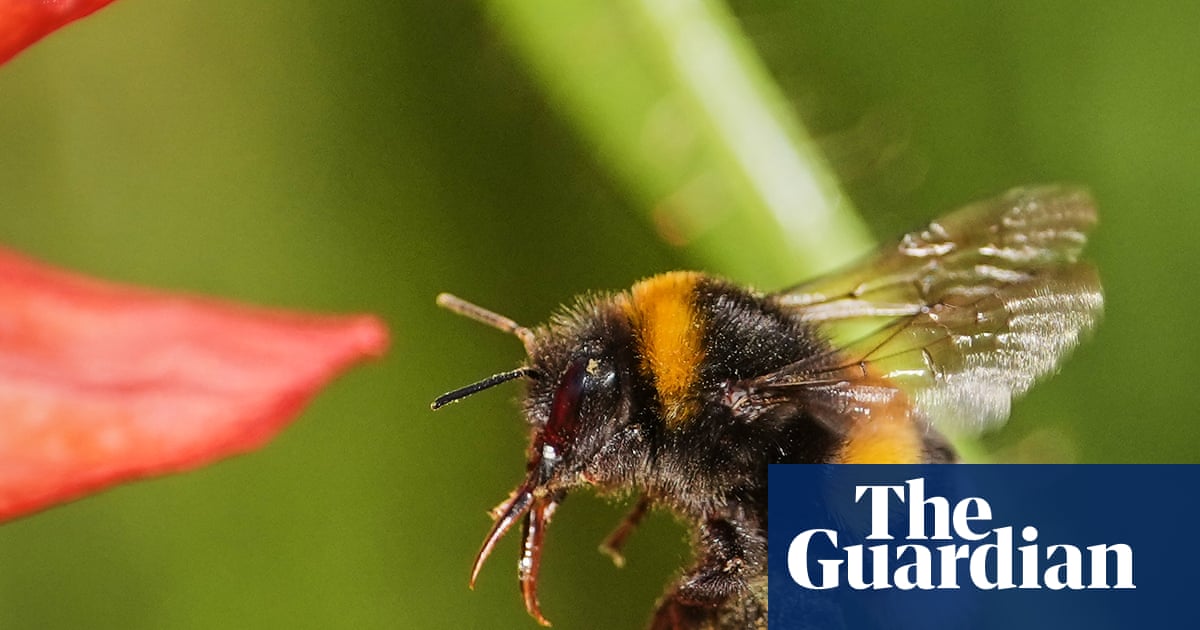
Bumblebees can use tools to solve a problem, according to experiments that demonstrate their remarkably advanced cognitive abilities.

The bees were given an adapted version of an experiment that, 100 years ago, first demonstrated chimpanzees could work out how to retrieve an out-of-reach banana by stacking boxes. Since then, various other primates, elephants and crows have joined an elite cohort of species known to be capable of this level of insight and spontaneous problem solving.

In the latest research, bees were shown to be able to roll a polystyrene ball to a specific location and climb on to it in order to access an artificial flower on a low ceiling. The findings challenge the longstanding assumption that insects operate purely on instinct and mindless trial-and-error learning.

“Most people think insects are reflex-based machines,” said Dr Olli Loukola, a behavioural ecologist at the University of Oulu, Finland, and senior author. “That they can’t have any emotional states or feel pain. Some people don’t even realise that they have brains. I hope that these results change the worldview about that.”

The bees, which were only a couple of weeks old, were first trained to associate a blue artificial flower with a reward of sugar water. During the test, the flower was moved to the ceiling of a transparent petri dish-style chamber whose ceiling was too high for them to reach, but with insufficient space for them to hover. A ball was also introduced into the chamber. To reach the flower, the bee had to roll the ball under it and climb on top – a behavioural sequence they had never previously encountered or been trained to perform.

In the most basic version of the test, 75% of the bees were successful in reaching the flower. “This is essentially an insect version of the classic ‘box-and-banana’ problem,” said Loukola. “The animal must realise that an object can be repositioned and then used as a tool to reach an otherwise inaccessible goal. What stands out about the result is that this kind of spontaneous problem solving is now demonstrated in an insect.”

A question remained, however, about whether the bees were really solving the problem. An alternative possibility was that the bees simply enjoyed the sensation of rolling a ball along and – separately – were attracted towards the blue dot, meaning that they fortuitously ended up positioning the ball in the right spot.

To test this, the scientists put the bees through increasingly complex versions of the challenge. In the final setup, the bees were allowed to explore a left and right chamber, one of which featured the artificial flower, before the ball was introduced. The scientists then illuminated the chamber with red light, preventing the bees from seeing the blue flower, and introduced the ball. To complete the task, the bees needed to recall the location of the flower and position the ball beneath it – and 23 out of 30 bees were successful.

“We are not claiming that bees think like humans,” said Loukola. “But our findings show that miniature brains can generate flexible solutions to novel problems in ways we are only beginning to understand.”

Prof Lars Chittka, a behavioural ecologist at Queen Mary University of London, and author of The Mind of a Bee, who was not involved in the latest research, said: “We’ve seen bees do all kinds of remarkable things in our lab: counting, impressive object manipulation – but they surprise me every time. This is the clearest demonstration yet of some kind of comprehension of what’s at stake.”

“There’s a general perception that intelligent behaviour requires big brains because we are big-brained and relatively intelligent among animals,” Chittka added. “Bees are a model of how much intelligence you can squeeze into a small nervous system … It’s a good reminder of there being a motivation to pay some respect to these other beings.”

The findings are published in the journal Science.

Share. Facebook Twitter Pinterest LinkedIn Tumblr Email
Previous ArticleNorth Korea unveils a new plant to produce fuel for nuclear weapons : NPR
Next Article Pentagon balks at court order allowing HIV-positive persons to serve
primereports
  • Website

Related Posts

Science

Musk's SpaceX share sale: Four things you need to know

June 4, 2026
Science

Stonehenge’s altar stone probably wasn’t transported by a glacier

June 4, 2026
Science

Daddy longlegs may be capturing and devouring frogs in the tropical forests of South America

June 3, 2026
Add A Comment
Leave A Reply Cancel Reply

Top Posts

Paxton’s win over Cornyn sets up high-stakes Texas clash with Talarico

May 28, 202616 Views

Global Resources Outlook 2024 | UNEP

December 6, 202510 Views

Texas Democrat Talarico claims voting laws are rigged ahead of Paxton race

May 28, 20269 Views
Stay In Touch
  • Facebook
  • YouTube
  • TikTok
  • WhatsApp
  • Twitter
  • Instagram
Latest Reviews

Subscribe to Updates

Get the latest tech news from FooBar about tech, design and biz.

PrimeReports.org
Independent global news, analysis & insights.

PrimeReports.org brings you in-depth coverage of geopolitics, markets, technology and risk – with context that helps you understand what really matters.

Editorially independent · Opinions are those of the authors and not investment advice.
Facebook X (Twitter) LinkedIn YouTube
Key Sections
  • World
  • Geopolitics
  • Popular Now
  • Artificial Intelligence
  • Cybersecurity
  • Crypto
All Categories
  • Artificial Intelligence
  • Climate Risks
  • Crypto
  • Cybersecurity
  • Defense
  • Economy
  • Geopolitics
  • Global Markets
  • Healthcare Innovation
  • Politics
  • Popular Now
  • Science
  • Technology
  • World
  • About Us
  • Contact Us
  • Privacy Policy
  • Terms & Conditions
  • Disclaimer
  • Cookie Policy
  • DMCA / Copyright Notice
  • Editorial Policy

Sign up for Prime Reports Briefing – essential stories and analysis in your inbox.

By subscribing you agree to our Privacy Policy. You can opt out anytime.
Latest Stories
  • Four Senate Republicans again vote to kill Trump’s SAVE Act voter ID bill
  • Americans exposed to DRC Ebola can access experimental treatment
  • Ahead of its IPO, Anthropic’s Daniela Amodei shrugs off doubts about AI’s returns
© 2026 PrimeReports.org. All rights reserved.
Privacy Terms Contact

Type above and press Enter to search. Press Esc to cancel.