

This story was produced in partnership with the Texas Newsroom, the state’s network of public radio stations.
A decade ago, Corpus Christi’s regional water plan projected shortages as soon as 2050. The next plan, released five years later, shortened that timeline to 2030.
The next plan, released this year, said shortages were imminent, putting city leaders in a desperate scramble to avoid an emergency.
Something’s not right with the calculations that underpin these plans, said John Michael, an engineering executive who has worked on local water infrastructure for 44 years.
“Whether it’s climate change or something else, our reservoir system is not as dependable as we once thought,” he said at his office in May.
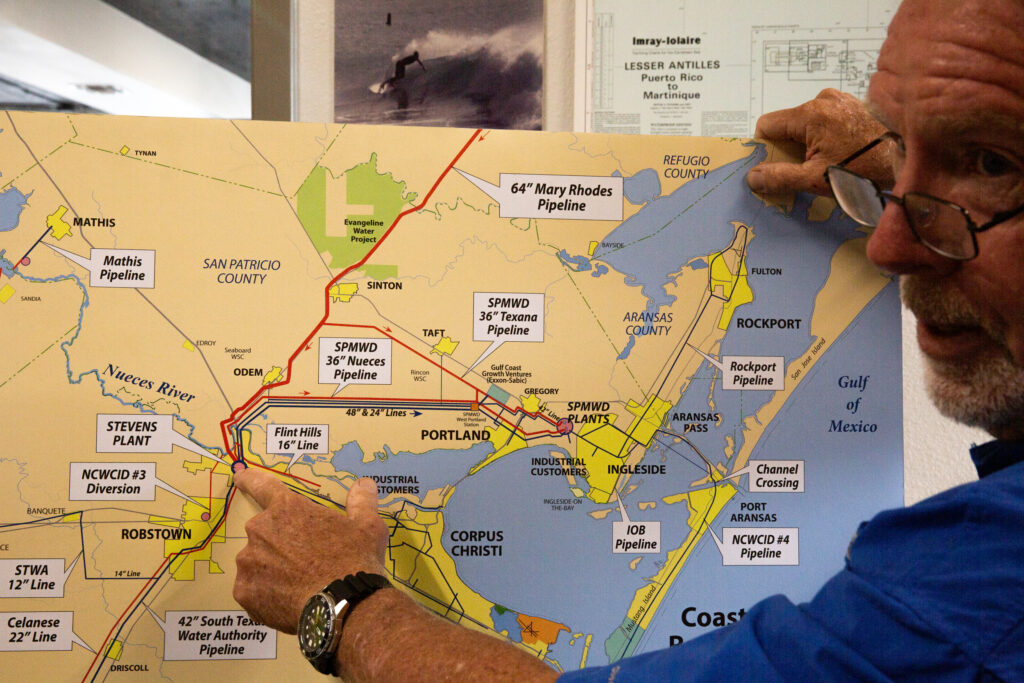
He pointed to the regional water plans on his office table—700 pages in four-inch binders—which are prepared every five years by local committees using methodology provided by the State of Texas. These plans never factored in climate science or considered the projections that a warming planet could contribute to a drought as extreme as the one Corpus Christi now faces.
In fact, as climate models predicted, every drought for the last 30 years in Corpus Christi, has exceeded the parameters contemplated in local plans, thanks to fatal delusions, deep in the heart of Texas’ methodology: Texas doesn’t plan for droughts to get worse.
“The droughts keep getting worse,” said Michael, vice president of Hanson Professional Services in Corpus Christi.
Four droughts have punctuated his career, each hotter and drier than the last. Each one left the city scrambling to build out its water plans ahead of schedule. For decades, intensifying droughts consistently outpaced planning efforts until, by the start of this drought, the region ran out of plans.
The problem is that methods developed by the Texas Water Development Board, an agency headed by appointees of the governor, use the worst drought conditions on record as a worst-case scenario for the future.
“Drought‑of‑record planning is a foundational element of Texas water planning,” said a TWDB spokesperson, Kaci Woodrome. “It provides a consistent, statewide minimum baseline for evaluating water supply reliability.”
The TWDB guides water planning processes for 16 regions in Texas, some of which plan for conditions worse than the drought of record, Woodrome said. It is well known that droughts worse than the drought-of-record can occur, she said. Climate scientists have concluded that the Earth’s warming atmosphere has made droughts worse over the past 25 years and will continue to do so over the next 25.
But that isn’t reflected in Texas’ water plans. “Climate-related projections are not something that any of Texas’ state water plans have included,” Woodrome said, referring questions about climate to the Office of the State Climatologist.
“The majority of factors point toward increased drought severity,” said an assessment of weather trends by the climatologist’s office in 2024, Corpus Christi’s hottest year on record. “Future rainfall deficits comparable to those earlier in the 20th century will have greater impacts due to higher temperatures.”
The region’s 2026 water plan, released in January, “explicitly recognized that, in the event of a repeat of the drought of record, the City of Corpus Christi, as a major water provider, was already facing an immediate shortage,” Woodrome said.
She added: “Such a shortage might increase if a new drought of record were to occur,” which is exactly what happened.
By early this year, officials suspected that drought conditions in Corpus Christi had again surpassed the worst on record. The city’s models never indicated the reservoirs would get this low, said Corpus City Manager Peter Zanoni. But the models didn’t consider the possibility, or the science describing the likelihood, of a drought as severe as the region now faces.
“We based it on the last drought-of-record,” Zanoni said. “This is the worst one yet.”
“A Real Lack of Leadership”
International scientific organizations projected decades ago that periods of drought would grow longer and more frequent as greenhouse gases continued to accumulate in the atmosphere.
If Texas had included projections of a warming climate in its water plans two decades ago, Corpus Christi might have been better prepared today, according to Robert Mace, a former deputy executive administrator of the Texas Water Development Board.
It’s hard to draw specific links between the rise in global temperatures and the steady intensification of droughts in Corpus Christi, said Mace, now executive director of the Meadows Center for Water and the Environment at Texas State University, “but it’s very consistent with what we’d expect.”
In the 1990s, he said, “something changed” in the weather of South Texas. Droughts started to get hotter and longer. In addition to the impacts of climate change, tree ring data in Texas shows periods drier than any measured since records began less than 200 years ago, he said.
“Communities really should be planning for droughts worse than the drought of record,” he said.
Instead, the assumptions of political leaders in Texas keeps regions like the Corpus Christi area planning for the previous drought and assuming that they have enough water to supply industrial water users requiring millions of gallons a day.
“The water plan has to be realistic,” said Larry Soward, a former executive director of the Texas Water Commission. “If you seriously looked at climate change, it would say: We can’t grow anymore unless we make some major changes.”
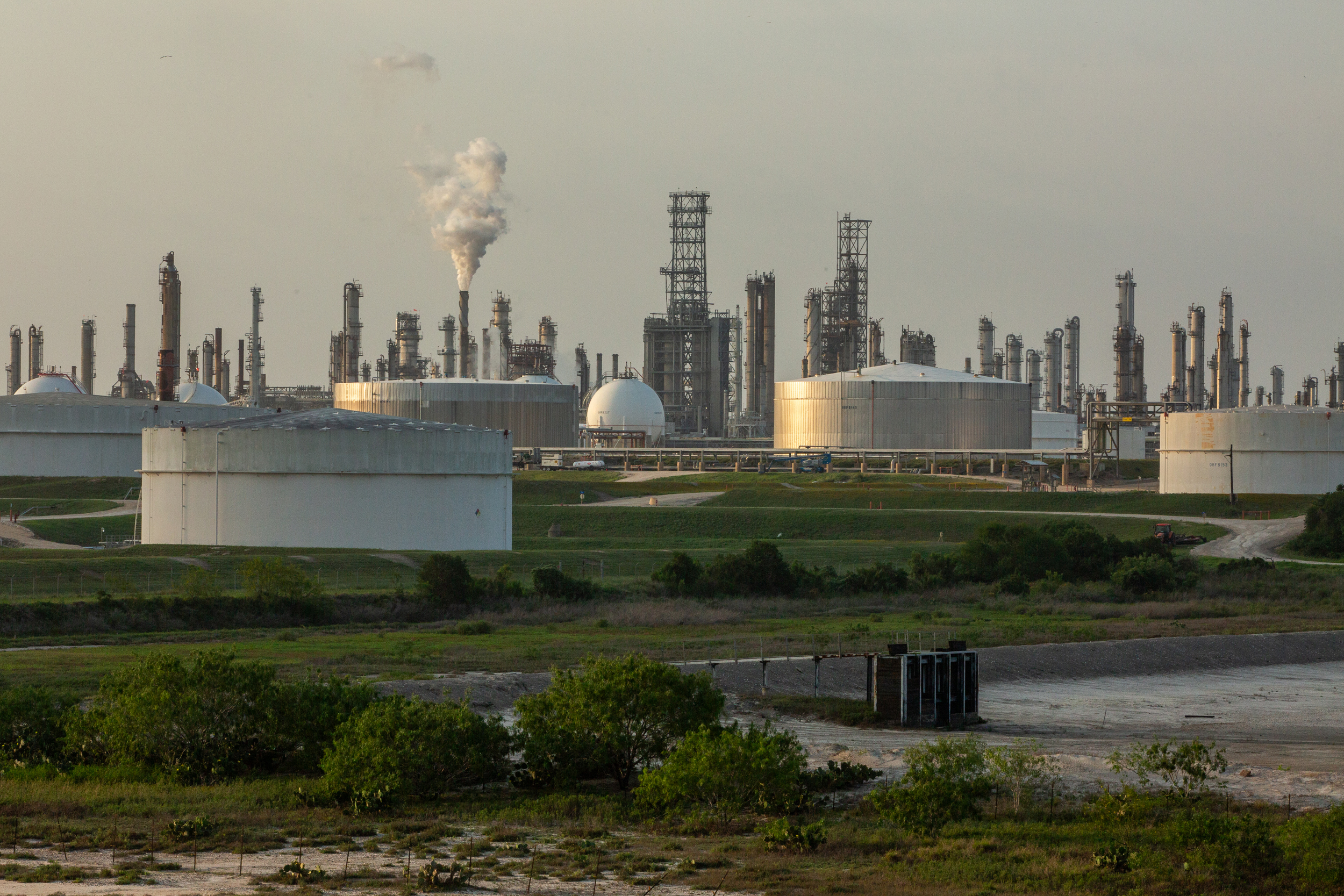
Political leaders in Texas have intentionally ignored this reality for decades, said Soward, who spent 35 years in state government. Acknowledging the risks of climate change would disrupt their economic agenda, Soward said, and interfere with the growth of business and industry.
Soward witnessed Texas’ irrepressible growth as an attorney for the Water Quality Board in the 1970s, director of the Texas Water Commission in the 1980s and in the 1990s as special counsel on water for the Texas Department of Agriculture. During that time, the state built its last reservoirs but failed to devise a subsequent strategy, Soward said. So Texas kept growing, but its water supply didn’t.
“There’s been a real lack of leadership,” he said. “Especially at the state level.”
As business prospered, temperatures warmed and water planners clung to unrealistic assumptions, each cycle of drought nudged Corpus Christi closer to the edge.
By the start of this year, amid another unprecedented dry streak, Corpus Christi’s projections began to show total depletion of reservoirs within months if conditions persisted, prompting city leaders to spend hundreds of millions of dollars on emergency water projects.
Timely rains this spring reversed the reservoirs’ decline, and Corpus Christi’s water department told city council on Tuesday that its projected date for a “water emergency” has moved to late next year.
But the good news came only after the region veered so near to the chasm that its residents and industries caught glimpses of the terrifying fall beyond.
“This is what it takes to wake up,” Soward said. “Our past is catching up with us.”
The 50-Year Water Plan of 1995
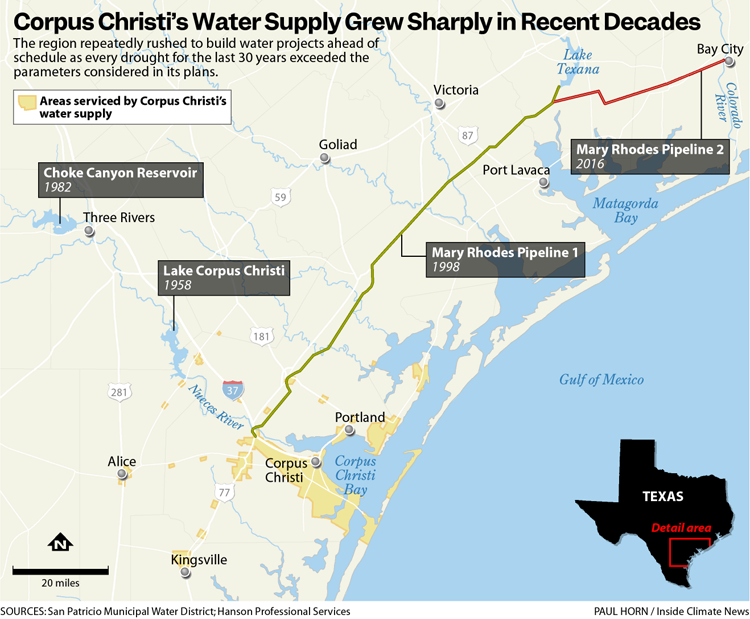
Corpus Chisti had just one reservoir, Lake Corpus Christi, when it came within months of running out of water during the drought of the 1980s. Then it added a second, larger reservoir, Choke Canyon.
That era marked the end of large-scale reservoir building in Texas. All the easy spots had been developed, and land in Texas wasn’t cheap anymore. In order to keep up with growth, Corpus Christi would develop other options.
The 50-year water plan of 1993 laid out the strategy: a 100-mile pipeline to Lake Texana, where Corpus Christi acquired water rights, then a second pipe 40 miles farther to the Colorado River.
The first pipe should be built by 2007, it said, and the second by 2029.
These projects, the plan said, could meet regional water demand through 2050.
When the plan was released, in 1993, Corpus Christi’s reservoirs were entirely full. Then came a drought of unexpected intensity, and by 1996 the region’s reservoirs hit 25 percent.
“It was an all-out emergency,” said James Dodson, regional director of the Corpus Christi Water Department at the time.
Dodson delivered a presentation to city leaders showing that supplies could run out completely, in a worst-case scenario, within two years.
So the city launched an extraordinary effort to design and build the first pipeline by 1998.
“They pushed it, pushed it, and pushed it,” said Dodson. “It got done in record time.”
Reservoirs had fallen to 15 percent by the time water started flowing through the pipeline, named Mary Rhodes for the mayor who oversaw its construction.
The 1990s drought broke records in Corpus Christi and across Texas.
“It kind of shocked everybody,” said Soward, who worked as special counsel on water in the 1990s for Texas Agriculture Commissioner Rick Perry.
Rejecting Science for Water Management
Perry became Texas governor and appointed Soward, in 2003, to the Texas Commission on Environmental Quality.
During that time, Soward said, climate science had become a prominent part of the national conversation, as well as an increasingly politicized issue.
“The water development board wouldn’t even mention it,” he said.
Many staff at various state agencies understood the implications of climate change and the need to plan for it, Soward said. Instructions not to plan for climate change, he said, came from elected officials and political appointees.
“One water plan,” Soward said. “They actually re-wrote it because the staff had put too much in about climate change.”
Once, he recalled, environmental groups proposed rules that would have incorporated climate projections into water planning.
“Of course that went nowhere in the legislature,” he said.
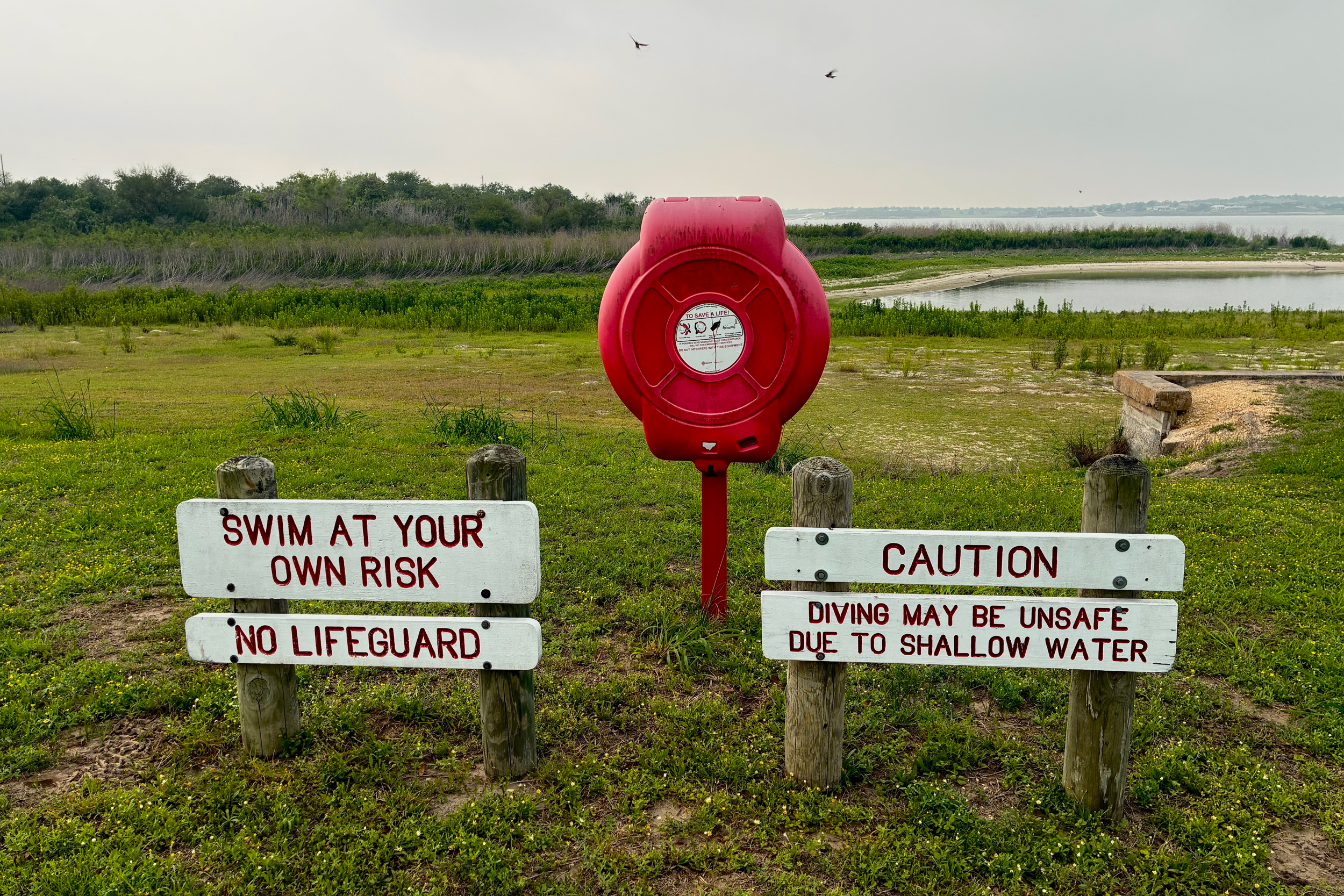
No one was worried about drought, Soward said. A few rainy years had refilled lakes across the state. The Choke Canyon reservoir, Corpus Christi’s largest, hit 100 percent (for the last time) in 2008. But Soward knew the problem wasn’t solved.
“We ignore at our peril the looming supply and demand issues Texas faces,” he said in a 2010 speech on water funding to a conference in Houston. “A sea change in attitude and behavior will have to occur.”
When Soward’s patron Perry ran for president in 2011 and adopted denial of climate projections as a campaign plank, Soward told the website Texas Climate News: “It is utterly amazing to me how conveniently dismissive he is to a huge and growing body of worldwide science.”
This story is funded by readers like you.
Our nonprofit newsroom provides award-winning climate coverage free of charge and advertising. We rely on donations from readers like you to keep going. Please donate now to support our work.
Unrealistic policies, Soward wrote in the foreword of a 2012 book, Water Policy in Texas: Responding to the Rise of Scarcity, “have perpetuated a false sense of security and have inhibited any appropriate undertaking of comprehensive, long-term planning.”
“Climate-related variability in water supplies presents a strong potential for extreme stress on water resources,” he wrote. “Texas has one of the world’s most robust economies, but if sound, scientifically-based water management strategies are not implemented, it could face serious social, economic and environmental consequences.”
In 2017, Corpus Christi Told Exxon: We Have Sufficient Water
By 2014, a new drought again had broken all previous records in Corpus Christi.
“During that period we apparently had experienced less rainfall than at any other time in previous history,” said Mark van Vleck, who worked as assistant city manager of Corpus Christi at the time.
So the city rushed to build its second pipeline, initially projected for 2029, by 2016.
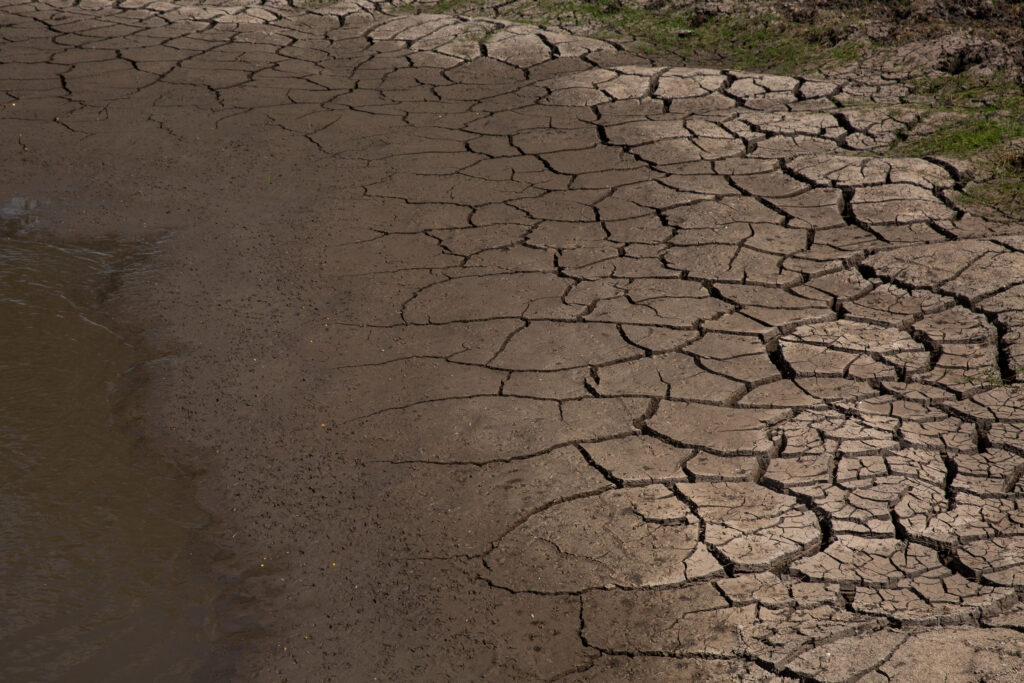
Corpus Christi had built every water project in its plans. Having to build a pipeline 15 years earlier than originally projected didn’t raise any alarms. That year, in 2016, a new regional water plan projected surpluses through 2050.
That’s why city leaders believed what they wrote, in March 2017, to ExxonMobil: “We feel that we have sufficient water supplies to meet your needs.”
The Texas oil major, in partnership with Saudi Arabia’s state chemical company, wanted to build an enormous plastics manufacturing plant that would consume more water than any other user in the region.
It was part of an industrial boom that followed the shale revolution, when fracking in the oilfields of Texas began to produce a bounty of cheap oil and gas. For Corpus Christi it was a period of rapid economic expansion.
But in 2019, when city leaders updated their water planning models to consider the record-breaking drought conditions of the previous decade, they lowered their estimates of the region’s water supply.
Van Vleck displayed a graph at a city council meeting in 2019 showing the decrease.
“What has caused the reduction of supply?” he said at the meeting. “The largest one is because of the new drought-of-record, which we’ve incorporated into the model.”
At the same meeting, city council members proposed to reconfigure rules to account for the lower supply.
“They actually lowered the amount of water that we should have in reserve for a drought so that there would be more to sell,” he said.
Steel Dynamics built a steel mill nearby. Occidental Chemical, Valero and Flint Hills expanded existing facilities. The new Exxon plant started operations in 2022.
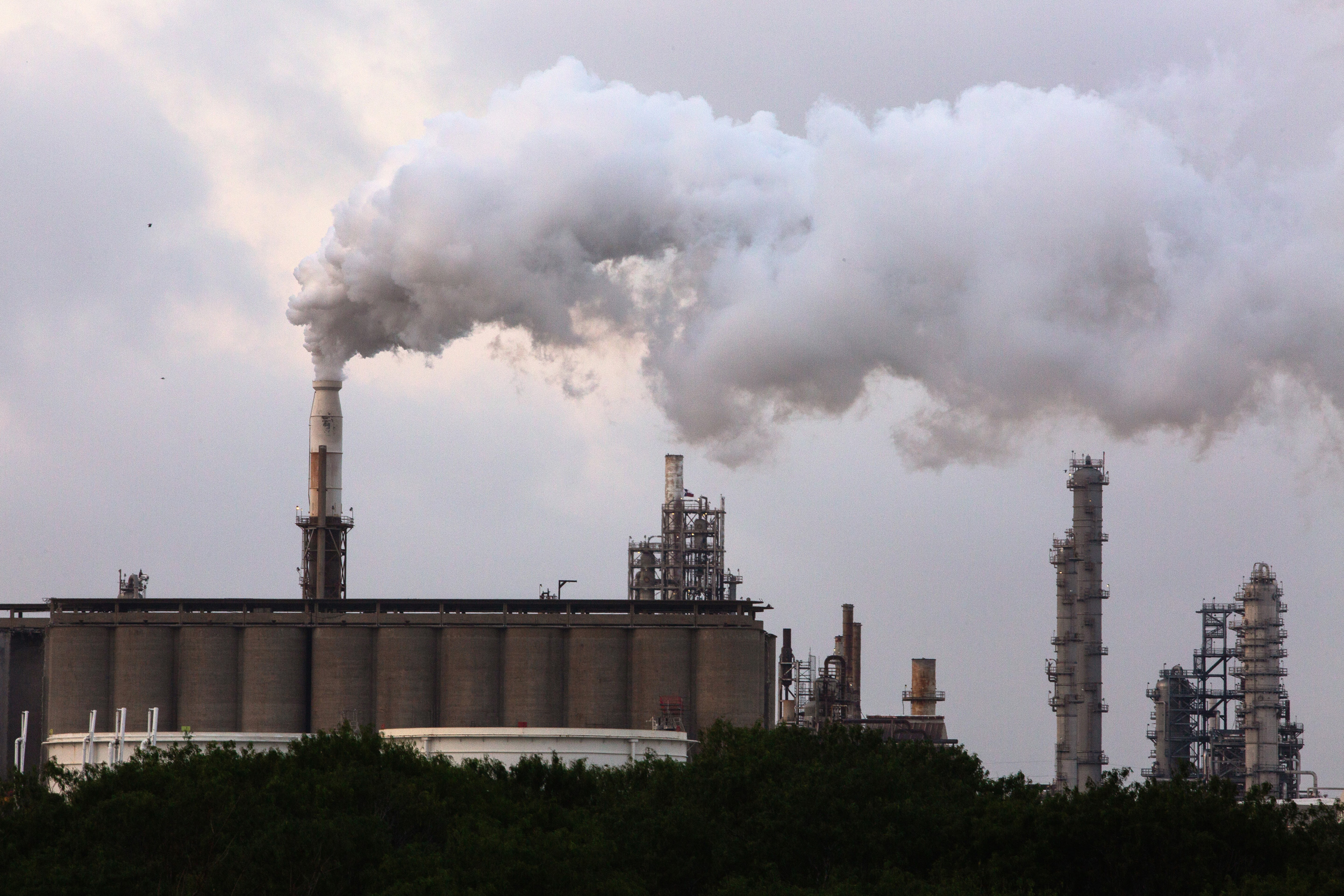
Over a few years, the region added 36 million gallons per day of water demand, according to Don Roach, former assistant general manager for the San Patricio Municipal Water District, which serves industrial customers near Corpus Christi. The region’s total water consumption grew by 40 percent.
“That was the nail that sealed the coffin,” Roach said.
“The Trajectory is a Little More Critical”
The new Exxon plant started operations in 2022, with the region’s reservoirs only about 40 percent full. That’s about when the next drought began.
At a Corpus Christi City Council meeting in July 2022, the chief operating officer of the city’s water department, Mike Murphy showed a graph depicting reservoir levels during the 2010s drought and presently.
“The trajectory of the current drought that we’re in shows us quickly approaching the drought of record,” he said. “This is what’s really got us concerned.”
Furthermore, amid a year of record heat, lakes were dropping almost twice as fast as the city’s calculations had predicted.
“We’ve noticed a shift in the model,” Murphy said. “The trajectory is a little more critical.”
The next year was even hotter, and the next year, 2024, was Corpus Christi’s hottest on record.
The city began drilling emergency water wells in January 2025. In March, reservoirs dropped to 30 percent, and the city upgraded drought restrictions to stage 2—“moderate.” Typical spring rain never came. Reservoirs hit 20 percent in December, and the city upgraded drought restrictions to stage 3—“urgent.”
“Day after day, week after week, month after month, we didn’t see the rain,” said Zanoni, the city manager.
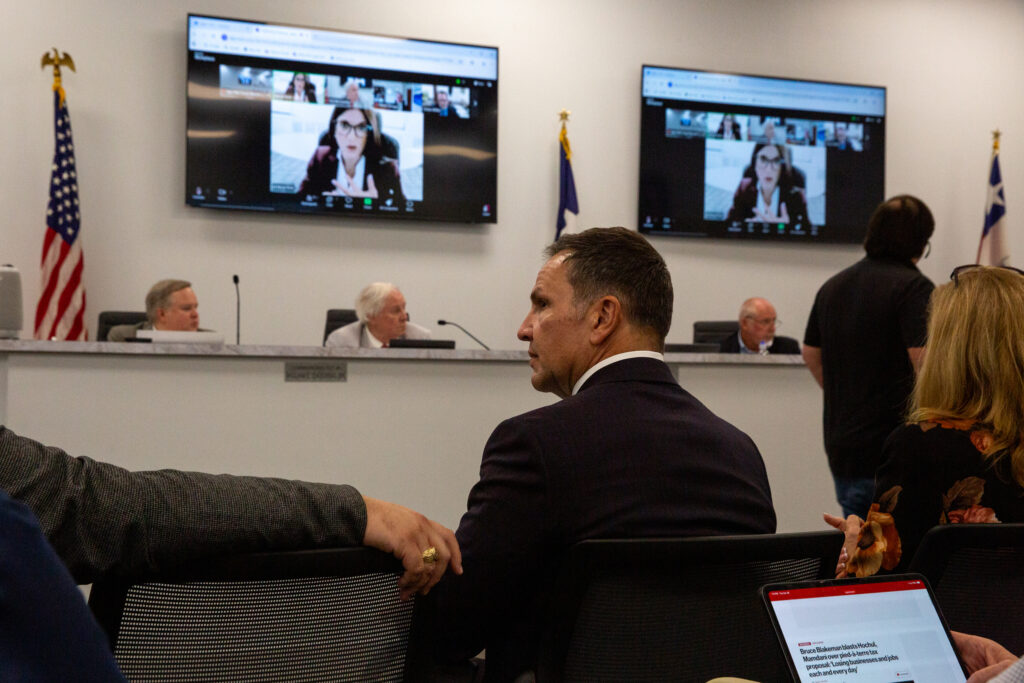
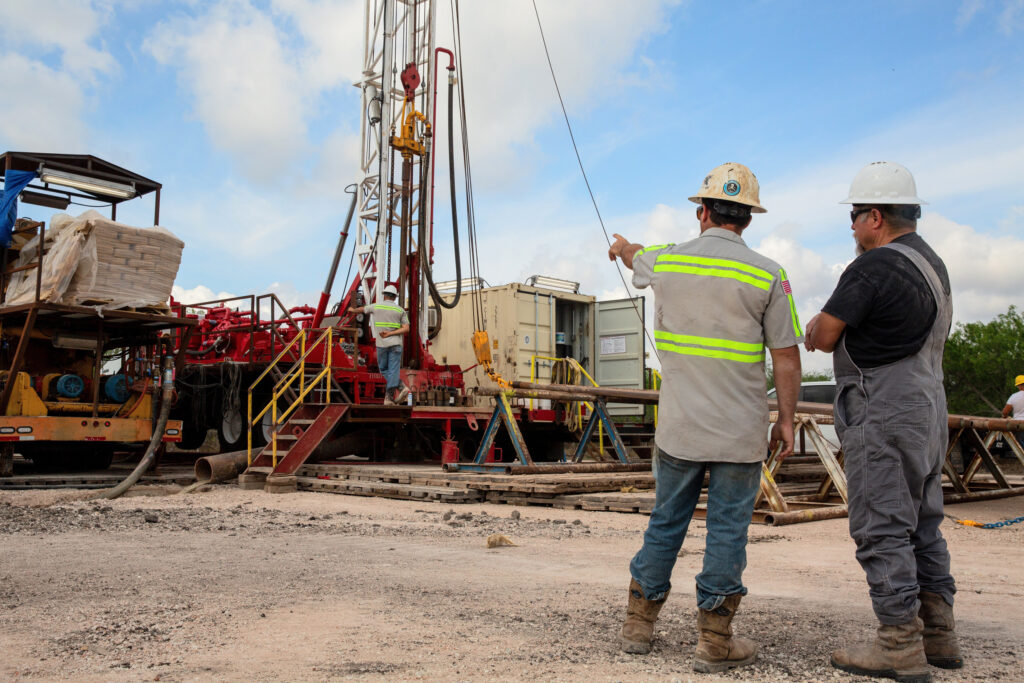
The dry spell persisted. A record-breaking heatwave formed in early spring. In March of this year, the reservoirs hit 10 percent, lower than they’d ever been.
Projections showed that if the spring rains were absent again, like the year before, reservoirs could be dry by summer. Only one stage of drought restrictions remained: “emergency.” City leaders started hammering out, for the first time, what that scenario would look like.
The Corpus Christi City Council authorized hundreds of millions of dollars to speed through an emergency groundwater project, leasing land and laying pipeline before the project received permits. But in May and June a state administrative judge sent Corpus Christi’s permits into a hearing process that could last years, effectively stalling the project.
Luckily, the spring rains came. Corpus Christi didn’t tumble over the edge this year. It now has more than a year worth of water in storage and could end up with more if the drought ends soon, as some forecasts predict.
But the region has a long way to go to find safe footing, said Michael, the vice president at Hanson. After this new drought-of-record, estimates of the water supply will be revised downward again, he said.
“We’re going to have to find new water,” he said. “We’re going to have to find a new way to pay for it.”
After four droughts in his career, he’s glad this was his last. He plans to retire.
Droughts are scary, he said, and difficult to plan for. No one knows when they’ll begin or when they’ll end. And no one knows how severe a drought this region should prepare for.
“Someday we’re going to find out,” he said. “I just don’t want to be here when.”
Neena Satija of the Texas Newsroom contributed to this report.
About This Story
Perhaps you noticed: This story, like all the news we publish, is free to read. That’s because Inside Climate News is a 501c3 nonprofit organization. We do not charge a subscription fee, lock our news behind a paywall, or clutter our website with ads. We make our news on climate and the environment freely available to you and anyone who wants it.
That’s not all. We also share our news for free with scores of other media organizations around the country. Many of them can’t afford to do environmental journalism of their own. We’ve built bureaus from coast to coast to report local stories, collaborate with local newsrooms and co-publish articles so that this vital work is shared as widely as possible.
Two of us launched ICN in 2007. Six years later we earned a Pulitzer Prize for National Reporting, and now we run the oldest and largest dedicated climate newsroom in the nation. We tell the story in all its complexity. We hold polluters accountable. We expose environmental injustice. We debunk misinformation. We scrutinize solutions and inspire action.
Donations from readers like you fund every aspect of what we do. If you don’t already, will you support our ongoing work, our reporting on the biggest crisis facing our planet, and help us reach even more readers in more places?
Please take a moment to make a tax-deductible donation. Every one of them makes a difference.
Thank you,

Reporter, Austin
Dylan Baddour covers the energy sector and environmental justice in Texas. Born in Houston, he’s worked the business desk at the Houston Chronicle, covered the U.S.-Mexico border for international outlets and reported for several years from Colombia for media like The Washington Post, BBC News and The Atlantic. He also spent two years investigating armed groups in Latin America for the global security department at Facebook before returning to Texas journalism. Baddour holds bachelor’s degrees in journalism and Latin American studies from the University of Texas at Austin. He has lived in Argentina, Kazakhstan and Colombia and speaks fluent Spanish.
