

One thing to remember about the modern world is that nothing online is ever secure. M&S and Jaguar taught us that. Edward Snowden taught us that. Every week, it seems, some giant corporation sees its system collapse at the touch of a button in an attic.
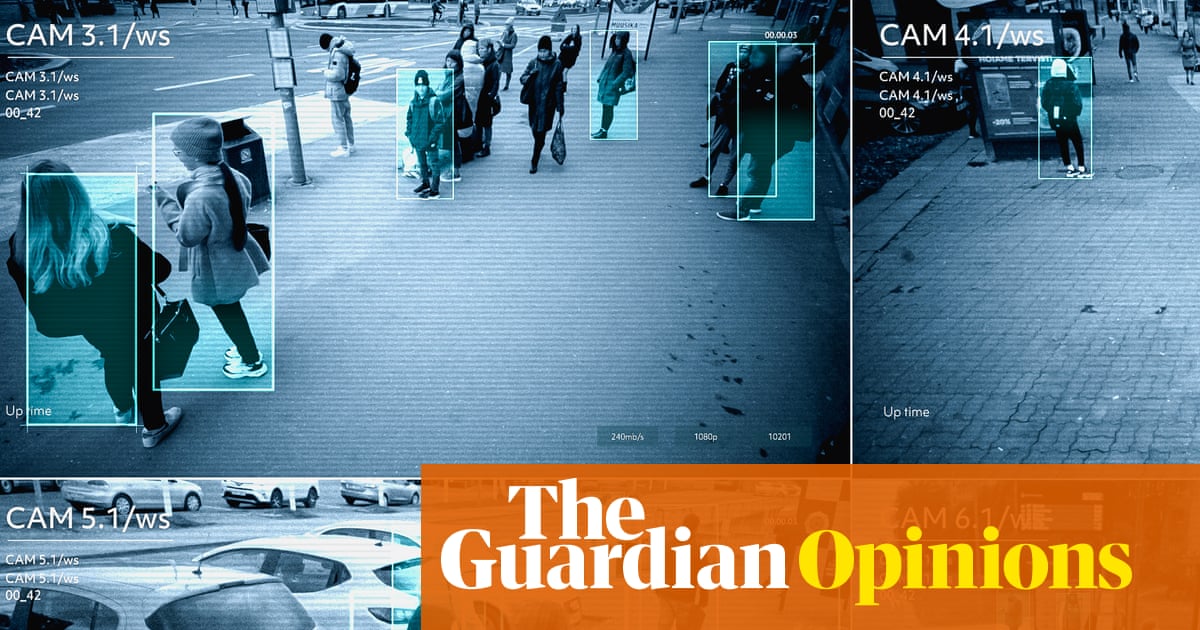
The government this week opened a consultation on its plan for nationwide facial recognition and surveillance. You would need only put your face outdoors and walk down the street and authorities will know and record it. Of course we will be assured that all will be kept secure. It will not. Cash or conspiracy will find it out and it will leak.
Already, the consultation is a lie. Facial surveillance is already up and running. London’s Met police claims it has caught more than 100 sex offenders breaking their licence conditions. At least six forces have their town centres plugged in and Whitehall has admitted that it intends the technology to be used nationwide. The policing minister, Sarah Jones, calls facial surveillance “the biggest breakthrough for catching criminals since DNA matching”. It will “help free up police time”. What’s not to like?
Every year sees a new advance of state and corporate intrusion into individual privacy. It does not always succeed. In 2013, the government tried to introduce a nationalised NHS data system that amassed all local GP records of personal health. This, it intended, would help supply A&E departments with possibly life-saving information, and aid research. The data would be surrounded with safeguards against abuse. The collected material would be ostensibly anonymised and sold to industry to help cover costs.
A sceptical public felt the safeguards were not to be trusted. Sooner or later every insurance company in the land would know from personal data how much to charge for insurance. Every employer would know whom not to hire. Since the scheme was voluntary, over a million opted out. The project collapsed three years later.
At much the same time, the former National Security Agency (NSA) contractor Edward Snowden’s revelations of internet surveillance by American and British intelligence services broke cover. Two lessons followed. One was that the services regard any behaviour on their part, however outrageous, as valid for reasons of “national security”. The other was that no computer data was truly safe. With American and British services sharing material hacked from personal archives, safeguards could be ignored and lied about. America was the land of the free, including a government wishing to do what it liked with anyone’s secrets.
The result of a digital free-for-all was satirised in Dave Eggers’ novel The Circle. First many politicians, and then citizens, were encouraged to carry a body camera that recorded and transmitted in real time where they were and what they were doing. It was said to promote political accountability and personal integrity. You could refuse, but those who refused could be identified and hounded down.
Even Eggers did not envisage a state in which every human face seen in public could be instantly identified. Computers can then match it against a national “hitlist” of individuals who have, at some point, crossed the behavioural line, and trace and record their movements. It would be similar to the data that enables banks to rule out, as a suitable customer, anyone who defaults on a payment or steps out of line.
Of course we can see the benefits of facial recognition. In potential hotspots there may be a case for some version of it. Intruding on privacy always sings the best tunes. Surveillance could apparently replace a probation tag. Police forces report that live facial recognition has led to over 1,000 arrests for offences including rape and burglary. It has captured an illegal immigrant; the Home Office says it can be used to find missing children. Jones says it also creates a “hostile environment for prolific sexual offenders”. Who can object when the innocent have nothing to fear? This has long been the slogan of state power.
During the controversy over the NHS database, I shall not forget the cackle of laughter from a computer expert when I asked him about Whitehall’s safeguards. “If there is one thing we know,” he said, “it is that no modern safeguard can beat the modern hacker.” As for when the safeguarder – the state – is also the hacker, there is no stopping it. During the Snowden revelations, the NSA was using the Prism system to gain illicit access to Google, Apple, Microsoft and Yahoo, and even inducing Microsoft to circumvent its own encryption.
after newsletter promotion
We already know what internet companies can do with evidence of our needs and preferences, scraped from our emails. They use it to make money. Ten years ago, we refused to allow our NHS details to be collated by Whitehall in the knowledge that they would inevitably leak. For the same reason we should deny permission for the state to track and record our private lives. I doubt if the state will listen.
