

Most cancer treatments attack rapidly dividing cells, but they often harm healthy cells as well. This damage can lead to serious side effects. Researchers are working to design therapies that strike cancer cells more precisely while leaving normal tissues unharmed.
An international research team led by the Universities of Geneva (UNIGE) and Marburg has identified a potential new strategy. They found that a mirror version of cysteine, a sulfur-containing amino acid, can significantly slow the growth of certain tumors while leaving healthy cells largely unaffected. The compound is absorbed mainly by specific cancer cells, where it disrupts critical biological functions including cellular respiration and DNA production. In mice, this effect greatly slowed the progression of aggressive breast tumors. The study was published in Nature Metabolism.
Understanding Mirror-Image Amino Acids
Amino acids are small molecules that serve as the building blocks of proteins. They connect together like beads on a string to form the proteins needed by living organisms. There are 20 amino acids used to construct the proteins found in all forms of life.
These molecules exist in two versions known as L (levorotatory) and D (dextrorotatory). The two forms are mirror images of one another, similar to the difference between a person’s left and right hands. Although they have the same chemical components, their three-dimensional structures differ. Human biology relies almost entirely on the L forms to build proteins, while the D forms are rarely used.
D-Cysteine Slows Cancer Cell Growth
The researchers, led by Jean-Claude Martinou, Honorary Professor in the Department of Molecular and Cellular Biology at the UNIGE Faculty of Science, explored how various amino acids influence cancer cell growth. Their experiments revealed that the D version of cysteine (D-Cys), which contains a sulfur atom, can strongly suppress the growth of certain cancer cells in laboratory experiments. Healthy cells, however, were not affected.
“This difference between cancer cells and healthy cells is easily explained: D-Cys is imported into cells via a specific transporter that is present only on the surface of certain cancer cells,” explains Joséphine Zangari, a PhD student in Professor Martinou’s laboratory and first author of the study. “In fact, we observed that if we express this transporter on the surface of healthy cells, those cells stop proliferating in the presence of D-Cys.”
How the Molecule Disrupts Cancer Cell Metabolism
Working with Professor Roland Lill and his team at the University of Marburg, the researchers uncovered how D-Cys harms cancer cells.
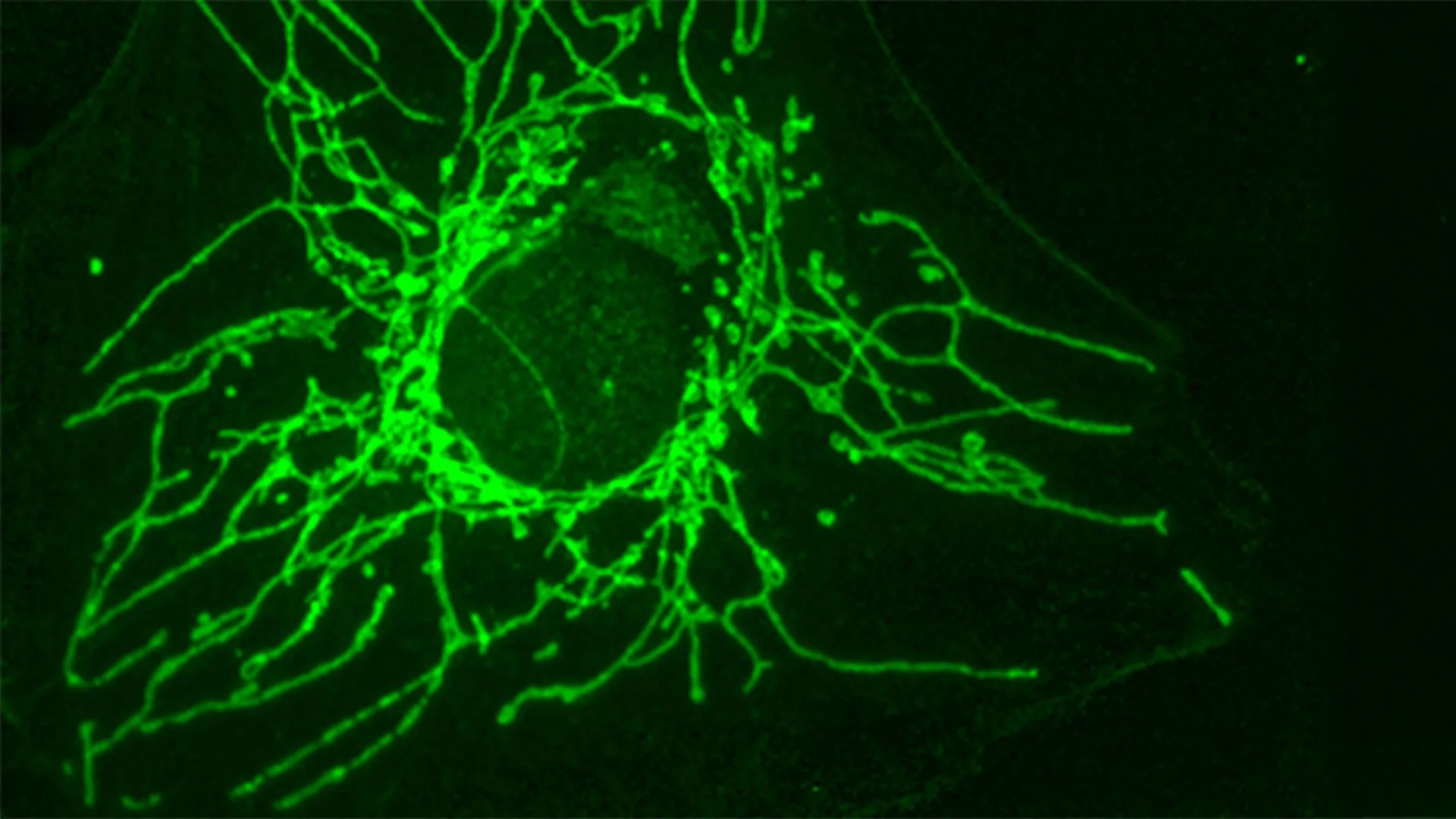
“It blocks an essential enzyme called NFS1, located in the mitochondria — the cell’s ‘powerhouses’. This enzyme plays a key role in producing iron-sulfur clusters, small structures that are indispensable for many processes such as cellular respiration, DNA and RNA production, and maintaining genetic integrity,” explains Roland Lill.
When NFS1 is blocked, several critical cellular functions break down. Cancer cells experience reduced respiration, DNA damage increases, and the cell cycle stops. Together, these effects prevent the cells from continuing to grow and divide.
Slowed Tumor Growth in Mice
To test whether this approach could work in living organisms, the scientists treated mice that had aggressive mammary tumors that are typically difficult to treat. The results were promising. Tumor growth slowed significantly, and the animals did not show major side effects.
“This is a very positive signal — we now know it’s possible to exploit this specificity to target certain cancer cells,” says Jean-Claude Martinou. “However, we still need to determine whether D-Cys could be administered at effective doses in humans without causing harm.”
If further studies confirm its safety and effectiveness in people, D-cysteine could become a relatively simple and selective therapy for cancers that produce high levels of the transporter responsible for bringing the molecule into cells. The strategy may also help prevent metastasis, a crucial stage in cancer progression.
