
LIVE NEWS
  • Archaeological site in Chile upends theory of how humans populated the Americas … again | Archaeology
  • Stablecoin Bill Enters Final Stage — Yield Rules and DeFi Are on the Line
  • Bitrefill blames North Korean Lazarus group for cyberattack
  • Bitcoin slips to $71k as risk assets slide on hot inflation data, Fed uncertainty By Investing.com
  • The Iran war tests Taiwan’s energy resilience
  • Drinks Not to Order If a Bar Is Crowded, According to Bartenders
  • Hiroshima survivor who spent decades investigating American POW deaths dies at 88
  • King opens world's longest coastal path around England
Prime Reports
  • Home
  • Popular Now
  • Crypto
  • Cybersecurity
  • Economy
  • Geopolitics
  • Global Markets
  • Politics
  • See More
    • Artificial Intelligence
    • Climate Risks
    • Defense
    • Healthcare Innovation
    • Science
    • Technology
    • World
Prime Reports
  • Home
  • Popular Now
  • Crypto
  • Cybersecurity
  • Economy
  • Geopolitics
  • Global Markets
  • Politics
  • Artificial Intelligence
  • Climate Risks
  • Defense
  • Healthcare Innovation
  • Science
  • Technology
  • World
Home»World»Archaeological site in Chile upends theory of how humans populated the Americas … again | Archaeology
World

Archaeological site in Chile upends theory of how humans populated the Americas … again | Archaeology

primereportsBy primereportsMarch 19, 2026No Comments4 Mins Read
Share Facebook Twitter Pinterest LinkedIn Tumblr Reddit Telegram Email
Archaeological site in Chile upends theory of how humans populated the Americas … again | Archaeology
Share
Facebook Twitter LinkedIn Pinterest Email


A groundbreaking new study may have once again upended our understanding of human prehistory in the Americas.

For years, the predominant theory of how humans arrived in the western hemisphere centred around the Clovis culture, which crossed the Beringia land bridge from Asia between 13,400 and 12,800 years ago, and spread south.

That version was challenged in 1977 when a site in southern Chile was first excavated. Monte Verde, near the city of Puerto Montt, was found to be about 14,500 years old – a true outlier which appeared to prove that there had been human populations in the far south of the hemisphere long before the arrival of the Clovis people.

Monte Verde from above. Academics previously thought that the site was about 14,500 years old – dispelling once dominant theories about the movement of the Clovis people. Photograph: Instituto de Ecología y Biodiversidad (IEB), Pontificia Universidad Católica de Chile.

Now, the theory has changed again.

A team of archaeologists have found that Monte Verde could actually be less than half the age previously thought, placing the north-to-south expansion theory back at the centre of a heated debate over the human history of the Americas.

Dr Todd Surovell, from the department of anthropology at the University of Wyoming and the lead author of the study published on Tuesday in Science, said: “Monte Verde was the anchor for the idea that people were in South America before we see the appearance of the Clovis complex in North America – and for the entirety of my career that has been the case.”

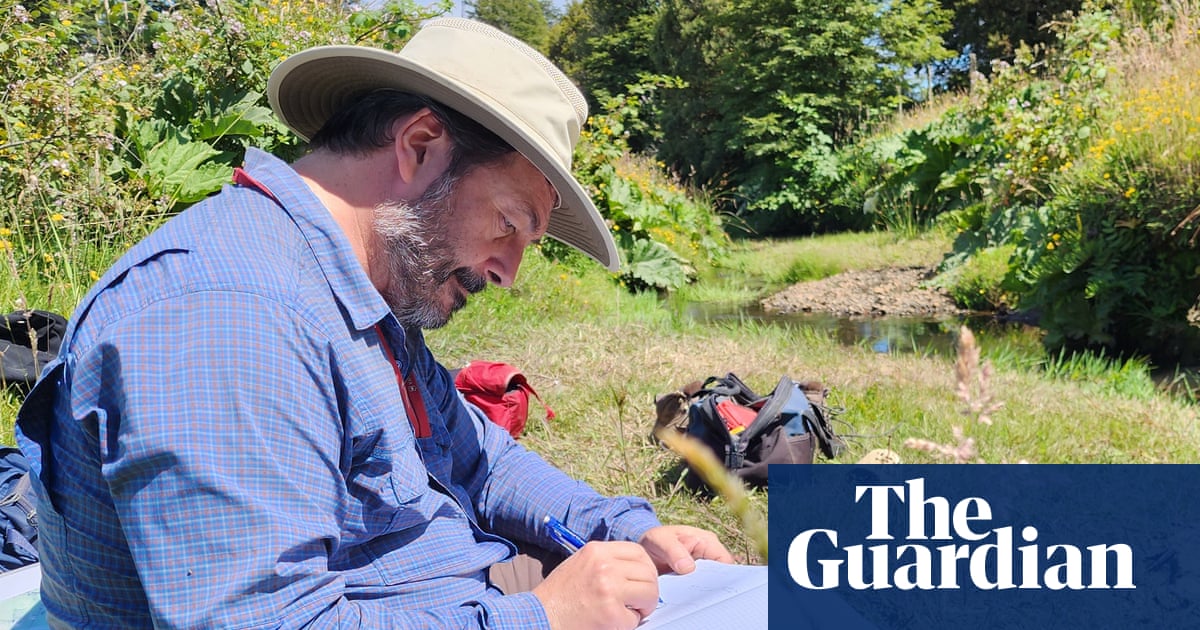
Surovell has harboured a fascination for the Monte Verde site since Tom Dillehay, who first excavated the site, spoke about his findings to his graduate class at the University of Wisconsin. Those findings were later verified by a multidisciplinary team.

But as his career progressed, Surovell became sceptical of Monte Verde, the great anomaly which had shifted the paradigm on how and when human beings arrived in the Americas.

The new research concludes that Monte Verde was misdated as the result of soil erosion which placed more recent archaeological evidence in older geological strata – meaning that the site is in fact only between 6,000 and 8,000 years old.

Dr Claudio Latorre, a paleoecologist at the Universidad Católica’s biological sciences faculty in Santiago, said: “When it was discovered, Monte Verde turned the entire story of the population of the Americas on its head.

“All of a sudden you had a site in southern Chile that’s 1,500 years older than the oldest sites in North America, and there was this huge gap in our knowledge – the understanding that the population of the Americas would have come from north to south was basically chucked out of the window.”

The archeologists behind the new study think that Monte Verde was misdated as a result of soil erosion. Photograph: Instituto de Ecología y Biodiversidad (IEB), Pontificia Universidad Católica de Chile.

Monte Verde was first excavated between 1977 and 1985 by Dillehay and his colleagues, who retained permits for the site.

But now, after the first independent survey of the site since initial excavations, Surovell and his team, having secured permission to study it in a brief window when the original permits expired, believe they have quashed the Monte Verde anomaly.

Other more recent pre-Clovis sites in the Americas have been discovered and excavated, from Mexico down to north-west Argentina and Uruguay, but none has yet been verified.

Surovell said that these should be examined in order for our understanding of American prehistory to evolve.

“I want to have the second set of eyes on these sites, but I don’t want to be the archaeological angel of death,” he said. “I much prefer to be in the business of knowledge production, which our work at Monte Verde does by erasing this one data point.”

Share. Facebook Twitter Pinterest LinkedIn Tumblr Email
Previous ArticleStablecoin Bill Enters Final Stage — Yield Rules and DeFi Are on the Line
primereports
  • Website

Related Posts

World

Former counter-terrorism head investigated by FBI over alleged leaks

March 19, 2026
World

Carbon Brief Quiz 2026: Picture Round 1 and 2

March 19, 2026
World

Landmark deal to share Chile’s lithium windfall fractures Indigenous communities

March 19, 2026
Add A Comment
Leave A Reply Cancel Reply

Top Posts

Global Resources Outlook 2024 | UNEP

December 6, 20255 Views

The D Brief: DHS shutdown likely; US troops leave al-Tanf; CNO’s plea to industry; Crowded robot-boat market; And a bit more.

February 14, 20264 Views

German Chancellor Merz faces difficult mission to Israel – DW – 12/06/2025

December 6, 20254 Views
Stay In Touch
  • Facebook
  • YouTube
  • TikTok
  • WhatsApp
  • Twitter
  • Instagram
Latest Reviews

Subscribe to Updates

Get the latest tech news from FooBar about tech, design and biz.

PrimeReports.org
Independent global news, analysis & insights.

PrimeReports.org brings you in-depth coverage of geopolitics, markets, technology and risk – with context that helps you understand what really matters.

Editorially independent · Opinions are those of the authors and not investment advice.
Facebook X (Twitter) LinkedIn YouTube
Key Sections
  • World
  • Geopolitics
  • Popular Now
  • Artificial Intelligence
  • Cybersecurity
  • Crypto
All Categories
  • Artificial Intelligence
  • Climate Risks
  • Crypto
  • Cybersecurity
  • Defense
  • Economy
  • Geopolitics
  • Global Markets
  • Healthcare Innovation
  • Politics
  • Popular Now
  • Science
  • Technology
  • World
  • About Us
  • Contact Us
  • Privacy Policy
  • Terms & Conditions
  • Disclaimer
  • Cookie Policy
  • DMCA / Copyright Notice
  • Editorial Policy

Sign up for Prime Reports Briefing – essential stories and analysis in your inbox.

By subscribing you agree to our Privacy Policy. You can opt out anytime.
Latest Stories
  • Archaeological site in Chile upends theory of how humans populated the Americas … again | Archaeology
  • Stablecoin Bill Enters Final Stage — Yield Rules and DeFi Are on the Line
  • Bitrefill blames North Korean Lazarus group for cyberattack
© 2026 PrimeReports.org. All rights reserved.
Privacy Terms Contact

Type above and press Enter to search. Press Esc to cancel.