


DAR ES SALAAM, Tanzania, October 20 (IPS) – Nearly three decades have passed, but Japhet Gimbi still remembers the rain.
He was a Form 2 student in Tabora, western Tanzania, when the 1997 El Niño flooded the town. As the rain kept falling, fewer students made it to school. That was a super El Niño, one of the strongest on record. Since then there have been five other events including the 2014-2016 “super El Niño”.
“It just kept raining. Day after day, the rain wouldn’t stop,” Gimbi, who now lives in Dar es Salaam, recalled.
But his strongest memory is of food running short at home.
“We would only eat Ugali without vegetables,” he said.
At Kwihara village, Hatibu Halfan remembers the same season differently. He was a 27-year-old farmer when the rains initially seemed a blessing. His rice crop flourished.
Then the ground became waterlogged. Cassava and sweet potatoes rotted. Homes in low-lying areas flooded.
Twenty-nine years later, East Africa is again preparing for “super” El Niño. The World Meteorological Organization (WMO) expects it to intensify toward the end of 2026, with forecasts showing a nearly 100 percent chance of persisting through February 2027. But WMO cautions that a strong El Niño does not necessarily mean severe impacts in every country.
For East Africa, the concern is heavy rain. The October-to-December season is crucial across much of the region, with forecasts pointing to wetter-than-normal conditions that could bring floods, landslides, infrastructure damage, and disease outbreaks. In parts of Tanzania, Uganda, Rwanda, and Burundi, the season delivers up to 40 percent of annual rainfall.
The East African Community (EAC) Partner States are calling for more predictable, accessible and grant-based climate finance as they prepare to take a common regional position to the United Nations Climate Change Conference (COP31) in Antalya, Türkiye, next month.
They plan to call on developed countries to meet their public climate finance obligations, triple adaptation finance by 2035, improve direct access to climate finance, and provide greater support for adaptation and loss and damage, all without increasing the debt burden on vulnerable countries.
“The common COP31 messages further call for the full capitalisation of the Fund for Responding to Loss and Damage, direct access to its resources by national institutions and support for both economic and non-economic losses. The EAC is also calling for full funding of the Santiago Network, which provides technical assistance to countries vulnerable to loss and damage, as well as stronger cooperation on disaster risk reduction and early warning systems.
The common position calls on developed countries to meet their public climate finance obligations, triple adaptation finance by 2035, improve direct access to climate finance and provide greater support for adaptation and loss and damage without increasing the debt burden of vulnerable countries.
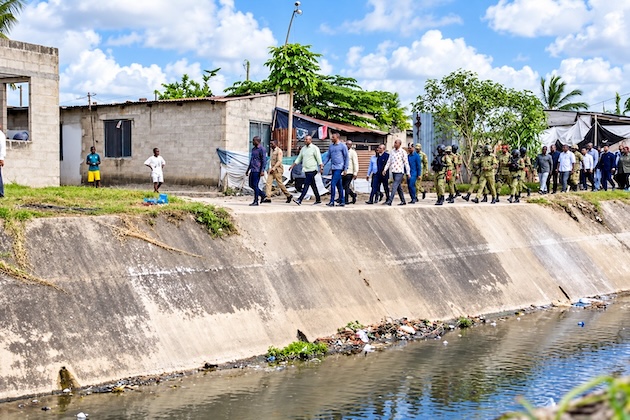
In Dar es Salaam and other fast-growing cities, however, the danger is not simply how much rain falls. It is where it falls—and who lives in its path.
In Southern Africa, the concern is drought, with its impacts on food security, the potential for wild fires, and water shortages. The country will use its participation at the COP31 to ask for increased adaptation finance.
Cities at Risk
“The main impacts we should expect from floods range from possible loss of lives and the number of people displaced, damaged houses, waterborne diseases, loss of employment, and disruption of livelihoods,” Romanus Opiyo, Policy and Engagement Lead for Sustainable Urbanisation at the Stockholm Environment Institute, told IPS.
In Dar es Salaam, neighbourhoods have expanded along rivers, valleys and low-lying land where housing is relatively affordable but drainage and other basic services often lag behind population growth.
Among the places Opiyo identifies as particularly exposed are Tandale, along the Sinza river system, and Jangwani, in the Msimbazi valley.
“The most vulnerable are the urban poor, especially those living near riparian areas such as those settlements in low elevations and near riparian areas,” he said.
Flooding does not affect all city residents equally. Low-income households living on daily earnings often have few savings, little or no insurance and limited options for moving somewhere safer.
When Drains Become Sewers
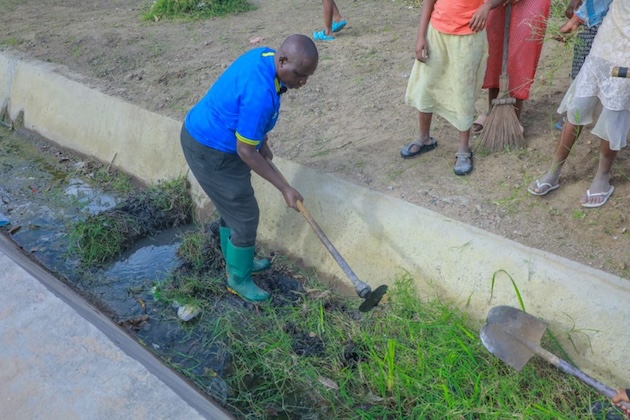
In crowded settlements, blocked drains sit alongside pit latrines, rubbish and open sewers. Floodwater can carry all three through homes and streets.
WMO’s regional outlook warns that excessive rainfall could increase water- and vector-borne disease while damaging roads and disrupting access to health and nutrition services.
Lessons From 1997
The 1997 El Niño brought torrential rain and widespread flooding across East Africa.
By February 1998, about 10 million people across the region needed emergency assistance, according to the UN Food and Agriculture Organization.
Tanzania suffered extensive damage to roads and railways. Communities were cut off, crops and food stocks were lost and relief efforts were hampered by damaged infrastructure.
The effects, however, varied from place to place. Rain replenished water supplies and improved pasture in some areas, and national food production rebounded in 1998. But hundreds of villages were isolated, and thousands of people were left homeless. FAO and the World Food Programme estimated that about 300,000 Tanzanians would still need targeted food aid.
Since 1997, East African cities have expanded rapidly into wetlands, river valleys and other flood-prone land. Riverbanks have been settled and open ground replaced by roads, buildings and concrete.
Opiyo says weak development control is worsening the risk.
“The major gap remains the allocation of adequate resources (finance, human, and infrastructure resources) to deal with the problem,” he said.
Tanzania Prepares
Tanzania has begun preparations for the October-to-December rains, with forecasters warning that a very strong El Niño could bring heavier rainfall to much of the northern coast, northeastern highlands, Lake Victoria basin and northern Kigoma.
The government has activated a National Emergency Plan and issued 13 directives, ordering authorities to identify high-risk areas, designate emergency shelters, clear drains, prepare rescue equipment and strengthen measures against disease and damage to infrastructure.
The government estimates that 730 billion Tanzanian shillings could be required to implement activities before, during and after a major El Niño emergency. The figure is an estimate of potential requirements, not money already set aside. The 2026/27 budget provides 10 billion shillings for activities under the plan across sectors.
Community flood mapping, identifying households that may need help evacuating, clearing drains and establishing safe routes can also reduce risks.
Beyond El Niño
Seasonal forecasts describe probabilities, not individual storms, and WMO stresses that even a very strong El Niño does not guarantee catastrophic impacts everywhere.
But the problem will outlast El Niño: each rainy season exposes many of the same neighbourhoods.
Rivers overflow and drains clog. Households move possessions onto beds, raise furniture on bricks and wait for the water to recede.
Opiyo says recurring flooding in informal settlements is also an urban-planning problem.
“The informal urban community’s vulnerability requires a collaborative approach in terms of data, creative and inclusive methodology and honest dialogue to address the recurring problem.”
Nature-based measures include protecting wetlands and river corridors, restoring vegetation and preserving areas where floodwater can spread without reaching homes.
But in cities where safe land is expensive, telling people not to live beside rivers does little for families who cannot afford to live anywhere else. Clearing a drain may reduce flooding this season; it does not resolve insecure housing, weak sanitation or the absence of affordable serviced land.
In 1997, Gimbi watched his classmates disappear from school as the rains continued and food ran short at home. Halfan watched his rice flourish before waterlogged fields began destroying other crops.
Twenty-nine years later, governments have better forecasts, satellite observations, flood maps and early-warning systems.
They can see the rain coming.
The question is whether the people living closest to the water will be safer when it arrives.
IPS UN Bureau Report



© Inter Press Service (20261020065342) — All Rights Reserved. Original source: Inter Press Service
