

Stepping off the Q train at Prospect Park Station in Brooklyn, I winced at the screech and grumble of the subway. Car horns echoed from streets nearby and the weekend morning crowd of visitors chattered raucously—all typical sounds of New York City’s urban symphony.
But as I took a moment to find the right exit, a different melody joined the performance: delicate chirps from birds out of sight. A preview of what was to come.
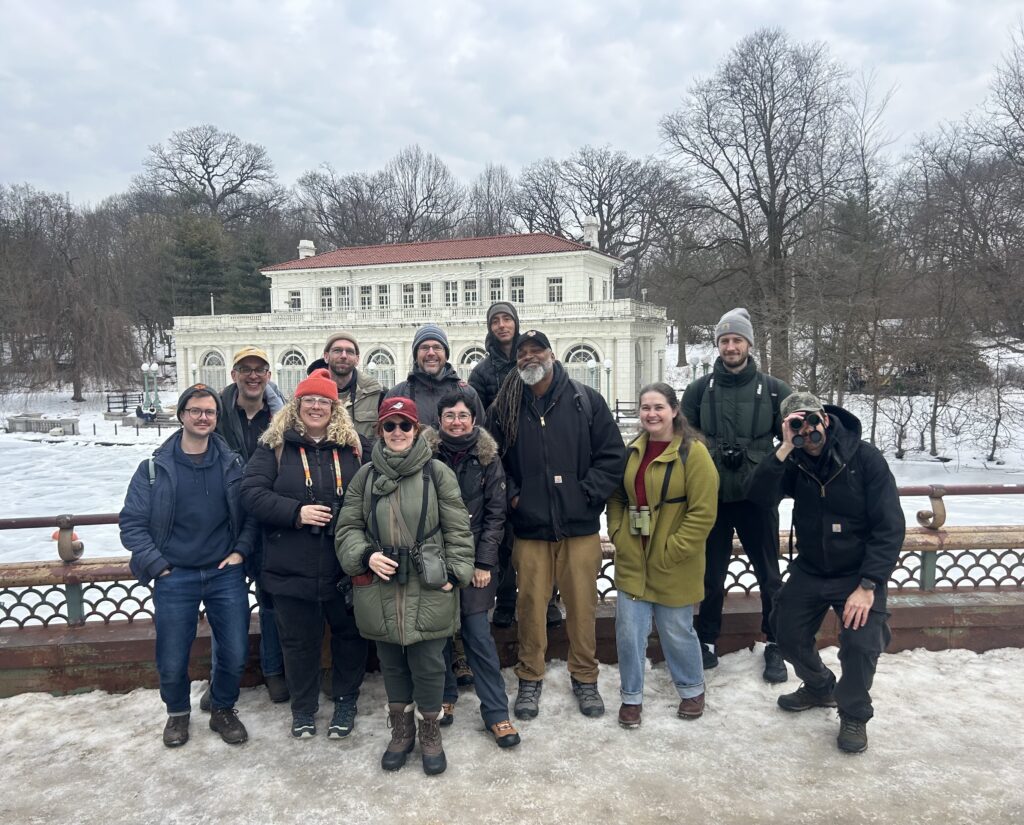
Fifteen minutes later, I huddled close with a group of around 30 other shivering but smiling parkgoers, each equipped with binoculars and ready to join the Great Backyard Bird Count, a global effort coordinated by the Cornell Lab of Ornithology, the National Audubon Society and Birds Canada. The initiative mobilizes citizen scientists to collect data on as many wild birds as possible in one weekend before they start their spring migration.
Launched in 1998, the event has exploded in size as birding has become increasingly popular across the globe and apps make identification and data submission more accessible. Last year, more than 830,000 people participated in the event, digitally capturing around 70 percent of the world’s avian species everywhere from Australia to Canada. This year, the event, which took place from Feb. 14 to 17, had record-breaking levels of participation.
The global datasets generated during the Great Backyard Bird Count and other similar events throughout the year help scientists track how bird populations are changing across time and space, capturing what Cornell Lab’s Mya Thompson calls one of “the heartbeats of the planet.”
But they also show the ways this heartbeat is faltering in the face of climate change and habitat loss. Experts are rushing to figure out how to slow bird losses before they flatline.
A Walk in the Park: Not even two minutes into our walk at Prospect Park, a birder pointed to the sky, bellowing, “Look, a red-tailed hawk!” Every head whipped in that direction, marveling at the bird of prey, a surprisingly common species in New York City. Cardinals dotted a nearby tree like vibrant cherries and mallards splashed in the pond next to it. Moments later, a rarer Cooper’s hawk soared into view.
“It’s really important, this park, for bird species,” said Tina Marie Alleva, who was leading the walk and helping submit the group’s data to the Great Backyard Bird Count. She’s a member of the Brooklyn Bird Club, which hosts many similar birding walks each week across the borough.
New York City is situated directly on the Atlantic Flyway, a major migratory corridor for birds that stretches from Greenland and Nova Scotia in the north along the East Coast in North America to the tropics of the Caribbean and down the East Coast of South America. During their migrations, birds frequently stop in the city to rest and refuel—avian tourists of sorts.
The core idea of the Great Backyard Bird Count in February is to document birds before the sprawling migration happens in the spring. This time of year, some of the most common migratory birds stopping in New York City are coming from the north and include waterfowl and songbirds like white-throated sparrows and dark-eyed juncos. Meanwhile, participants in the Great Backyard Bird Count from warmer regions such as India might spot species such as flamingos and Amur falcons that have fled colder climates in Siberia or Central Asia.
“Birds tell us how the environment is doing, because they’re moving, they’re eating, they really rely on different areas and spaces, not just one specific place,” Alleva said before we were interrupted by a throaty blue jay call. Birding can also engage people in science and conservation, she added. For example, hobby birders and the nonprofit NYC Bird Alliance spent years pushing for legislation requiring “bird-friendly” glass on all new construction to reduce building collisions, which passed in 2019.
“It’s just having more people involved and more people caring,” Alleva said. “It’s important, especially in these urban types of areas where there’s very little green space for people and birds and everyone to coexist.”
Oftentimes, watching birds can help bring people closer together, too. Throughout the three-hour walk, the group—many of whom were strangers to start—bonded as they shared avian fun facts, spotted new species and pointed out the black ice patches to avoid. Brooklyn Bird Club member Chris Laskowski told me he first got interested in birding more than a decade ago after losing a job.
“Thirteen years later, it’s really changed my life,” he said. It helps him “engage nature at a higher level.”
Pulse Check: The submission from our small group of birders in New York City filters into a global avian database managed by the Cornell Lab of Ornithology. Prior to my Prospect Park walk, I sat down on Zoom with Thompson so she could show me the Great Backyard Bird Count’s system.
“This is my Super Bowl feed here,” she said, referring to a world map that showed birding submissions in near real-time, which ticked up by the thousands during our roughly one-hour call. Eventually, it will show “a snapshot of what was happening in the winter.”
People from the United States, India and Canada are the leading contributors during the Great Backyard Bird Count, though the vast majority of countries have at least one person joining in and nearly every represented country has seen an increase in submissions in recent years. Scientists are still finalizing the numbers for this year, but it’s already clear the count broke all previous records, Thompson said. More than 1 million participants shared information about at least 8,119 bird species.
Citizen science birding apps such as Merlin and eBird, which are managed by the Cornell Lab of Ornithology, help users identify species through their smartphones, data that can be used by scientists studying global trends. However, data deserts remain in harder-to-reach areas (including, for example, actual deserts) as well as places with restrictions on technology, such as China. Scientists use machine learning to fill in some of the gaps.
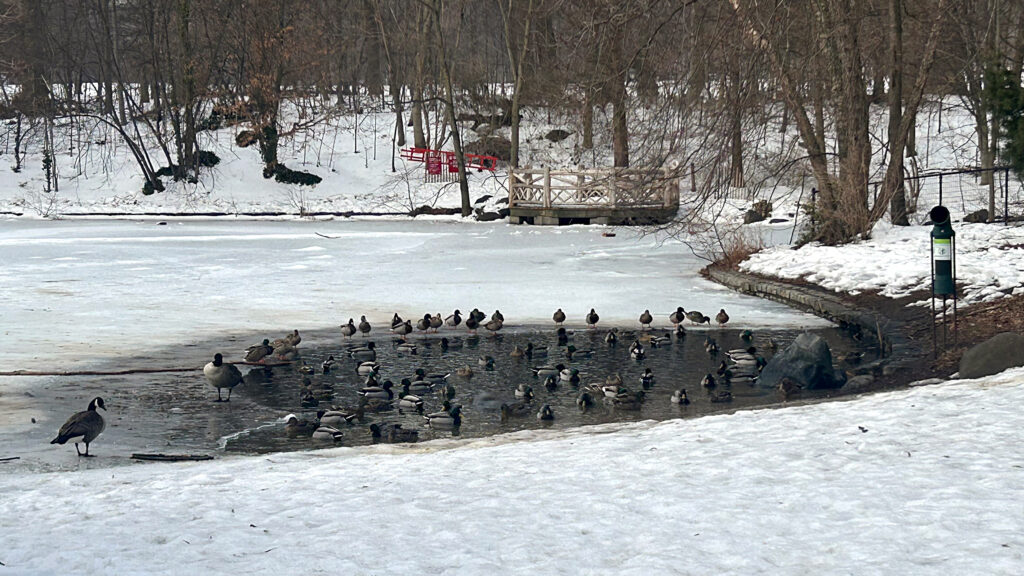
The picture they paint is sobering, Thompson said.
“The vast majority of these maps when they first came out were showing overall decreases in bird populations,” she said.
A 2019 study, supported partially by community science data, found that the U.S. and Canada have roughly 3 billion fewer birds than they did in 1970. Scientists are still parsing out the contributing factors for particular species and locations, but some reasons are becoming clearer. For example, declining cactus wrens native to deserts and arid systems in North America are not moving in response to warming temperatures, potentially due to their limited flight capability and habitat needs, research shows.
But not all hope is lost. In some areas, avian species are increasing, particularly where communities are helping provide or restore critical habitat for migratory birds. The birds off the subway are still singing. And a global army of birders are still helping keep an eye on things.
More Top Climate News
Around 650,000 electricity customers along the East Coast lost power during the snowstorm this week, which knocked down power lines and infrastructure across the region, Ivan Penn and Jenna Russell report for The New York Times. For the most part, it seems the issues were localized, rather than systemic grid failures. Local governments opened makeshift warming centers in schools or even buses to help support those without power, including unhoused people.
Last week, an avalanche killed nine skiers in the Sierra Nevada mountains near Lake Tahoe, making it the deadliest such event in California’s modern history. Avalanche risks in the region remain high, and climate change is partially to blame, Gabrielle Canon reports for The Guardian. Abnormally high temperatures in Northern California have led to low snowpack this year, which means that slopes don’t have the conditions for fresh snow to stick to. Now, snow is pummeling the area and could trigger more severe avalanches, experts say.
After a series of wildfires tore through southwestern Oregon in 2020, many homeowners and building developers in the most affected areas opted to rebuild with wildfire resilience and energy efficiency in mind. Now, the once-burnt neighborhoods are among the most energy efficient in the country, Juliet Grable reports for Canary Media. When the 2020 fires destroyed more than 5,000 structures, the state relaxed mandatory building codes to help survivors recover more quickly, a common practice after disasters. But the state and nonprofits also offered incentives to help homeowners follow the standards anyway, and these initiatives largely paid off, especially in the Rogue Valley region.
“The incentive we had for going up and above code was doubled, and that’s where we saw a lot of uptake,” Scott Leonard, residential program manager at the nonprofit Energy Trust of Oregon, told Canary Media.
Postcard From … Hawaii
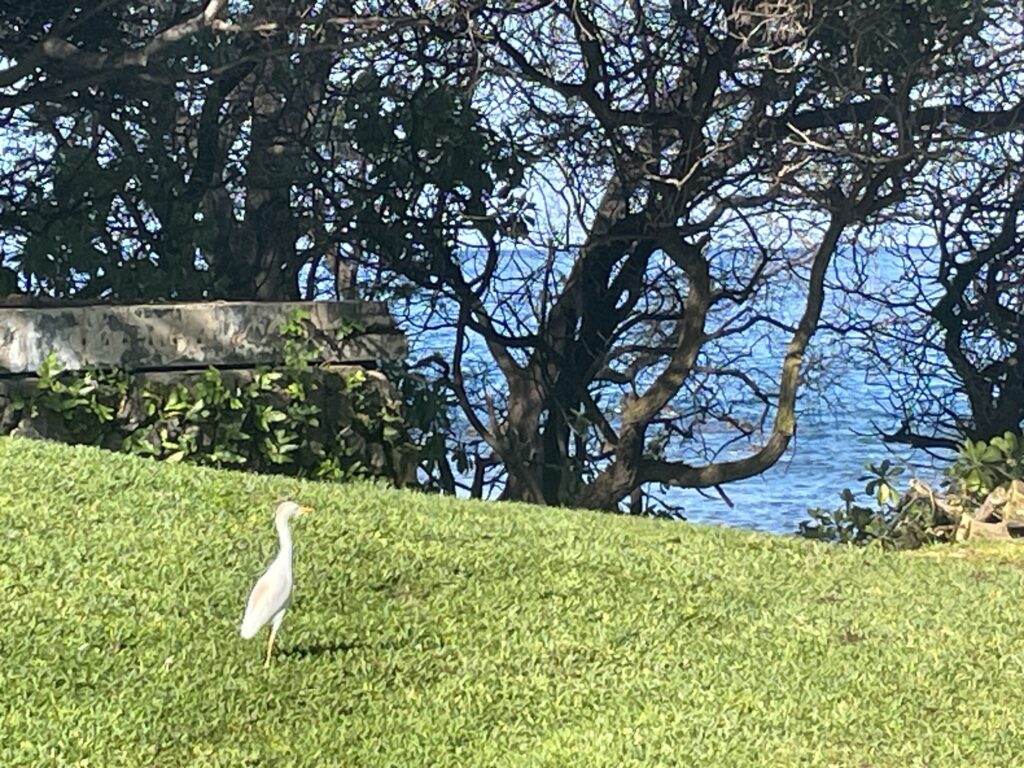
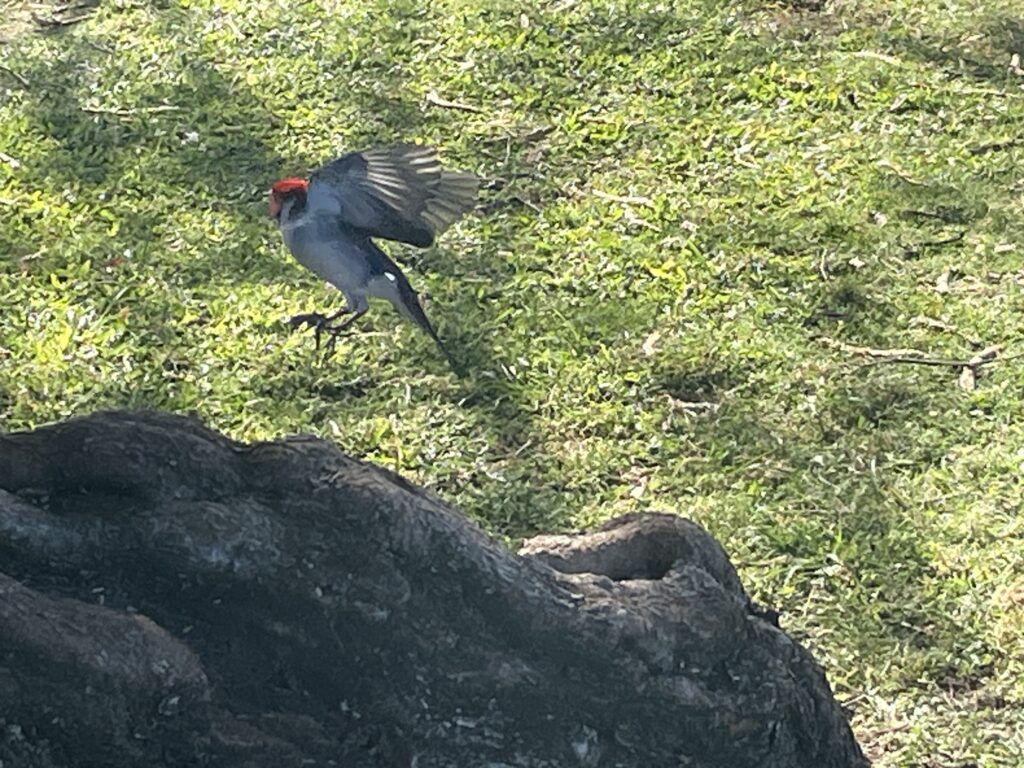
This week’s installment of “Postcards From” is courtesy of ICN’s California reporter, Liza Gross. She recently went on vacation to Maui, where she saw an array of wildlife.
“The red-crested cardinal, Paroaria coronata, is common across the Hawaiian islands but is native to South America (it’s also known as the Brazilian cardinal) and is actually related to tanagers, not cardinals,” Liza said. “The birds were introduced to Hawaii nearly a century ago, though are not considered invasive, unlike the ubiquitous cattle egret, which was introduced in the 1950s to control insects on livestock, but also prey on the nests of native birds that evolved without predators.”
She added: “I love going to Maui during winter, when thousands of humpback whales migrate to the island from feeding grounds in Alaska, in one of the longest migrations of any mammal, to breed and raise their young. There’s nothing like swimming and snorkeling in the ocean with whales, sea turtles and Maui’s diverse fish species to recharge your spirit.”
Today’s Climate readers, we want to feature your photos from nature, whether you are in a city, suburb, forest or anywhere in between. Please send your photos to [email protected].
About This Story
Perhaps you noticed: This story, like all the news we publish, is free to read. That’s because Inside Climate News is a 501c3 nonprofit organization. We do not charge a subscription fee, lock our news behind a paywall, or clutter our website with ads. We make our news on climate and the environment freely available to you and anyone who wants it.
That’s not all. We also share our news for free with scores of other media organizations around the country. Many of them can’t afford to do environmental journalism of their own. We’ve built bureaus from coast to coast to report local stories, collaborate with local newsrooms and co-publish articles so that this vital work is shared as widely as possible.
Two of us launched ICN in 2007. Six years later we earned a Pulitzer Prize for National Reporting, and now we run the oldest and largest dedicated climate newsroom in the nation. We tell the story in all its complexity. We hold polluters accountable. We expose environmental injustice. We debunk misinformation. We scrutinize solutions and inspire action.
Donations from readers like you fund every aspect of what we do. If you don’t already, will you support our ongoing work, our reporting on the biggest crisis facing our planet, and help us reach even more readers in more places?
Please take a moment to make a tax-deductible donation. Every one of them makes a difference.
Thank you,

Reporter
Kiley Price is a reporter at Inside Climate News, with a particular interest in wildlife, ocean health, food systems and climate change. She writes ICN’s “Today’s Climate” newsletter, which covers the most pressing environmental news each week.
She earned her master’s degree in science journalism at New York University, and her bachelor’s degree in biology at Wake Forest University. Her work has appeared in National Geographic, Time, Scientific American and more. She is a former Pulitzer Reporting Fellow, during which she spent a month in Thailand covering the intersection between Buddhism and the country’s environmental movement.
