

The Vietnam War has left deep social and political scars on the US psyche that still ache today. Pierre Asselin broadens our understanding through his recent book, Vietnam’s American War: A New History, which draws on Vietnamese archival references.
According to Asselin, the narrative of Vietnamese national unity and resistance in the face of foreign aggression starting 2,000 years ago is essentially a myth propagated by Vietnamese nationalists and communists, and is not the reason why France and the United States lost wars in Vietnam. He suggests that Vietnam’s history has been marked much more by internal fragmentation and divisions than national unity.
Vietnam’s modern history was marked by France’s occupation of Indochina (today Cambodia, Laos and Vietnam) in the 19th century. France lost these colonies to Japan during World War II. Following the war’s end, on 2 September 1945, Ho Chi Minh declared the independence of the Democratic Republic of Vietnam—even before the return of the French—and appointed himself as president.
But Ho’s declaration of independence was not celebrated by everyone in Vietnam. It provoked a dramatic escalation of internal violence between communist and anti-communist groups, as did Ho’s death squads targeting political rivals. France returned to Vietnam after WWII with the goal of reestablishing its colonial rule. A seven-year war between Ho’s Viet Minh and France ensued, which France ultimately lost despite support from the US and Britain.
Asselin argues that the French did not create hostilities when they returned to Vietnam, but rather exploited and amplified existing divisions and cleavages. He believes that the French war was really an expansion of the Vietnamese civil war, as many Vietnamese fought with the French against the communists because they saw the communists as a bigger threat than the French.
A ceasefire was agreed upon in 1954, and Vietnam was temporarily divided into two military zones along the 17th parallel. Viet Minh forces moved north of the line, and French and South Vietnamese troops moved south. According to the Geneva Accords (which were not signed by the US or South Vietnam), nationwide elections were to be held in 1956 to unify the country.
Those planned elections were never held, and the temporary division became permanent, which heightened tensions and led to the Vietnam War. Communist sympathisers in the south formed the Viet Cong (Vietnamese Communists) and, backed by China and North Vietnam, fought against the South Vietnamese government.
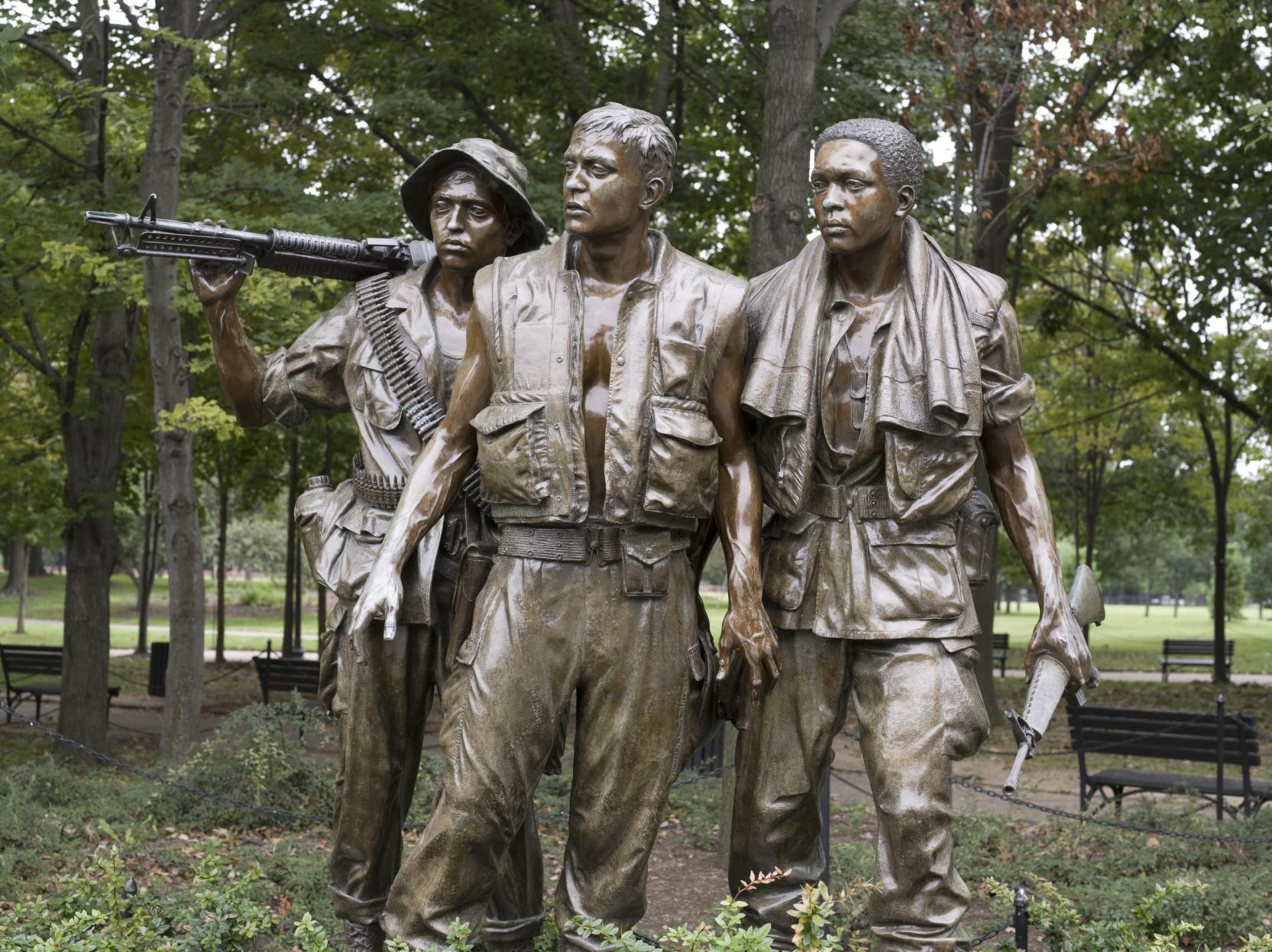
Fearing a communist expansion throughout the region, the US accelerated aid to South Vietnam. The number of US military personnel in Vietnam grew rapidly from 1964, peaking at over 500,000 in April 1969. In total, approximately 2.7 million Americans served in uniform in Vietnam during the war.
By 1973, anti-war sentiment was running high in the US and president Richard Nixon was embroiled in the Watergate scandal. He ceased all bombing of North Vietnam and withdrew US troops. By 1975, Saigon fell, the war was over, and the Socialist Republic of Vietnam was established the following year.
In his analysis, Asselin stresses that the war was not a US war, as many Americans believe. Nor was it an anti-imperialist war. The conflict from 1945–1975 was a Vietnamese civil war between two factions: Marxist/Leninists in the north who were fixated on dominating the whole country; and the non-communists in the south who championed political pluralism and who were intent on obliterating the communists in the north.
The US military intervention of 1965 constitutes the Americanisation of the Vietnamese civil war. When the US intervened militarily on the side of the south, the war had been underway for some 20 years. True, the US made things worse (so did the Soviet Union and China), escalating the scale of the violence in Vietnam, but it was already a violent conflict.
For those who argue that the South Vietnamese government was a puppet of the US, the same can be said of North Vietnam’s relationship with China and the Soviet Union. These outside powers aggravated cleavages between North and South Vietnam—but those cleavages were already there and inherent in the relationship between the north and the south.
Could the outcome of the war have been different? According to Asselin, the US intervention merely extended the war’s length and would not have changed the result. The north’s strategy was always so much more sophisticated than that of the south. The south’s diverse, complex and more democratic society, with an abundance of political factions, became a major liability after Hanoi escalated the insurgency in the south and shifted to all-out war in the late 1950s and early 1960s.
