

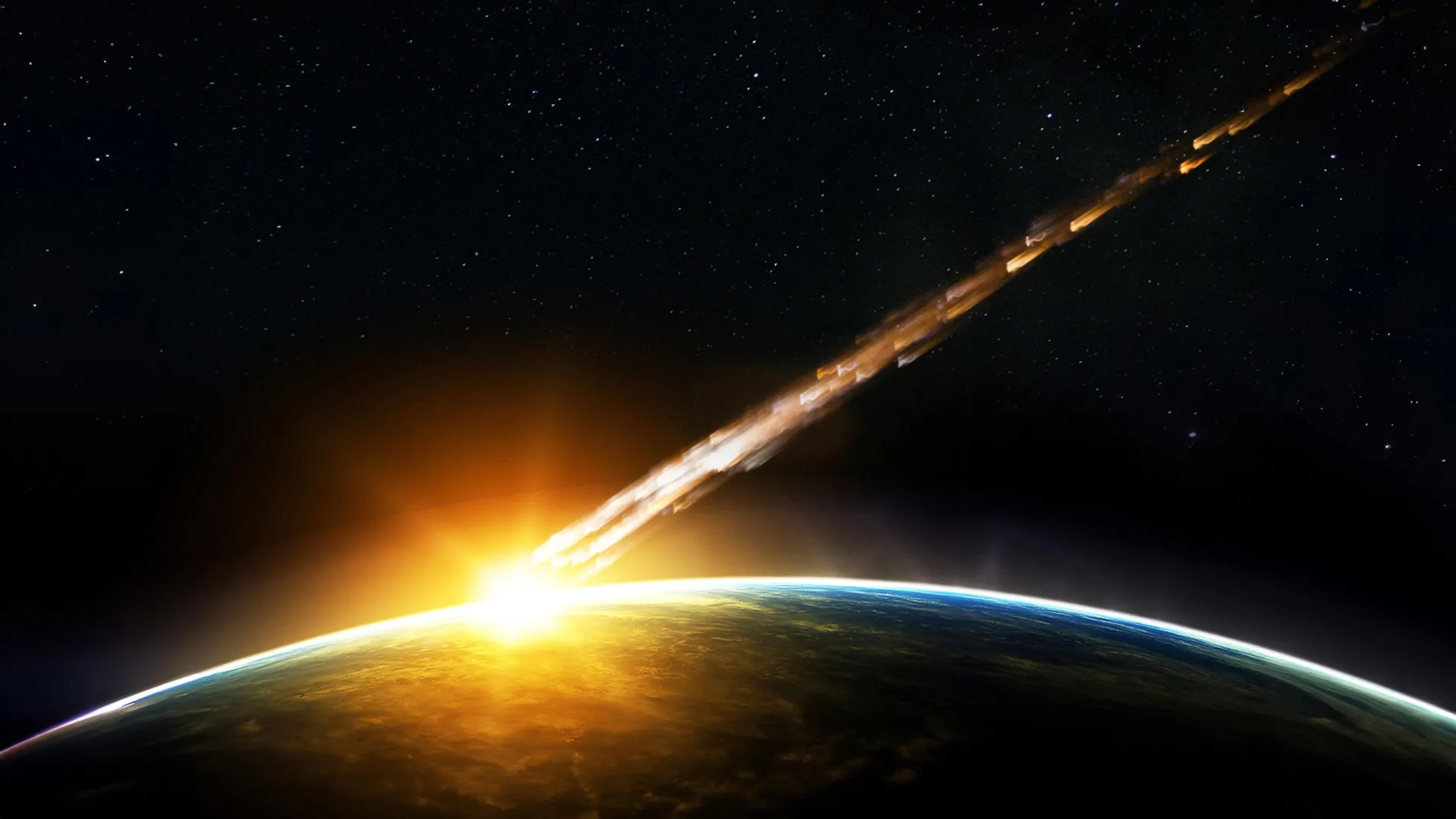
Scientists are continuing to strengthen the case that a fragmented comet exploded in Earth’s atmosphere nearly 13,000 years ago. This event may have played a role in the sudden disappearance of mammoths, mastodons, and many other large Ice Age animals, as well as the abrupt loss of the Clovis culture from North America’s archaeological record.
In a study published in PLOS One, UC Santa Barbara Emeritus Professor of Earth Science James Kennett and his colleagues describe new evidence found at three well-known Clovis archaeological sites. These sites include Murray Springs in Arizona, Blackwater Draw in New Mexico, and Arlington Canyon in California’s Channel Islands. At each location, the team identified shocked quartz — grains of sand that have been physically altered by extreme heat and pressure.
“These three sites were classic sites in the discovery and the documentation of the megafaunal extinctions in North America and the disappearance of the Clovis culture,” said Kennett.
Linking Extinctions to the Younger Dryas
The loss of Ice Age megafauna and the disappearance of Clovis tools and artifacts occurred around the same time as the onset of the Younger Dryas. This period marked a sudden and unusual return to near ice-age conditions that lasted roughly a thousand years, interrupting an overall warming trend following the Last Glacial Period.
Several explanations have been proposed for what triggered this dramatic climate reversal. Kennett and his team support the Younger Dryas impact hypothesis, which suggests that fragments of a comet detonated above Earth’s surface. These explosions would have released immense heat and powerful shockwaves across large regions.
“In other words, all hell broke loose,” Kennett said. Under this hypothesis, the blasts ignited widespread fires that filled the atmosphere with smoke, soot, and dust. This debris likely blocked sunlight and produced an “impact winter.” At the same time, rapid melting of ice sheets may have contributed to further cooling in affected areas. Together, the immediate destruction and the harsh environmental aftermath could have pushed many large animals to extinction and disrupted human populations across North and South America.
Growing Evidence for a Cosmic Impact
Over the past two decades, researchers supporting this idea have gathered multiple lines of evidence. One of the most widespread findings is a dark, carbon-rich “black mat” layer found in sediment across many sites in North America and Europe, which points to extensive burning.
Scientists have also identified a range of impact proxies. These include elevated levels of rare elements commonly associated with comets, such as platinum and iridium. Other indicators include materials formed only under extreme heat and pressure, including nanodiamonds, metallic spherules, and meltglass created when minerals melted and then rapidly cooled.
Shocked Quartz as a Key Clue
Advances in analytical technology have allowed researchers to focus on what many consider the strongest indicator of a cosmic impact: shocked quartz — sand grains that show internal damage caused by intense temperatures and pressures. In samples from Murray Springs, Blackwater Draw, and Arlington Canyon, the team found quartz grains marked by distinctive fractures, some of which were filled with melted silica.
Using tools such as electron microscopy and cathodoluminescence, the researchers confirmed that these grains had been exposed to conditions far more extreme than those produced by volcanic activity or early human fires.
Why No Crater Is Needed
Shocked quartz is especially significant because no large crater has been found from this event. Large asteroid impacts, like the one that contributed to the dinosaur extinction 65 million years ago, typically leave a clear crater, such as the one beneath the Yucatan Peninsula. In contrast, “touchdown airbursts” — explosions that occur above the Earth’s surface — can cause massive damage without leaving a lasting crater.
To better understand how this could happen, the team used hydrocode modeling to simulate low-altitude explosions and assess how different impact conditions could produce the shock patterns observed in the quartz grains.
“There are different levels of shocked quartz,” Kennett said. He explained that while traditional impact evidence often focuses on parallel fractures found near craters, airbursts generate a wide range of pressures and temperatures. “There are going to be some very highly shocked grains and some that will be low-shocked. That’s what you would expect.”
A Stronger Case for a Catastrophic Event
When combined with other impact indicators found in the same sediment layer — including the black mat, nanodiamonds, and impact spherules — the shocked quartz discoveries add weight to the impact hypothesis. According to the study, this growing body of evidence “supports a cosmic impact as a major contributing factor in the megafaunal extinctions and the collapse of the Clovis technocomplex at the Younger Dryas onset.”
