LIVE NEWS
  • CMS proposes more aggressive audits of Medicare Advantage| STAT
  • Microsoft says months-old bug caused global Microsoft 365 outage
  • James Bond live updates: Robert Pattinson named as new 007
  • Wildfire Lawsuits Against Utilities Fuel a Debate Over Who Should Pay
  • Tiny robots can tumble through blood vessels to help dissolve blood clots, early test shows
  • The Verge’s guide to the best gifts under $100
  • Europe’s Hera mission is ready to double down on asteroid science
  • German Lawmakers Back Customs Powers to Seize Crypto of ‘Unclear Origin’
Prime Reports
  • Home
  • Popular Now
  • Crypto
  • Cybersecurity
  • Economy
  • Geopolitics
  • Global Markets
  • Politics
  • See More
    • Artificial Intelligence
    • Climate Risks
    • Defense
    • Healthcare Innovation
    • Science
    • Technology
    • World
Prime Reports
  • Home
  • Popular Now
  • Crypto
  • Cybersecurity
  • Economy
  • Geopolitics
  • Global Markets
  • Politics
  • Artificial Intelligence
  • Climate Risks
  • Defense
  • Healthcare Innovation
  • Science
  • Technology
  • World
Home»Geopolitics»Ebola Spread Raises Fresh Urgency for Africa’s Domestic Health Funding — Global Issues
Geopolitics

Ebola Spread Raises Fresh Urgency for Africa’s Domestic Health Funding — Global Issues

primereportsBy primereportsOctober 16, 2026No Comments6 Mins Read
Share Facebook Twitter Pinterest LinkedIn Tumblr Reddit Telegram Email
Ebola Spread Raises Fresh Urgency for Africa’s Domestic Health Funding — Global Issues
Share
Facebook Twitter LinkedIn Pinterest Email


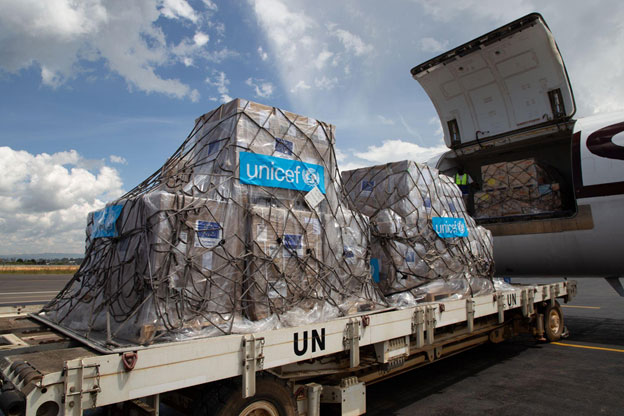
UNICEF unloads emergency humanitarian supplies in the Democratic Republic of the Congo in response to the Ebola outbreak. The shipment includes protective equipment, hygiene kits, medicines, and medical supplies to support frontline health workers and nearly 100,000 people. Credit: UNICEF/Ndomba Mbikayi
  • by Ignatius Banda (bulawayo)
  • Friday, October 16, 2026
  • Inter Press Service

BULAWAYO, October 16 (IPS) – An Ebola death last week in Kenya is highlighting the urgency of Africa’s public health emergency preparedness and how the continent’s governments are committing their national budgets to the health sector.

The Kenya case is serving as a call to arms in the fight against Africa’s public health emergencies and how locally coordinated efforts are adequately equipped to contain the spread of communicable diseases.

“Health emergency preparedness gives us a head start, and Kenya has put important outbreak control measures in place,” Janabi said in a 6 October media brief, which was in stark contrast to concerns raised in the DRC that life-saving medical supplies only arrived ten days later from neighbouring countries, effectively allowing Ebola to leave a trail of death.

As the disease surges at its north Kivu epicentre in the Democratic Republic of Congo, questions have returned about how the shuttering of the United States Agency for International Development (USAID) has devastated public health emergency responses across Africa.

Last week, Doctors Without Borders warned that the current Ebola strain was spreading so fast for emergency health workers “it was like fighting a megafire,” further raising concerns over how the DRC and neighbouring countries will tackle the crisis amid increasingly limited resources.

Despite being often cited as having vast mineral wealth, the DRC’s Ebola response has been plagued by an under-funded health sector where international humanitarian agencies are struggling to provide basic medical care.

As the new Ebola strain took root in the DRC’s east, Amadou Bocoum, CARE International’s DRC Country Director, lamented that “with proper funding, we would have had prepositioned stock and begun distributing critical supplies like PPE from day one, but instead, we started with nothing and lost 10 days.”

These funding concerns would be raised weeks later by the United Nations Economic Commission for Africa (UNECA) at the 76th Session of the WHO Regional Committee for Africa in Addis Ababa in August.

UNECA noted that “Africa’s health financing model remains structurally fragile,” with governments failing to allocate adequate budgets for the health sector.

African governments and other health sector players have already raised alarm over the Trump Administration’s decision to ice the USAID, which triggered a continent-wide shortage of anything from condoms to malaria and HIV/AIDS drugs.

At the WHO Regional Committee conference, UNECA raised concerns that “external health assistance was down almost 30 per cent,” and as Ebola spreads, the effects of that deficit are being felt with catastrophic consequences.

The impact of the reliance on overseas development assistance was made clear by Aboubakri Diaw, who leads UNECA’s Sustainable Financing Initiative, who told the gathering that “Africa does not have a reform deficit. It has a sustainable financed-reform deficit.”

“Health financing strategies sit on shelves. Insurance schemes are legislated but struggling to be capitalised. Benefit packages are defined but not costed into medium-term expenditure frameworks. A reform without a budget line does not constitute a policy,” Diaw said.

Yet it is a commitment African governments made in 2001 at the Abuja Declaration to allocate 15 percent of national budgets to health, but countries have fallen short, with some allocations ranging between as little as 2 percent and 12 percent, according to the World Health Organisation.

To address the public health funding crisis, UNECA says what remains crucial is “a fundamental reset in how African governments and their finance ministries fund health systems” in a continent where millions lack access to and cannot afford basic medical care.

“External aid covered more than 30 per cent of health expenditure, and in some 13 countries the ECA has looked at, households pay more for health than their own governments do,” Diaw said, adding that “many countries on the continent now spend more on servicing debt than on public health.”

Amid these challenges and competing public spending priorities, it is not yet clear how governments will navigate these new public health funding realities, as pressure from international lending institutions for African countries to repay billions of loans still remains.

Analysts however see the funding crisis as part of Africa’s broader political architecture where short-term planning by sitting governments prioritises projects closely linked to the election cycle.

“Governments have to balance health against infrastructure, security, education, social protection and other priorities,” said Pakhani Mhazo, a public health researcher based in South Africa.

“However, health preparedness often produces benefits that are not immediately visible to voters. For example, if you invest in disease surveillance, laboratories and emergency systems and successfully prevent an outbreak from becoming a crisis, there is no obvious event that voters can see as the result of that investment,” Mhazo told IPS.

Meanwhile, without any clear or immediate sources to fill the funding gaps left by international aid, African governments have their work cut out, and as Claver Gatete, UNECA Executive Secretary, reminded African ministers during the High-Level Forum on Sustainable Health Financing in April this year, “Health is not expenditure; it is investment – in people, in productivity and in prosperity.”

IPS UN Bureau Report

© Inter Press Service (20261016110601) — All Rights Reserved. Original source: Inter Press Service

Where next?

Related news

Browse related news topics:

Latest news

Read the latest news stories:

  • Ebola Spread Raises Fresh Urgency for Africa’s Domestic Health Funding Friday, October 16, 2026
  • Finding Silver Linings Amid Haze of Climatic Uncertainty Friday, October 16, 2026
  • ‘Prioritize Social Inclusion as Rapid Transformations Risk Leaving Millions Behind’ Friday, October 16, 2026
  • If the UN COP17 Is Serious About Biodiversity, It Needs to Follow the Money Friday, October 16, 2026
  • Guterres urges faster action and financing to stop biodiversity loss Friday, October 16, 2026
  • International Day for the Eradication of Poverty 2026 Thursday, October 15, 2026
  • Afghanistan’s Stolen Peace: The Women Who Refuse to Be Silenced Thursday, October 15, 2026
  • 30 Years of War, 30 Years of Impunity in DR Congo Thursday, October 15, 2026
  • Kenia Hernández: Indigenous Rights Defender Imprisoned for Her Activism Thursday, October 15, 2026
  • Could your brain data be used against you? UN calls for limits on neurotechnology Thursday, October 15, 2026

In-depth

Learn more about the related issues:

Share this

Bookmark or share this with others using some popular social bookmarking web sites:

Link to this page from your site/blog

Add the following HTML code to your page:

Ebola Spread Raises Fresh Urgency for Africa’s Domestic Health Funding, Inter Press Service, Friday, October 16, 2026 (posted by Global Issues)

… to produce this:

Ebola Spread Raises Fresh Urgency for Africa’s Domestic Health Funding, Inter Press Service, Friday, October 16, 2026 (posted by Global Issues)


Share. Facebook Twitter Pinterest LinkedIn Tumblr Email
Previous ArticleUS lifts restrictions on new Mexican flights from capital’s airports
Next Article AI startup failure, Russian Diesel, and some Nobel winners : Planet Money : NPR
primereports
  • Website

Related Posts

Geopolitics

The rising cost of ambition in Saudi Arabia’s Vision 2030

November 16, 2026
Geopolitics

Fiji should operate its Bluebottles jointly with Australia

November 15, 2026
Geopolitics

Ukraine, Russia race to build military satellite networks as war rages on | Russia-Ukraine war News

November 14, 2026
Add A Comment
Leave A Reply Cancel Reply

Top Posts

Threat of further violence looms after Mexican cartel rampage

February 25, 2026116 Views

‘Two-sided risk’ Medicare Advantage plans improve patient outcomes

February 24, 202673 Views

Police chief urges those ‘who know nothing about Northern Ireland’ not to stir up disorder via social media – UK politics live | Politics

June 9, 202631 Views
Stay In Touch
  • Facebook
  • YouTube
  • TikTok
  • WhatsApp
  • Twitter
  • Instagram
Latest Reviews

Subscribe to Updates

Get the latest tech news from FooBar about tech, design and biz.

PrimeReports.org
Independent global news, analysis & insights.

PrimeReports.org brings you in-depth coverage of geopolitics, markets, technology and risk – with context that helps you understand what really matters.

Editorially independent · Opinions are those of the authors and not investment advice.
Facebook X (Twitter) LinkedIn YouTube
Key Sections
  • World
  • Crypto
  • Cybersecurity
  • Geopolitics
  • Global Markets
  • Artificial Intelligence
All Categories
  • Artificial Intelligence
  • Climate Risks
  • Crypto
  • Cybersecurity
  • Defense
  • Economy
  • Geopolitics
  • Global Markets
  • Healthcare Innovation
  • Politics
  • Popular Now
  • Science
  • Technology
  • World
  • About Us
  • Contact Us
  • Privacy Policy
  • Terms & Conditions
  • Disclaimer
  • Cookie Policy
  • DMCA / Copyright Notice
  • Editorial Policy

Sign up for Prime Reports Briefing – essential stories and analysis in your inbox.

By subscribing you agree to our Privacy Policy. You can opt out anytime.
Latest Stories
  • CMS proposes more aggressive audits of Medicare Advantage| STAT
  • Microsoft says months-old bug caused global Microsoft 365 outage
  • James Bond live updates: Robert Pattinson named as new 007
© 2026 PrimeReports.org. All rights reserved.
Privacy Terms Contact

Type above and press Enter to search. Press Esc to cancel.