


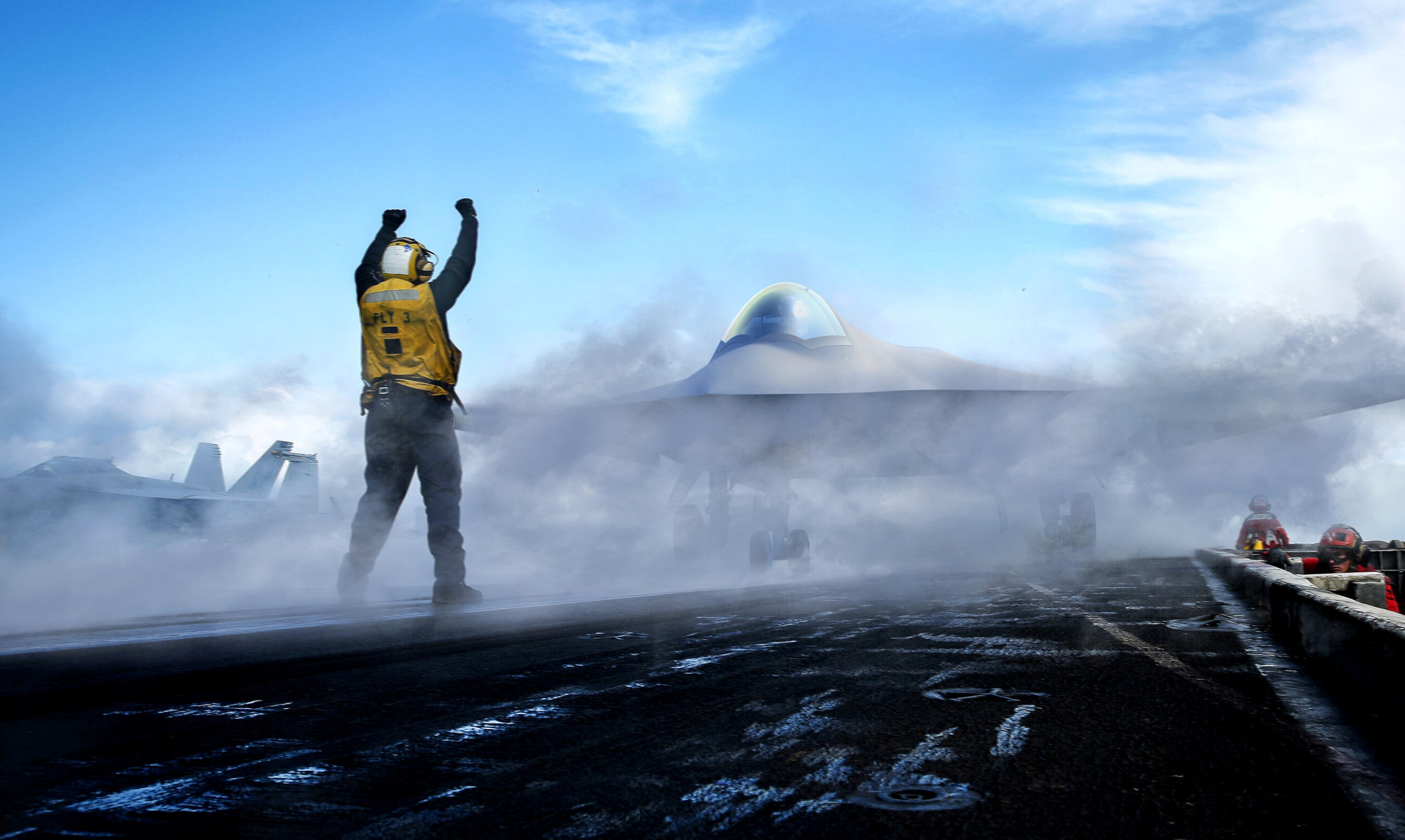
A six-paragraph news release at 5:01 pm on Tuesday was all that marked the launch of one of the biggest US Navy projects of the 21st century: the service had picked Boeing, over Northrop Grumman, to develop its future F/A-XX combat aircraft under a $20 billion contract. From the mid-2030s, the F/A-XX will replace F/A-18 Hornet fighters and EA-18 Growler electronic attack aircraft.
Incredulity was the main public reaction, for understandable reasons. It was known that the F/A-XX competition was down to Boeing and Northrop Grumman. And Boeing had beaten Lockheed Martin in March 2025 in the contest to build the Air Force’s F-47 Next Generation Air Dominance (NGAD) aircraft, so giving it the F/A-XX program would mean, most unattractively, putting all the Pentagon’s fighter-development eggs in one basket.
So the first question is: why would the Defense Department do this? Lockheed Martin has enjoyed a near-monopoly position since its plump cuckoo-chick, the F-35 Lightning, tossed its last rival, the Boeing F/A-18E/F Super Hornet, out of the nest. Even now, the long-troubled F-35 program is suffering computer problems that have left new aircraft only partially capable since 2023.
The second question: Boeing?! The company’s military division, Boeing Defense and Space, hasn’t exactly been hitting a lot of home runs lately. Its KC-46 Pegasus tanker program has been a sad story, and its T-7 Red Hawk trainer is following a pathway that looks rocky, at least. Next, its revival of the E-7 Wedgetail air-surveillance aircraft for the 2030s and beyond seems to be harder than developing a new type.
So how has the navy set aside concerns about the performance of Boeing Defense and Space? Well, for the most part, the division has not gooned up navy programs. The Super Hornet and Growler have kept the navy’s air wings credible despite the delays and deficiencies of the F-35C, while the Boeing P-8 Poseidon maritime patrol aircraft has gone smoothly. The navy does not give a hoot about US Air Force aircraft, and historically it has liked working with navy-experienced primes (and, sorry, the Grumman name, for fighters, is history).
But tucked away in California’s South Bay suburbs is something the navy does care about: Northrop Grumman’s Sunnyvale plant, which makes the steam turbines for America’s nuclear submarines. In 2024, the navy disclosed that Sunnyvale issues were responsible for a 12 to 16 month delay in the completion of USS Columbia, first boat of a new ballistic-missile submarine class. Washington sources say that the navy wasn’t happy with the USAF-focused prime’s response.
Boeing’s F-47 win will have been a positive, as well as negative, factor.
Despite classification, enough has been said to tell us that F/A-XX is not a derivative of the F-47. As I discussed in an earlier Strategist article, the F-47 is large and expensive, and the USAF may acquire between 200 and 300 aircraft of the type. The navy needs to build 30-plus fighters a year to keep its air wings filled. This, and the fact that the two aircraft are separate programs, mean that, thankfully, we’re not looking at another multi-service program like F-35.
But the Aerospace Innovation Initiative (AII) started in 2015 by Frank Kendall, president Barack Obama’s Pentagon acquisition boss, was aimed at supporting both services, and it’s a fair guess that the F-47 and F/A-XX use a lot of common technology.
Since there was an 18-month gap between the choice of contractors, Boeing had the F-47 in the bag before making its final navy bid. So it could offer the advantage of using the F-47 program to break ground and reduce risk for the F/A-XX, particularly with regard to systems integration and software.
Boeing is developing the F-47 on a brand-new campus at St Louis with facilities and workforce that it could share with the F/A-XX. This includes high-end simulation. And it has Midwest costs for labour, land and construction. I would have absolutely hated to have been the Northrop Grumman exec who tried to shape a competitive bid against that.
Another factor applies to both Boeing wins: the company is twice Northrop Grumman’s size and is the largest US exporter. For the navy, the 800-pound gorilla is nice to have on your side, especially if you want to keep your program funded amid debate over replacing your supercarriers with drones.
Then there’s the big factor we can’t see: the relative performance and risk of the Boeing and Northrop Grumman designs. Boeing may simply have proposed a much better fighter.
One risk for the F/A-XX and F-47 is that the government – political and administrative – will be no more able to control this double-headed monster of a fighter development effort than it has been for the F-35. You want a powerful, professional project office. Ideally, you want people well compensated enough that they’re not thinking of going to industry when they retire. Does anyone in DoD leadership today understand this?
Another thing that I’m not sure that DoD leadership understands: US fighter exports. If the F-47 and F/A-XX really need to be as secret as they are, they’re not exportable, and there’s no replacement for the main current exportable US type, the F-35. And if DoD leadership chuckles and says that’s a 2050 matter, I have a bridge to sell them. Foreign F-35 operators will be looking for replacements well before then.
Finally, there is one extraordinary story to be told about the revival of Boeing’s fighter organisation in St Louis, which was once notorious because most of its later products – the Hornet, Harrier and Goshawk – had their roots in other companies. I told part of that story in another Strategist article. Somehow, the late Alan Wiechman – the most important aerospace engineer you’ve never heard of – kept his team and his projects together – through the loss of the Joint Strike Fighter competition in 1996, the rise and demise of the early uncrewed combat aircraft projects in the 2000s, and Northrop Grumman’s B-21 bomber win, to set them on a path to victory.
