


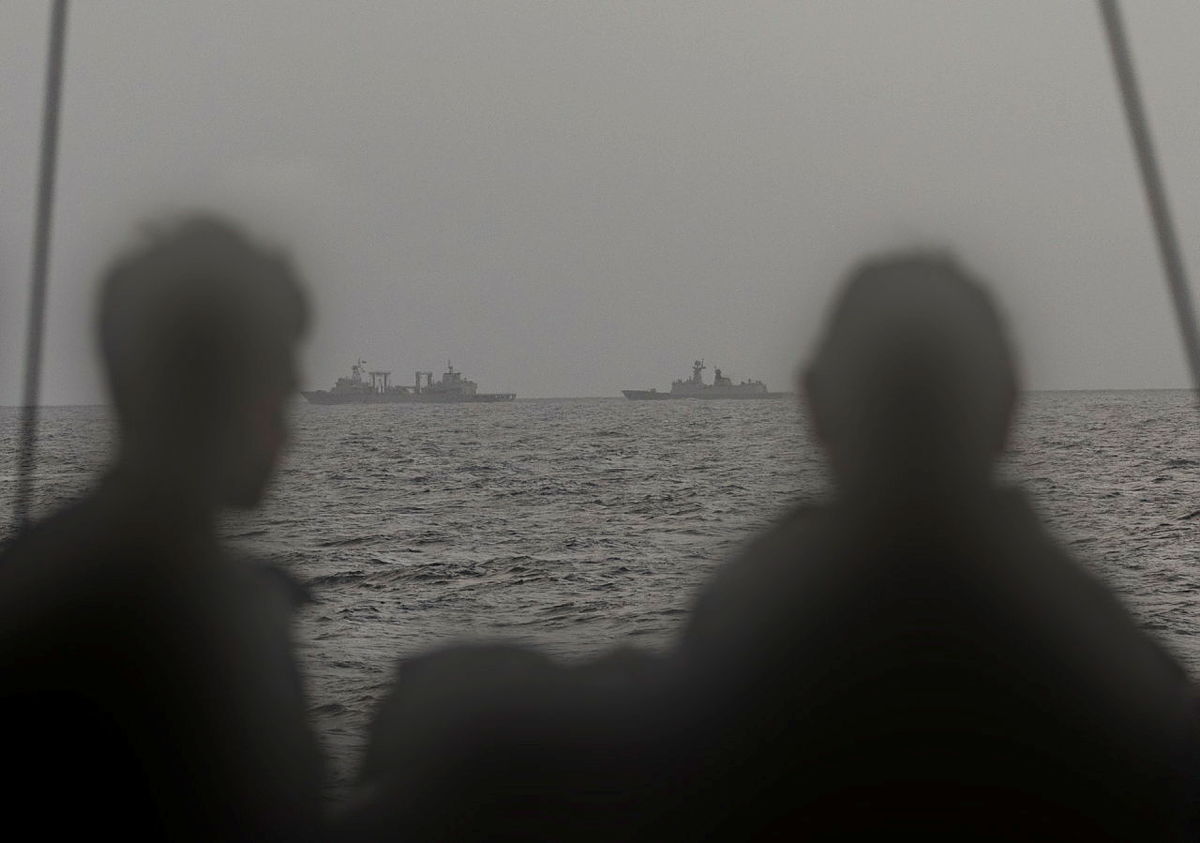
If war over Taiwan erupts, Australia could face elements of the People’s Liberation Army Southern Theater Command. While we often talk in generalities about defending Australia and our northern approaches, it’s the Southern Theater Command we need to watch most closely.
In such a war, China could use the parts of the command – such as submarines, surface ships and bombers – to disrupt operations from Australia, halt seaborne trade and interdict Australian and allied operations in the archipelago to the north. Centrally held assets, such as missiles and cyber and space capabilities could also contribute. I examine this in an ASPI report issued today.
Guangzhou-based Southern Theater Command has responsibilities extending into the South China Sea, adjacent to Australia’s primary area of military interest. Understanding it can assist Australia in strategic planning and the development of capabilities to counter military activity against the country. Such detail is also important for informing Australians about the effort China is putting into boosting its defence capabilities to secure its strategic objectives. At the same time, the information would help reassure the public that Australia has a strategy to prevent or manage the threat.
Australia’s 2026 National Defence Strategy (NDS) describes China as the primary driver of changes in Indo-Pacific security and points to flashpoints such as the Taiwan Strait as areas where miscalculation could lead to conflict. A conflict between the United States and China over Taiwan would be particularly consequential for Australia. Our vital trade to and from North Asia (including with Taiwan) would be disrupted. If China were to win, a vibrant democracy of 23 million people would be lost and the regional balance of power would tip towards Beijing.
While some continue to argue that Taiwan isn’t a vital Australian interest, neither disrupted trade, invasion of neighbours by large states nor a Sino-led regional order is in Australia’s interest. The notion that countries such as Australia and Japan could ignore a Chinese invasion of Taiwan is akin to saying European nations could have ignored Russia’s invasion of Ukraine.
Maintaining peace and preparing for conflict are in Australia’s interest. Both require a strong defence capability. The NDS is understandably inexplicit about the threats Australia needs to deter and potentially defend against, but outlining what those broad threats might practically look like could help Australians understand the size, shape and cost of the defence capability the NDS seeks to build.
While most reporting on a potential regional conflict references a broad US-versus-China contest, it’s worth looking at the specific roles of PLA commands and their likely responsibilities in a conflict over Taiwan.
A major conflict between the US and China over Taiwan (not just a blockade or quarantine of the island) would constitute a national effort for China and its armed forces. While the PLA’s Eastern Theater Command has primary responsibility for Taiwan, the other four Theater commands would all contribute capability and assets to the effort. Among them, the Southern Theater Command is most likely to contribute directly against Taiwan, because of its proximity and the weight of its maritime and air capability. But a minority of its strength (supplemented by centrally held cyber, space and missile assets) could operate in the South China Sea and further south towards Australia with the aim of disrupting any potential intervention from the south. In that event, actions that the Southern Theater Command could take include:
—Early long-range dissuasion or disruption of allied military operations from Australia using cyber or missile attacks on infrastructure supporting those operations. Use of Chinese military space capabilities to disrupt command and control could also complicate mustering a response from Australia.
—Threatening Australia’s sea lines of communication. If US forces, assets and logistics were to flow into Australia for follow-on operations in Taiwan, a handful of Chinese submarines in our eastern approaches would hamper that potential force flow. Similarly, off our west coast, a few Chinese submarines could hold at risk the vital supply lines that keep the nation operating.
—Disruption of allied operations through the northern archipelago. If Australian or allied forces were operating from Australia through the archipelago to our north, Southern Theater Command bombers and refuelled fighters, submarines and surface combatants could attack them in the narrow passageways through the archipelago.
The NDS has diagnosed the right problem, and its accompanying spending plan, the Integrated Investment Program, is providing broadly the right solutions. However, more detailed and clearer conversations about the problem would make the solution easier for the Australian public to understand, particularly in the face of influential voices arguing that Australia could just calmly watch if regional conflict were to erupt. Australia should be open about the threat, what effects it could suffer and the country’s role in regional security – not to cause fear, but to provide reassurance.
