


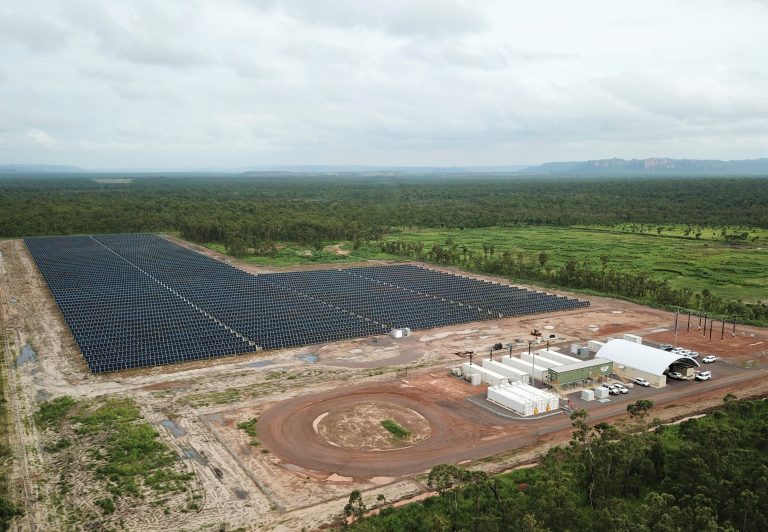
Australia’s next major data centre opportunity may lie where developers can build their own power supply. As established data centre markets struggle to connect large new facilities to their electricity grids, the Northern Territory has a case worth examining.
For Australia, the opportunity is to attract investment while broadening the geography of the digital infrastructure that its economy increasingly depends on.
The constraint shaping the decision to build data centres is increasingly electricity supply. Ireland restricted new data-centre connections because of pressure on its power system. Singapore imposed a moratorium on data centre development before reopening limited capacity in controlled blocks. Neighbouring Johor, Malaysia, absorbed some of the overflow from Singapore and hit its own power and water constraints. Capital can move between countries much faster than electricity networks can expand.
That creates an opening for northern Australia, although geography alone will not win a customer. Darwin has subsea and terrestrial connections for data centres to serve regional markets. Proponents would still need to demonstrate the latency, capacity and route diversity a particular customer required. A location suited to one computing workload will not necessarily suit another.
The territory’s energy proposition deserves equally careful treatment. It’s far from the eastern and southeastern Australian grid, which therefore can’t be further burdened by data centres in the territory nor practicably extended for them. An opportunity therefore arises from necessity: developing dedicated electricity generation alongside a data centre. This would rely on the territory’s two outstanding energy sources – solar and gas.
There is a trade-off. An independently powered facility cannot assume the local grid will rescue it when power generation fails. Darwin’s modest network cannot backstop a supply for a gigawatt-scale development. Proponents must build and price the redundancy, fuel security and operating capability needed to keep the facility running. Avoiding the wait for a grid connection transfers full responsibility for reliable power to the project.
Still, generation equipment must be secured, land access agreed and environmental requirements met. Investors will need evidence that dedicated generation can reach operation sooner than a grid connection and meet reliability requirements at a competitive whole-of-project price.
Territory solar and gas could underpin that proposition, with generation developed alongside demand. Gas production in the Beetaloo Sub-basin, close to the middle of the territory, is only at pilot stage. Data centre developers can’t rely on it until some gas project proponent can sign a supply contract and show a reliable plan for delivery. Developers also need a credible decarbonisation pathway, including how the generation mix can change over the facility’s life.
Water and community confidence require similar discipline. Air-cooled and closed-loop cooling can substantially reduce water use, but this depends on the design and operating conditions of the data centre. Proponents should declare how much water they’d use and where it would come from, and they should demonstrate how they’d monitor its use. Planning must account for existing water users and environmental limits before construction begins. Community confidence will also depend on credible local benefits and agreements with traditional owners.
The national interest extends beyond attracting a new investment. Computing capacity in northern Australia could diversify the hosting of nationally important digital services and could support closer connections with regional markets. Those benefits depend on secure operations and resilient communications as well as reliable electricity. They should be assessed explicitly when governments consider the infrastructure supporting these projects.
The immediate government task is to ease investment in viable data centre proposals. That means coordinating approvals for power generation and data centre development, resolving land tenure and water requirements early and clarifying how the project’s proposed energy mix will be assessed. Proponents need to know what evidence is needed and when decisions can reasonably be expected. Speed should come from coherent processes and timely decisions, with investors carrying commercial risk.
The government should test the case for data centres in northern Australia by asking whether private capital can deliver a competitive project when investors are given timely, coordinated approvals but bear the project’s commercial risk. The Northern Territory’s pitch should be offering certainty and efficient approvals, with public expenditure considered on its own merits rather than assumed to be the price of attracting investment.
This opportunity won’t last forever. Competing jurisdictions will expand grids and adapt policies, which will reduce the Northern Territory’s possible advantage of quick power supply. Australia should give credible territory proposals a clear path to a decision while that advantage matters.
