
LIVE NEWS
  • Pentagon, Boeing agree to triple PAC-3 seeker production
  • Fossil reveals that an early relative of spiders had claws
  • As Israel invades south Lebanon, many worry they’ll never go home : NPR
  • Fed’s Barr Calls for Stronger Stablecoin Oversight
  • Depthfirst Raises $80 Million in Series B Funding
  • Bitcoin climbs to $68k as Trump spurs Iran de-escalation hopes By Investing.com
  • U.S. Is Weighing Leaving NATO, Trump Says
  • My Dad Always Said We Don’t Have Tomorrow. I Finally Listened.
Prime Reports
  • Home
  • Popular Now
  • Crypto
  • Cybersecurity
  • Economy
  • Geopolitics
  • Global Markets
  • Politics
  • See More
    • Artificial Intelligence
    • Climate Risks
    • Defense
    • Healthcare Innovation
    • Science
    • Technology
    • World
Prime Reports
  • Home
  • Popular Now
  • Crypto
  • Cybersecurity
  • Economy
  • Geopolitics
  • Global Markets
  • Politics
  • Artificial Intelligence
  • Climate Risks
  • Defense
  • Healthcare Innovation
  • Science
  • Technology
  • World
Home»Science»Fossil reveals that an early relative of spiders had claws
Science

Fossil reveals that an early relative of spiders had claws

primereportsBy primereportsApril 1, 2026No Comments3 Mins Read
Share Facebook Twitter Pinterest LinkedIn Tumblr Reddit Telegram Email
Fossil reveals that an early relative of spiders had claws
Share
Facebook Twitter LinkedIn Pinterest Email

A stunningly preserved fossil shows that early relatives of spiders and scorpions were already armed with their hallmark front claws about half a billion years ago.

The newly described animal preserves the oldest clear example yet found of these specialized appendages, paleontologist Rudy Lerosey-Aubril and colleagues report April 1 in Nature. The find helps settle a long-standing debate over how the claws evolved and shows that chelicerates — the group that today includes  horseshoe crabs, ticks and daddy longlegs — had already taken on a surprisingly modern body plan.

Sign up for our newsletter

We summarize the week’s scientific breakthroughs every Thursday.

“This creature is super-modern in anatomy for an animal that is 500 million years old,” says Lerosey-Aubril, of Harvard University.

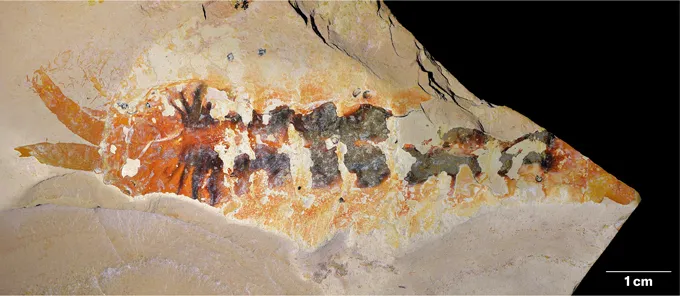
The fossil’s obvious pincers sit on a pair of appendages beside its mouth. In modern chelicerates, those appendages, called chelicera, have evolved to do different jobs. In spiders, they have become fangs, sometimes used to inject venom. In scorpions, they are small mouthparts used in feeding.

Younger fossils clearly show clawed chelicera, but earlier candidates had not preserved them. That left open the possibility that the structures evolved from the sensory antennae seen on insects, a related animal group. Instead, the new fossil’s well-developed claws suggest that chelicera evolved from the grasping “great appendages” seen on some earlier arthropods, Lerosey-Aubril says.

A fossil preserves the outline of a small, segmented arthropod with multiple appendages along its body.
The fossil of a 500-million-year-old spider relative (shown) clearly show appendages ending in claws near its mouth.Rudy Lerosey-AubrilThe fossil of a 500-million-year-old spider relative (shown) clearly show appendages ending in claws near its mouth.Rudy Lerosey-Aubril

The creature probably lived in a primeval sea. Its shape and the location it was found in suggest it swam close to the seafloor, where it may have used its chelicera to lift animal prey — probably primitive worms — to its mouth.

“It’s a very nice fossil,” Lerosey-Aubril says. “What’s amazing is that it’s been in our collection for decades.”

The hand-sized specimen was found in the early 1980s at Utah’s Wheeler Formation, famous for its remains of the early sea creatures called trilobites. But little could be seen of it until recently, after Lerosey-Aubril spent weeks carefully removing the grains of overlying sediments to reveal the ancient critter in all its horrible glory. The split shale it was encased in preserved views of both the top and underside of its body, helping researchers reconstruct how the animal looked when alive.

Questions or comments on this article? E-mail us at feedback@sciencenews.org | Reprints FAQ

We are at a critical time and supporting science journalism is more important than ever. Science News and our parent organization, the Society for Science, need your help to strengthen scientific literacy and ensure that important societal decisions are made with science in mind.

Please subscribe to Science News and add $16 to expand science literacy and understanding.


Share. Facebook Twitter Pinterest LinkedIn Tumblr Email
Previous ArticleAs Israel invades south Lebanon, many worry they’ll never go home : NPR
Next Article Pentagon, Boeing agree to triple PAC-3 seeker production
primereports
  • Website

Related Posts

Science

Scientists discover hidden “winds” inside cells that could explain cancer spread

April 1, 2026
Science

This star-forming galaxy is blowing out powerful winds topping 2 million mph

March 31, 2026
Science

We need a credible plan for science funding in the UK | Science

March 31, 2026
Add A Comment
Leave A Reply Cancel Reply

Top Posts

Global Resources Outlook 2024 | UNEP

December 6, 20257 Views

The D Brief: DHS shutdown likely; US troops leave al-Tanf; CNO’s plea to industry; Crowded robot-boat market; And a bit more.

February 14, 20264 Views

German Chancellor Merz faces difficult mission to Israel – DW – 12/06/2025

December 6, 20254 Views
Stay In Touch
  • Facebook
  • YouTube
  • TikTok
  • WhatsApp
  • Twitter
  • Instagram
Latest Reviews

Subscribe to Updates

Get the latest tech news from FooBar about tech, design and biz.

PrimeReports.org
Independent global news, analysis & insights.

PrimeReports.org brings you in-depth coverage of geopolitics, markets, technology and risk – with context that helps you understand what really matters.

Editorially independent · Opinions are those of the authors and not investment advice.
Facebook X (Twitter) LinkedIn YouTube
Key Sections
  • World
  • Geopolitics
  • Popular Now
  • Artificial Intelligence
  • Cybersecurity
  • Crypto
All Categories
  • Artificial Intelligence
  • Climate Risks
  • Crypto
  • Cybersecurity
  • Defense
  • Economy
  • Geopolitics
  • Global Markets
  • Healthcare Innovation
  • Politics
  • Popular Now
  • Science
  • Technology
  • World
  • About Us
  • Contact Us
  • Privacy Policy
  • Terms & Conditions
  • Disclaimer
  • Cookie Policy
  • DMCA / Copyright Notice
  • Editorial Policy

Sign up for Prime Reports Briefing – essential stories and analysis in your inbox.

By subscribing you agree to our Privacy Policy. You can opt out anytime.
Latest Stories
  • Pentagon, Boeing agree to triple PAC-3 seeker production
  • Fossil reveals that an early relative of spiders had claws
  • As Israel invades south Lebanon, many worry they’ll never go home : NPR
© 2026 PrimeReports.org. All rights reserved.
Privacy Terms Contact

Type above and press Enter to search. Press Esc to cancel.