


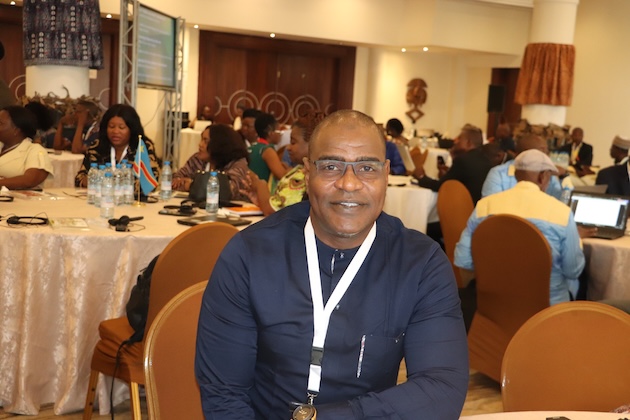
Credit: Isaiah Esipisu/IPS
YAOUNDE, Cameroon, September 29 (IPS) – Agricultural, land, forestry, environmental and trade policies in the Congo Basin remain compartmentalised at country levels, leaving proven agroecological models trapped at pilot stages due to a lack of advisory services, organic inputs, market outlets and sustainable financing.
In a declaration made following the Second Congo Basin Convening on Agroecology held in Yaounde, Cameroon, in August 2026, experts and activists, as well as government representatives, observed that the Congo Basin does not end at the borders of its six countries.
“The trade corridors, timber and charcoal markets, mining, energy and infrastructure investment, transhumance and pastoral movement, displacement and refugee flows, and shared river systems mean that the decisions of neighbouring states and regional bodies can protect the basin or degrade it, and that coherence between them is a condition of success,” reads part of the Yaounde Declaration 2026.
“In several countries as well, agricultural, land, trade, environmental, and fiscal policies are not sufficiently aligned,” noted Mohamed Abakar, Head of Agriculture, Food and Nutrition at the Economic Community of Central African States (ECCAS).
“Some policies for example, continue to favour use and sometimes offer subsidies on conventional inputs without offering comparable support for bio-fertilisers, bio-pesticides, indigenous seeds, or ecosystem services,” he observed.
He called on countries within the basin to adopt a regional framework for agroecology and organic farming and integrate it into the Common Agricultural Policy (CAP) and the Regional Agricultural Investment Plan (RAIP).
“Our ambition is not merely to change the way we produce; it is to build sustainable agrifood systems in the Central Africa region, capable of sustainably feeding populations, boosting rural incomes, creating decent jobs, and preserving the Congo Basin,” said Abakar.
The region, in particular the Congo Basin, hosts the largest continuous tract of forest in Africa that regulates the global climate. But according to the UN Food and Agriculture Organisation (FAO), industrial agriculture in different states has been cited as one of major threats to these forests, apart from extractive industries and infrastructure development.
According to the recent World Bank report titled the Congo Basin Forest Ecosystem Accounts report and Policy Recommendations, forests in the region store over 90.9 billion tonnes of carbon, ten times the annual global carbon dioxide emissions from the energy sector, making the basin one of the planet’s most critical natural carbon sinks.
Yet, the entire ecosystem is under direct threat. Forest loss nearly doubled between 2010 and 2020 compared to the previous decade, driven by shifting agriculture, infrastructure, and mounting land pressures.
During the convening in Yaounde, the delegates affirmed that adopting ecological farming models can sustain farmer incomes, protect biodiversity, and lead to food sovereignty while conserving the forests and the entire ecosystem.
Through the Yaounde Declaration, the delegates called upon Member States and the African Union Commission to write ‘agroecology’ by name in the domestication of CAADP so that National and Regional Agriculture and Food Systems Investment Plans carry explicit agroecology objectives, indicators and budget lines, with at least 30 per cent of allocations across the sectors that shape food systems dedicated to agroecology.
The Kampala Declaration of the Comprehensive African Agricultural Development Programme (CAADP) speaks to achieving sustainable agrifood systems transformation but fails to explicitly recognise agroecology.
“We urge technical and funding partners, including the Green Climate Fund, the Global Environment Facility, Central African Forest Initiative, the Blue Fund for the Congo Basin and the African Development Bank, to open simplified direct-access windows so that at least 20 per cent of climate, biodiversity and conservation finance flowing into the basin reaches farmer organisations, women, youth, Indigenous Peoples and local communities, and to fund multi-year core support rather than short projects,” said Dr Million Belay, General Coordinator at the Alliance for Food Sovereignty in Africa (AFSA).
“We are also asking Regional Economic Communities to adopt a regional agroecology framework within the Common Agricultural Policy of Central Africa and the COMIFAC Convergence Plan, and to establish a standing channel with the EAC, SADC and COMESA on the trans-boundary drivers of deforestation, including timber and charcoal trade, mining and infrastructure corridors, transhumance and displacement,” he said.
Abakar told IPS that ECCAS is progressively integrating agroecology into a broader vision for the sustainable, resilient, and competitive transformation of agrifood systems, both across Central Africa in general and within the Congo Basin in particular.
“This approach is grounded, first and foremost, in the revised ECCAS Treaty,” he said. “Article 63 of the revised Treaty commits member states to harmonising their agricultural policies, improving food production in terms of both quantity and quality, sharing research findings, developing joint training programs, and enhancing the ability of rural populations to master the technical and economic environment.”
At country levels, Ghada Kames Kill, a a Member of Parliament from South Sudan, told IPS that the country is in the process of enacting a law that will safeguard indigenous seeds, among other agroecological practices.
“Most of the seeds grown in South Sudan are imported, and in many times the quality is compromised.
With the right policies, our communities should be able to produce their own seeds that are adopted to their environment,” she said. In Cameroon, Law No. 2025/013, promulgated by President Paul Biya on December 17, 2025, establishes a national legal framework to regulate, promote, and develop sustainable agriculture that respects the environment, human health, and biodiversity.
The Central African Republic has developed the National Multi-Stakeholder Food Systems Platform that promotes local production of biofertilisers and soil restoration models, while the Democratic Republic of Congo has a dedicated agroecology service and national strategy.
For the Congo Basin, the solution lies in harmonised regional policies rather than in isolated, short-lived national projects.
IPS UN Bureau Report



© Inter Press Service (20260929115845) — All Rights Reserved. Original source: Inter Press Service
