

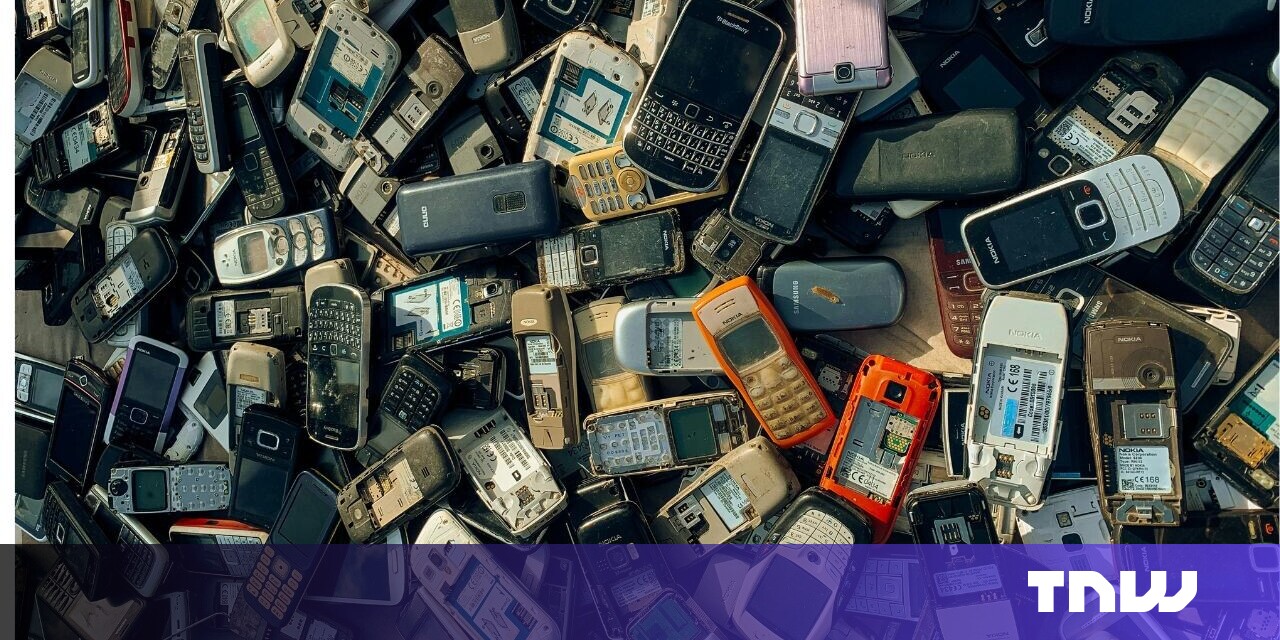
E-waste has become a global problem. Unfortunately, the majority of discarded used technology, known as e-waste, is dumped or processed in unsafe conditions. Around 78% of electronic products aren’t properly recycled — and the garbage pile keeps growing.
In 2024, the world churned out 1.22 billion smartphones. Add this to the billions of TVs, laptops, and computers, and what we have is a saturated market that fuels a throwaway cycle.
A United Nations report forecasts that e-waste will grow to 80 million tonnes by 2030. “That’s enough to fill 1.5 million 40-ton trucks, which could circle the planet,” says Eric Ingebretsen, Chief Commercial Officer at SK Tes, which runs 40 global IT Asset Disposition (ITAD) sites and processes hundreds of millions of pounds of electronics annually.
Clearly, the world urgently needs e-waste projects that can reverse the global situation — while driving business.
A Danish robotic solution
At the Danish Technological Institute, researchers are building an AI-driven robotic system that could help tackle e-waste while scaling, modernising, and empowering the tech refurbishment industry.
TNW received a demo of the project from Mikkel Labori Olsen, a consultant in robotics technology at the institute and researcher on the RoboSAPIENS project, which aims to make robot-human interaction safer. His team is developing a robot that automates laptop refurbishment, creating a revenue stream while reducing e-waste.
The system is equipped with a robotic arm, a dedicated toolbox, and a camera. It’s trained to replace laptop screens — a manual and time-consuming task that local businesses struggle to find workers for due to the tedious processes involved, Olsen said.
Olsen and his team have already trained the robot to replace screens of two laptop models and their submodels. They’re now hard at work to expand the robot’s screen disassembly capabilities to more laptop models and brands.
The robot combines AI and visual recognition to adapt to different laptop types, remove the plastic protectors, unscrew the screens, and carefully remove them. A recent video showcases it in action.
“We can drastically reduce waste if instead of throwing a perfectly useful laptop out, we just change the screen and then sell it again,” says Olsen.
The business value of e-waste
Depending on the region, laptop model, and other circumstances, a refurbished laptop can be sold for about €200, while the material value of a recycled laptop — obtained by grinding down the entire device — is only about €10, says Olsen.
“The essence is that by changing a few components, and especially a few simple components, you can make a lot of value from it instead of just selling the recycled components,” he adds.
However, training the AI that powers systems such as Olsen’s is challenging. If the robot encounters unexpected events that weren’t in its data set, it may struggle to complete tasks. Even small details like different colours of screws could require new AI training to expand the data set on which the system relies.
These unexpected events are the reason why robotic systems in the technology recycling industry must include humans-in-the-loop, says Olsen. They could address any problems the robot flags.
Why is e-waste an untapped billion-dollar industry?
The value of e-waste is incredibly high. A tonne of discarded smartphones yields more gold than a tonne of mined gold ore, according to a report by the Astute Group.
“In addition to gold, components like copper, silver, palladium, and rare earth metals are critical for manufacturing the technology hardware that the world demands,” says Ingebretsen from SK Tes.
However, most of the e-waste is never recovered. But why aren’t the tech industry or other sectors tapping into this market?
According to Olsen, the field is yet to be recognised globally as one with significant value. However, companies are slowly waking up to the potential of e-waste robotic recycling.
Another factor holding back the technology is cost. “Robots and automation are expensive and complex”, says Olsen.
An additional challenge is the overwhelming diversity of hardware, components, devices, model variations, and states of e-waste products when they’re found
This causes issues when building robotic systems that can adapt to different e-waste devices without hitting snags. AI that can do this is highly advanced and largely still in research and development.
Modern tech problems — and solutions
As technology becomes more compact, manufacturers are radically changing how they build devices. They often glue components together instead of using screws, making disassembly and recycling without damaging components very difficult.
Despite these challenges, Olsen is optimistic. He’s impressed by the progress being made by local, European, and international companies, which are levelling up their game to either refurbish tech or recycle components.
In Denmark, companies such as Tier 1A, Refurb, and Greenmind show refurbishment can be a scalable business model- “Some of these companies are aiming to refurbish up to 2,000 units per day,” Olsen says.
Olsen and his team plan to continue expanding the capabilities of their robotic system. The goal is for it to recognise many different laptop models and submodels. Ultimately, they want to build a ready-for-production robotic system that supports local Danish tech refurbishment businesses.
His optimism makes sense: robotics is set to reshape the future of e-waste management and reuse. From Denmark to global recycling operations, AI-powered systems are being developed to identify, sort, and dismantle devices with precision.
These robots will enable the automation of hazardous and labour-intensive tasks and enhance safety and efficiency. They’ll also unlock the hidden treasure trove of e-waste.
