

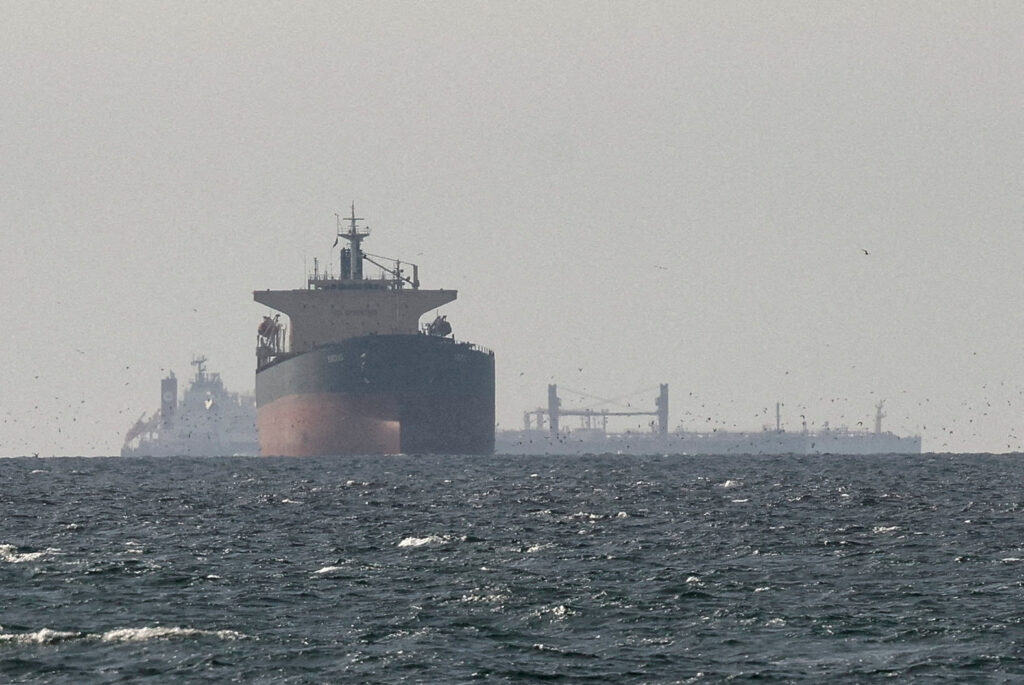
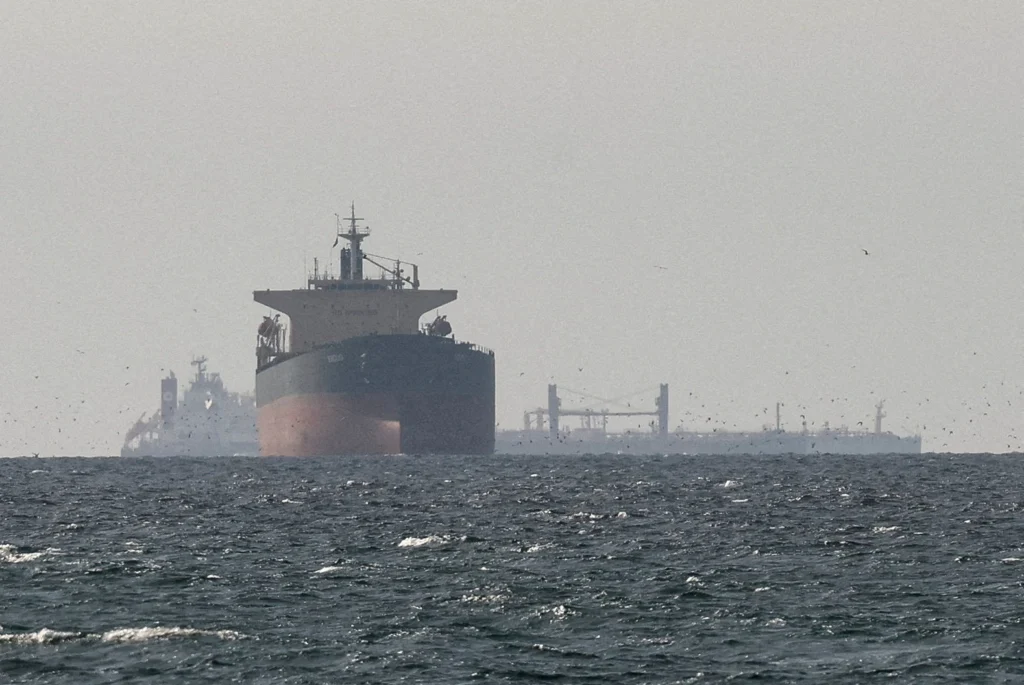
The war in Iran and the effective closure of the Strait of Hormuz have plunged global energy markets into deep uncertainty, disrupting critical oil and gas flows and accelerating structural shifts in how governments and industry approach energy policy, trade, and security.
In some regions, the effects are already acute. Southeast Asia faces fuel shortages and rationing that threaten industrial activity. China is managing domestic stockpiles while balancing exports to key trading partners, exposing vulnerabilities across its supply chains. Europe is confronting soaring energy costs that strain households and industry, heighten inflationary pressures, and force policymakers to trade off short-term relief with long-term transition goals. Africa grapples with higher fuel and fertilizer prices that exacerbate food insecurity, even as the conflict opens opportunities for oil, gas and infrastructure investment. Meanwhile, in the Western Hemisphere, the crisis is creating new opportunities for energy producers across the United States, Canada, Brazil, and Guyana to expand production and attract investment as demand for secure, diversified supply intensifies.
In this article, our experts explore how this conflict could both drive near-term demand adjustments and longer-term structural shifts in energy markets, infrastructure, and policy across key regions, highlighting how different economic exposures and policy choices shape global energy resilience in the wake of the Iran crisis.
Click to jump to an expert analysis:
- After Iran, does energy dominance mean the Western Hemisphere vs. the Rest?
The global oil supply shortages triggered by the conflict in the Middle East could create a strategic opportunity for energy producers in the Western Hemisphere that are well positioned to benefit from a renewed global emphasis on energy security and supply diversification. - Southeast Asia’s energy shortages will have implications for future LNG demand
The Strait of Hormuz crisis could result in the largest energy shock of the modern era for Southeast Asia—and it could lead the fast-growing region to reevaluate its long-term energy import strategy. - The Iran war poses risks and opportunities for China’s oil and gas security
Chinese oil and gas markets were relatively well-supplied prior to the start of US-Israeli strikes on Iran. Still, the longer the resulting energy crisis persists, the greater damage China will face. - In Europe, today’s energy affordability crisis creates tension with long-term energy strategy
The conflict in the Gulf has exposed Europe’s vulnerability to global oil and gas price shocks. Short-term relief measures risk delaying the energy transition, deepening political fragmentation, and boosting Russia’s leverage in global energy markets. - The war in Iran could present new opportunities for Africa in the global energy landscape
Africa is facing rising fuel and fertilizer prices that are worsening food and economic security. But the crisis also has the potential to reshape Africa’s commercial ties to the world and transform its role in global energy markets.
1. After Iran, does energy dominance mean the Western Hemisphere vs. the Rest?
As the world struggles against the volatility induced by the latest Middle Eastern oil crisis, the Western Hemisphere (while not immune to these risks) is poised to benefit for years to come. But those opportunities for the hemisphere’s energy producers are not evenly distributed. Established and emerging energy producers—like the United States, Brazil, Canada and Guyana—stand to gain from a renewed focus on energy security and diversification of supply. But others—like Mexico and Venezuela—could miss the wave of renewed opportunity.
Crude oil supply shortfalls are estimated at around 12 million barrels per day as the Strait of Hormuz remains strangled, resulting in a global supply shortage nearing 400 million barrels. Global natural gas supply, meanwhile, has been massively undercut with Qatari liquefied natural gas (LNG) offline and LNG prices swelling as high as 143 percent in Asia. The Americas are somewhat insulated against these dramatic price increases (evidenced, for example, in the wide spreads between West Texas Intermediate and Brent crude oil prices, and likewise that between Henry Hub natural gas and soaring European TTF prices). With energy supply shortfalls worsening by the day, Western Hemisphere energy producers stand to benefit tremendously—both in the immediate term, and perhaps more so looking ahead to a world with a heightened anxiety around energy (in)security.
The short-term advantages are obvious for all the hemisphere’s energy producers: As global oil prices rise to a premium, they (unlike now-stranded Middle Eastern producers) can enjoy unprecedented market share, maximize available production and therefore profits. LNG exporters, especially those in the United States, are shipping cargoes as fast as their infrastructure allows amid fierce competition for available molecules.
But, while the Iran endgame is deeply uncertain, it’s worth asking now: Who benefits in the long term? Can the Western Hemisphere’s energy producers remain attractive long after some version of status quo returns to the Persian Gulf? To be sure, the lingering structural uncertainty over the security of Middle Eastern energy infrastructure and the lasting vulnerabilities to shipping through the Strait of Hormuz could create opportunities for countries with large-scale resources outside the Gulf to attract new investment in both the upstream and broader infrastructure. The appeal would be redoubled if Iran proceeds with its stated plans to maintain control over the strait in the form of tolling—a risky proposition for all energy importers dependent on the passageway’s viability. Whatever plans there may be to prioritize homegrown energy—renewables, nuclear, and more—the world’s major economies will require affordable access to both oil and natural gas for the foreseeable future.
The winners, in this perspective, are those producers that already offer functional, well-regulated energy sectors governed by the rule of law and contract sanctity, in addition to substantial and recoverable resources. The United States will remain attractive both for oil and gas production because it is a short-cycle investment with rapid, stable returns. Shale oil and gas investors have vowed to maintain capital discipline despite the current boom cycle, which could amplify the sector’s appeal, and the US LNG industry is poised to fill the gap left by extensive, multi-year damage to Qatari LNG facilities. Canadian oil and gas producers, meanwhile, enjoy the security of the US pipeline system for most of their own exports and could now consider expanding the new oil export pipelines to that country’s West Coast—a previously difficult proposition that may be far more enticing in the aftermath of this latest Persian Gulf crisis. Guyana, a rapidly-growing South American oil producer, offers both a prolific resource base and an increasingly mature, commercial upstream environment. Brazil is similarly well-positioned to remain a compelling investment destination, given that its deep-water oil production operates at relatively low costs and high volumes.
But others in the hemisphere could get left behind in a renewed rush to invest in the Americas. Mexico’s formerly prolific oil and gas industry has languished under years of indebtedness, chronic mismanagement and unhelpful interventions by the national government. Its national oil company, Pemex, will no doubt benefit enormously from the short-term lift in oil prices, but the Mexican energy sector is still too uncertain, state-dominated, and high-risk to compete for an influx of investor interest. So, too, Venezuela; despite the handover of the country’s government to new leadership earlier this year, the country’s operational, regulatory, and legal environment is widely considered still unsuitable for new entrants and transformational levels of investment. These insecurities, in addition to the country’s unfortunate history of expropriation of assets, may leave Venezuela unable to meaningfully benefit from a surge of interest in the American energy sectors.
As the world reimagines energy security after the Iran War crisis, the Western Hemisphere has much to offer and even more to gain. But the groundwork for doing so—effective, reliable and attractive operational and investment environments—must be laid now, not later.
David Goldwyn is president of Goldwyn Global Strategies, LLC, and chairman of the Atlantic Council Global Energy Center’s Energy Advisory Group.
Andrea Clabough is a nonresident fellow at the Atlantic Council Global Energy Center and an associate at Goldwyn Global Strategies, LLC.
2. Southeast Asia’s energy shortages will have implications for future LNG demand
The Strait of Hormuz energy crisis will unfold at different speeds across the world, but some of the first blows fell on import-dependent Southeast Asia. Fuel rationing and demand destruction have begun, and countries including the Philippines, Thailand, Vietnam, and Indonesia are encouraging conservation and contemplating emergency measures.
This could be the largest energy shock of the modern era for Southeast Asia. Indonesia and Malaysia are significant oil producers, and Malaysia is the world’s fifth-largest liquefied natural gas (LNG) exporter. But population growth, economic development, and declining domestic resources have turned several countries in the region into net oil and gas importers in recent years. Southeast Asia, along with India and China, is expected to be a key engine of energy demand growth in the coming decades. Already, governments across these highly varied economies faced challenges in planning for costlier oil and gas imports.
Direct energy imports from the Gulf are somewhat limited, but this does not tell the full story of the current energy crunch. Last year, the region imported 2.2 million barrels per day (b/d) from the Gulf, according to Kpler data. Crude oil and naphtha (a feedstock for petrochemicals production) accounted for nearly all of these imports. But crude and product prices in Southeast Asia reflect global market conditions, and soaring prices have already led to shortages.
Oil and gas analysts use the term “demand destruction” to describe the painful process of energy rationing. This is occurring across the region, as governments urge citizens to reduce energy usage and work from home to avoid travel. The Philippines declared a national energy emergency, forming a committee to consider allocation of fuel to critical industries. Thailand’s government has proposed a three-stage contingency plan for fuel rationing. Vietnam, which normally imports crude from Kuwait, is seeking alternative supplies. Indonesia is contemplating the fiscal pressure that will accompany costlier oil imports.
The Iran war also has implications for longer-term LNG demand in Southeast Asia. Until recently, market observers expected a sharp increase in global LNG supply this year, largely from the United States and Qatar. Many in the LNG industry hoped that, if an oversupplied market in the coming years produced lower spot prices, the upside would be increased competitiveness and market penetration for gas in Southeast Asia and South Asia, for end-uses including electricity generation. Now, the shutdown of Qatar’s entire LNG export capacity and the damage to two of its fourteen LNG trains (production facilities) at Ras Laffan could erase this oversupply, and even tip the market into deficit if the outage extends into July.
These events will shift expectations for LNG importers. The second global gas price spike in the past five years could make gas look riskier to importing states, including those such as Indonesia and the Philippines that still rely heavily on coal in power generation. Competition with coal and especially with renewable energy and battery storage solutions is likely to intensify.
Ben Cahill is a nonresident senior fellow with the Atlantic Council Global Energy Center and a Washington DC-based director of energy markets and policy at the University of Texas at Austin’s Center for Energy and Environmental Systems Analysis.
3. The Iran war poses risks and opportunities for China’s oil and gas security
Chinese oil and gas markets were relatively well-supplied prior to the start of US-Israeli strikes on Iran. Still, the longer the resulting energy crisis persists, the greater damage China will face.
Beijing prepared for an oil crisis, but is it enough?
China had 1.2 billion barrels of crude stored at the beginning of the war, enough to meet domestic consumption needs for 130 days, as long as it could prohibit petroleum product exports—a step it has already announced, with some exceptions. In addition, China can access Russian pipeline and seaborne import volumes via the East Siberia-Pacific Ocean pipeline and via Kazakhstan, which carries about 200,000 barrels per day of Russian crude to China. This supply adds about another 40 days of net supply for domestic consumption (author estimate).
But if Beijing continues to prohibit petroleum exports, key trade partners in Southeast Asia and Australia could suffer, especially from a shortage of diesel, fuel oil, and jet fuel. A resulting reduction in these countries’ industrial activity would end up severely disrupting the Chinese economy. Accordingly, Beijing may engage in what the analyst Alex Turnbull has referred to as “diesel diplomacy,” where China ships diesel and other refined products to energy-poor countries in the Indo-Pacific, securing its commercial interests while enhancing its geopolitical leverage.
The Association of Southeast Asian Nations (ASEAN) represents China’s largest trading partner but is energy poor; it is already implementing draconian energy rationing. In Thailand, for instance, energy conservation measures include work-from-home orders for civil servants; Vietnam is implementing fuel contingency plans. Singapore, meanwhile, is struggling to source sufficient fuel oil for shipping, with some industry sources wondering if the island nation could eventually face bunkering fuel shortages. With ASEAN countries absorbing more Chinese shipments than anywhere else, a regional economic slowdown would threaten Chinese exporters. Similarly, ASEAN’s lack of fuel might constrain its ability to produce commodities like copper, nickel, rare earths, and coal crucial for Chinese supply chains. For these reasons, while Beijing is largely prohibiting petroleum exports, it is issuing some exemptions to ASEAN countries. But China might soon need to expand its exemptions.
Australia’s role in Chinese supply chains is also vital, yet it also suffers from growing fuel shortages. Australia is the world’s largest exporter of lithium and iron ore, and a major exporter of coal; these commodities are vital for Chinese supply chains across batteries, electric vehicles, steel making, and in the power sector. But Australia is increasingly suffering from fuel shortages; in a worst-case scenario, it may not have enough diesel for mining operations. If China seeks continued access to Australia’s commodities, it may need to relax restrictions on petroleum product exports to this valuable trade partner.
If China expands its exports of petroleum products to ASEAN, Australia, and beyond—and it likely will—then Beijing will face tradeoffs between sending these commodities abroad and rationing domestic consumption.
Such a tradeoff will disproportionately impact petrochemicals feedstocks, such as naphtha, as well as bitumen (used for concrete) and other lower-value distillates. Many companies may begin to curtail consumption, although Beijing may seek to dominate certain segments of the petrochemical supply chain if competitors are forced out due to insufficient feedstock, inadequate electricity, or both.

Note: Includes total liquids consumption, including natural gas liquids. Sources: Energy Institute Statistical Review, Author’s calculations and analysis
Finally, political economy will loom large in any Chinese oil demand rationalization. Beijing is ordering private refineries to continue production at pre-war levels, for now, in order to maintain domestic fuel supply. If ultimately forced to constrict supplies, however, Beijing will seek to curtail operations at the independent “teapot” refineries concentrated in Shandong province. Beijing has long sought—largely unsuccessfully—to curtail excess capacity at these facilities. Moreover, if the United States moves into a post-sanctions world, China’s national oil companies—Sinopec, China National Petroleum Corporation, China National Offshore Oil Corporation—may be able to directly access previously-forbidden Russian, Iranian, and Venezuelan barrels, stripping away a competitive advantage that the teapots have previously enjoyed.
With respect to natural gas, China faces limited downside risks
China is much less vulnerable than other economies if there is a large, persistent global liquefied natural gas (LNG) outage. It is much less reliant on imports of pipeline natural gas or LNG than other economies, and it has significant domestic production and storage. Last autumn, China faced a natural gas supply glut, meaning its inventories are well-stocked; it is even using the opportunity to resell record volumes of LNG. Still, as with other countries, China will burn coal and deploy renewables to replace natural gas for power burn wherever possible. Accordingly, electricity-oriented LNG demand in southern China will fall. This is already occurring in Guangdong province, which is instituting caps on natural gas burn for the power market. Still, as the power sector constitutes only 18 percent of Chinese natural gas demand, there are limits to demand destruction; heating and industrial use cases will be harder to displace. Chinese cities will become dirtier due to gas-to-coal switching, all else equal, although the transition to electric vehicles will continue to reduce tailpipe emissions.
To bolster near-term natural gas security, China may seek additional overland pipeline natural gas supply, especially with Central Asia, but potentially also with Russia. In the first week of the crisis, Chinese Communist Party General Secretary Xi Jinping met with Turkmenistan strongman Gurbanguly Berdimuhamedow to discuss greater energy cooperation. Beijing and Ashgabat have talked for years about expanding the Central Asia-to-China (CACP) pipeline network to include Line D. The Iran war may lead to a CACP breakthrough, but a more realistic outcome is that Beijing further pressures the Central Asian states, especially Turkmenistan, to quickly ramp up exports along existing CACP lines, as these volumes are not at capacity due to persistent underproduction in Turkmenistan and the region. Alternatively, China could turn to Russia to accelerate incremental capacity along the Power of Siberia-1 (PoS-1) pipeline and the Far Eastern Route. In September of 2025, the two sides agreed to add 8 billion cubic meters (bcm/yr) per year of incremental volumes along these two routes (6 bcm/yr on PoS-1 and 2 bcm/yr on the Far Eastern Route). A deal on the proposed Power of Siberia-2 (PoS-2) pipeline remains highly unlikely, given the project’s challenging economics and timeline. The PoS-2 is about 1,400 kilometers longer than PoS-1, is of larger capacity, would require risky financing that Russia cannot afford and China will not provide, and the megaproject would receive first gas no sooner than 2030.
Joseph Webster is a senior fellow at the Atlantic Council’s Global Energy Center and the Indo-Pacific Security Initiative; he also edits the independent China-Russia Report. This analysis reflects his own personal opinion.
4. In Europe, today’s energy affordability crisis creates tension with long-term energy strategy
The closure of the Strait of Hormuz is less a test of Europe’s direct supply exposure and more a stress test of how global price shocks translate into economic and political pressure across the continent. While Europe does not rely heavily on the Gulf flows themselves, it remains deeply exposed to the global pricing for oil or buying competition for natural gas. When a disruption of this scale occurs, the impact is immediate and systemic: higher fuel prices, rising inflation, and a renewed squeeze on industrial competitiveness. In that sense, the current crisis reinforces a point increasingly visible in Europe’s energy debates—energy security is no longer defined primarily by volumes, but by the ability to absorb and manage price volatility over time.
In this context, demand-side responses already emerge unevenly and, to some extent, inefficiently. As in previous crises, the first signs of adjustment will not be structural transformation, but rather reactive behavior: reduced mobility, shifts in freight and logistics costs, and selective industrial curtailments, particularly in energy-intensive sectors. While high fossil fuel prices should, in theory, accelerate electrification and efficiency, in practice they often trigger the opposite dynamic. Governments are pushed toward short-term affordability measures—subsidies, price caps, or tax reductions—that dilute price signals and crowd out investment in long-term infrastructure. This creates a familiar “stop-go” cycle in the energy transition, where the urgency to act structurally is highest precisely when the fiscal and political space to do so is most constrained.
This tension is further amplified by the political calendar. Over the next eighteen months, a series of major elections—including the US midterms and key votes in Spain, France, and Italy—will shape the appetite for difficult policy choices in the European Union. In such a context, governments are even more likely to prioritize immediate price relief over structural reforms, reinforcing short-termism in energy policy and increasing the risk of fragmented responses across the European Union.
This tension sits at the core of Europe’s response. On the one hand, the crisis reinforces the need to accelerate electrification, grid expansion, and storage—areas that ultimately reduce exposure to imported fuels and global chokepoints, while bringing long-term benefits for EU industry. On the other hand, the immediate pressure on households and industry risks shifting attention back toward short-term stabilization. The result is likely to be a two-speed policy response: emergency measures to contain the shock, alongside a slower and more contested effort to strengthen structural resilience. The risk is not (necessarily) that Europe abandons its transition goals, but that it delays or fragments their implementation, particularly across regions that already face higher costs or weaker infrastructure.
At the same time, the geopolitical dimension cannot be separated from the market dynamics. Sustained disruption in the Gulf tightens global energy markets and increases the marginal value of alternative suppliers. In this context, Russia stands to benefit—not necessarily through a return to previous volumes (although lifting some of the sanctions on its crude has led to increased available volumes), but through higher prices, improved bargaining positions, and renewed pressure on Europe’s internal cohesion. Even as the European Union maintains its formal trajectory to phase out Russian gas imports, prolonged price stress can reopen political debates around affordability, exemptions, or the pace of implementation. This is where the crisis moves from a market event to a strategic test: The resilience of Europe’s energy system becomes inseparable from the resilience of its political consensus.
Ultimately, the Hormuz shock underscores a broader shift in how energy security should be understood. Diversification remains necessary, but it is no longer sufficient. What matters increasingly is the structure of the system itself—its flexibility, its infrastructure, and its ability to withstand prolonged disruption without triggering economic or political fragmentation. Whether this crisis accelerates that shift or delays it will depend less on the scale of the disruption itself, and more on how Europe balances short-term relief with long-term transformation.
Andrei Covatariu is a nonresident senior fellow at the Atlantic Council Global Energy Center
5. The war in Iran could present new opportunities for Africa in the global energy landscape
The war in Iran and the broader reverberation in the Middle East is not just reshaping the geopolitical security landscape; it is changing Africa’s commercial ties to the world. The nature of the immediate impact depends most on whether countries are energy importers or exporters. Fuel shortages are already impacting Ethiopia, Kenya, Mauritius, and South Sudan. Countries such as Ghana, South Africa, and even Nigeria, fuel‑importing or refining‑constrained African economies, are rationing electricity, stretching petrol with ethanol, and working to secure alternative supplies.
The most concerning implication of the closure of the Strait of Hormuz comes from restricted access to fertilizers, for which natural gas is a feedstock. Roughly 30 percent of global fertilizer trade transits the Iranian-controlled chokepoint, dramatically reducing access for countries such as Kenya, Tanzania, and Mozambique. The early days of the war in Ukraine demonstrated that higher fuel and fertilizer prices will quickly translate into increased food prices. With the exception of South Africa, people in Africa’s largest economies spend nearly 50 percent of their income on food.
For African farmers, higher fertilizer prices and shipping costs translate into reduced application rates, shifts to less input‑intensive crops, and lower yields. That in turn accelerates food‑price inflation, hitting countries already dealing with hunger and humanitarian challenges hardest. South Sudan and Somalia have large food import bills and large food-insecure populations, and rerouted shipping is slowing down humanitarian responses from agencies such as the World Food Programme.
Despite the suffering caused by higher food and fuel prices, some oil and gas-rich countries could benefit in the medium to long term. The Iran crisis is accelerating a global structural shift to diversified supply chains that could make African gas assets far more central to how Europe and Asia manage their energy mix. Energy investors are actively exploring how to direct capital toward relatively safer African exporters and accelerating a handful of long‑stalled gas and liquefied natural gas (LNG) projects, even as import‑dependent economies see financing conditions deteriorate.
The investors will likely change. In 2022, the United Arab Emirates surpassed the United States, United Kingdom, France, and China to become the largest source of foreign direct investment in African markets. The Gulf Cooperation Council states collectively invested over $110 billion in 2022 and 2023 which was greater than what they invested in total over the prior decade. 2024 sustained the trend.
Major investments include:
- Mopani Copper Mines, Zambia: International Holding Company: 51 percent stake, approximately $1 billion
- RwandAir and Bugesera Airport, Rwanda: Qatar Airways, $1.3 billion (49 percent stake in the airline and 60 percent in the new airport)
- DP World Africa: $3 billion additional African port/logistics targeting new construction and upgrades in the Democratic Republic of the Congo, Tanzania, and Senegal
- Masdar Africa: $10 billion renewable energy program across the continent
Conflict with Iran threatens to redirect Gulf investment priorities. Rising defense budgets, oil‑market volatility, and the fiscal burden of potential reconstruction efforts are pushing Gulf governments and sovereign funds to review their Africa exposure. For African governments that have effectively penciled Gulf money into their medium‑term infrastructure and energy plans, this would deepen financing gaps at a challenging time. It will be up to African governments and partner development finance institutions to unlock African capital to fill gaps and own a larger share of increasingly attractive energy and gas projects. African institutional investors—pension funds, sovereign wealth funds, and others—collectively manage over one trillion dollars. If a small percentage is mobilized to invest in infrastructure, while maintaining sound portfolio management, more than $50 billion could help to fill the financing gap. By looking internally, African markets can resiliently face the fallout from Middle Eastern instability and become a more central part of the world’s diversification strategy.
Aubrey Hrubyis a senior advisor at the Atlantic Council’s Africa Center.
about the authors
stay connected
Sign up for PowerPlay, the Atlantic Council’s bimonthly newsletter keeping you up to date on all facets of the energy transition
related work
our work

The Global Energy Center develops and promotes pragmatic and nonpartisan policy solutions designed to advance global energy security, enhance economic opportunity, and accelerate pathways to net-zero emissions.
Image: FILE PHOTO: Cargo ships in the Gulf, near the Strait of Hormuz, as seen from northern Ras al-Khaimah, near the border with Oman’s Musandam governance, amid the U.S.-Israeli conflict with Iran, in United Arab Emirates, March 11, 2026. REUTERS/Stringer/File Photo/File Photo
