
LIVE NEWS
  • An unexpected activist helped block a $5 billion data center : NPR
  • Palestinian citizens of Israel put to ‘loyalty test’ after election wins | Israel Election 2026 News
  • Meta’s best AI model now trains the one most of its users get
  • SpaceX launches mystery mission for US Space Force in gorgeous sunset liftoff from California (photos)
  • US Treasury Blocks MEXC Over Alleged $16B in Illicit Transactions
  • Want to Rent an Internet Address at the White House? – Krebs on Security
  • The View from Eritrea
  • Musk: Tesla to wind down Cybertruck production in Texas next year
Prime Reports
  • Home
  • Popular Now
  • Crypto
  • Cybersecurity
  • Economy
  • Geopolitics
  • Global Markets
  • Politics
  • See More
    • Artificial Intelligence
    • Climate Risks
    • Defense
    • Healthcare Innovation
    • Science
    • Technology
    • World
Prime Reports
  • Home
  • Popular Now
  • Crypto
  • Cybersecurity
  • Economy
  • Geopolitics
  • Global Markets
  • Politics
  • Artificial Intelligence
  • Climate Risks
  • Defense
  • Healthcare Innovation
  • Science
  • Technology
  • World
Home»Geopolitics»Nicaragua: End of the Electoral Illusion — Global Issues
Geopolitics

Nicaragua: End of the Electoral Illusion — Global Issues

primereportsBy primereportsAugust 12, 2026Updated:November 2, 2026No Comments6 Mins Read
Share Facebook Twitter Pinterest LinkedIn Tumblr Reddit Telegram Email
Nicaragua: End of the Electoral Illusion — Global Issues
Share
Facebook Twitter LinkedIn Pinterest Email


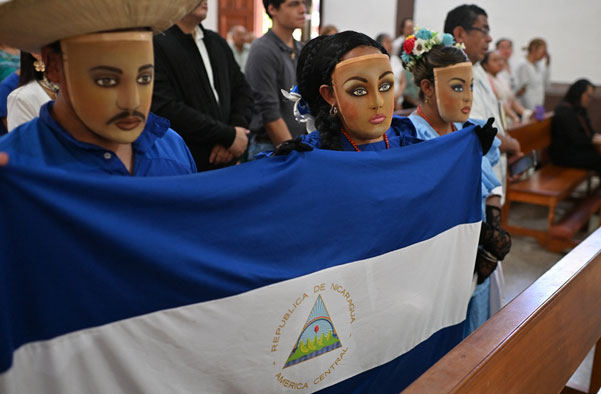
Exiled Nicaraguans hold a national flag in the Church of San Francisco in San José, Costa Rica, at a service held on 19 April 2026 to commemorate the anniversary of protests in 2018. Credit: Ezequiel Becerra/AFP
  • Opinion by Inés M. Pousadela (montevideo, uruguay)
  • Wednesday, August 12, 2026
  • Inter Press Service

MONTEVIDEO, Uruguay, August 12 (IPS) – On 19 July, the 47th anniversary of the Sandinista revolution that first brought him to power, Nicaraguan President Daniel Ortega declared that his country would hold ‘no more elections’ so that the opposition could never again try to ‘seize power’. Just like that, he scrapped a presidential vote that had previously been pushed back to 2027, abandoning even the fiction of democratic legitimacy. The move changes little in practice, since no free vote had been possible for years. But it’s still revealing: a government that controls the army, the courts, the electoral machinery and the police, and will still not risk even a stage-managed ballot, is one that has lost confidence in its people.

Civil society dismantled

The abolition of elections is the political capstone of a longer-term project to eliminate every organised space beyond the ruling family’s control. A constitutional overhaul ratified in January 2025 extended Ortega’s term, elevated his wife, Rosario Murillo, from vice-president to ‘co-president’, and handed the couple control over every branch of the state, with their son, Laureano Ortega Murillo, positioned as monarchical heir apparent. Scrapping elections that had already been emptied of any meaning removes the last formal mechanism through which power in Nicaragua might, however unlikely, have changed hands.

Since 2018, the government has shut down over 5,500 civil society organisations, close to 80 per cent of what existed. Its net has encompassed trade unions, women’s groups, universities, independent media and religious bodies, with the Catholic Church a particular target. The legal profession is the latest victim. In early July, some 2,000 lawyers found their licences to practise revoked overnight, without notice or appeal, effectively leaving many Nicaraguans without legal defence.

The Group of Human Rights Experts on Nicaragua, mandated by the UN Human Rights Council, has concluded that the government has weaponised every arm of the state and its abuses amount to crimes against humanity committed as deliberate policy. It has documented chains of command linking the presidency to local officials, and named 54 officials responsible for the repression.

Repression beyond borders

Persecution has forced over 935,000 people, roughly one in eight Nicaraguans, into exile since mass protests in 2018, which security forces suppressed by killing more than 300 people. But exile offers no safety. A 2025 report by the Group of Human Rights Experts shows the regime runs an extensive transnational intelligence and surveillance network using the army, police, foreign service and informal agents to track critics abroad, monitor their communications and threaten their families back home.

For a growing number, surveillance leads to violence. In June 2025, Roberto Samcam, a retired army major turned prominent critic, was shot dead at his home in Costa Rica by an assassin posing as a delivery driver. He was one of at least four exiled opposition figures killed in Central America since 2022. Many more have survived attempts on their lives.

The regime has also stripped hundreds of critics of their nationality, including 222 political prisoners it expelled to the USA in 2023 and 135 it shipped to Guatemala in 2024, and made changes to the Penal Code to prosecute ‘crimes against the state’ committed abroad.

Aware that international bodies offer a route to accountability, the regime is moving to close it off. Having quit the Organization of American States in 2023, Nicaragua withdrew from the UN Human Rights Council and four other multilateral bodies in 2025. Yet some mechanisms do not need its consent. Two months after the government announced it was quitting, the Human Rights Council renewed the Group of Experts’ mandate for a further two years. An Argentine judge, acting under universal jurisdiction, has issued arrest warrants for Ortega, Murillo and other senior officials. The legal instruments exist, but the will to use them is often missing.

Democratic states have supplied little of that will. The USA does not recognise Ortega’s government, yet in September 2025 the Trump administration terminated Temporary Protected Status for Nicaraguans, asserting that the country was now safe for their return, a claim at odds with UN findings. This left thousands exposed to deportation.

Ortega has meanwhile leaned on autocratic friends, with China now his main source of funding and Russia supplying intelligence and security advice and training.

Long-term pressure needed

Ortega will have watched Venezuela closely. In 2024, Nicolás Maduro allowed the holding of an election he was sure he had won in advance, having stopped the main opposition candidate standing, only to see a little-known substitute become the catalyst for years of pent-up discontent. Scrapping elections spares Ortega that danger, at least in the short term.

Over the long term, pressure for the restoration of democracy will depend on the endurance of Nicaraguan civil society, at home and in exile, and on democratic states being willing to hold the regime to account. Neither can be taken for granted. The movement best able to sustain the fight has been driven abroad, where it also faces persecution, and the government best placed to shelter these exiles is busy sending them back home.

Inés M. Pousadela is CIVICUS Head of Research and Analysis, co-director and writer for CIVICUS Lens and co-author of the State of Civil Society Report. She is also a Professor of Comparative Politics at Universidad ORT Uruguay.

For interviews or more information, please contact [email protected]

© Inter Press Service (20260812085734) — All Rights Reserved. Original source: Inter Press Service

Where next?

Related news

Browse related news topics:

Latest news

Read the latest news stories:

  • Nicaragua: End of the Electoral Illusion Wednesday, August 12, 2026
  • UN Special Rapporteur Urges the Protection of Children’s Rights Amid Deepening Conflict and Digital Threats Wednesday, August 12, 2026
  • Malawi Bets on Battery Storage to Climate-Proof Its Fragile Power Grid Wednesday, August 12, 2026
  • Frankenstein in Charge: Netanyahu Rejects Trump’s Gaza Plan Wednesday, August 12, 2026
  • Obstetric Violence: Syrian Women Speak Out Tuesday, August 11, 2026
  • Resilience Is Not Enough: OCHA Sounds Alarm on Underfunded Humanitarian Crisis in Afghanistan Tuesday, August 11, 2026
  • Saudi Arabia, Türkiye and Pakistan Forge Mutual Defence Pact, as Iran Pursues New Shipping Framework Tuesday, August 11, 2026
  • After post-pandemic improvement, youth unemployment is rising again Tuesday, August 11, 2026
  • South Sudan: UN mission decries deadly attacks, works to calm tensions after ‘nothing but devastation’ Tuesday, August 11, 2026
  • Ebola deaths top 2,000 as scientists race to develop vaccine Tuesday, August 11, 2026

In-depth

Learn more about the related issues:

Share this

Bookmark or share this with others using some popular social bookmarking web sites:

Link to this page from your site/blog

Add the following HTML code to your page:

Nicaragua: End of the Electoral Illusion, Inter Press Service, Wednesday, August 12, 2026 (posted by Global Issues)

… to produce this:

Nicaragua: End of the Electoral Illusion, Inter Press Service, Wednesday, August 12, 2026 (posted by Global Issues)

Share. Facebook Twitter Pinterest LinkedIn Tumblr Email
Previous ArticleYouTube Star Cliff Tan Apologizes After Promoting AI Company
Next Article A stranger has been reading Salesforce and ServiceNow portals worldwide for 17 months
primereports
  • Website

Related Posts

Geopolitics

The View from Eritrea

November 7, 2026
Geopolitics

Behind Taliban Dress Code Arrests, Afghan Activists See a Campaign to Silence Critics — Global Issues

November 6, 2026
Geopolitics

Bangladesh to Raise Garment Workers’ Minimum Wage After Protests

November 5, 2026
Add A Comment
Leave A Reply Cancel Reply

Top Posts

Threat of further violence looms after Mexican cartel rampage

February 25, 2026116 Views

‘Two-sided risk’ Medicare Advantage plans improve patient outcomes

February 24, 202673 Views

An $18bn settlement – and Zuckerberg barely blinked. The tech titans must be stripped of their power, and soon | Jonathan Freedland

August 28, 202627 Views
Stay In Touch
  • Facebook
  • YouTube
  • TikTok
  • WhatsApp
  • Twitter
  • Instagram
Latest Reviews

Subscribe to Updates

Get the latest tech news from FooBar about tech, design and biz.

PrimeReports.org
Independent global news, analysis & insights.

PrimeReports.org brings you in-depth coverage of geopolitics, markets, technology and risk – with context that helps you understand what really matters.

Editorially independent · Opinions are those of the authors and not investment advice.
Facebook X (Twitter) LinkedIn YouTube
Key Sections
  • World
  • Crypto
  • Cybersecurity
  • Geopolitics
  • Global Markets
  • Artificial Intelligence
All Categories
  • Artificial Intelligence
  • Climate Risks
  • Crypto
  • Cybersecurity
  • Defense
  • Economy
  • Geopolitics
  • Global Markets
  • Healthcare Innovation
  • Politics
  • Popular Now
  • Science
  • Technology
  • World
  • About Us
  • Contact Us
  • Privacy Policy
  • Terms & Conditions
  • Disclaimer
  • Cookie Policy
  • DMCA / Copyright Notice
  • Editorial Policy

Sign up for Prime Reports Briefing – essential stories and analysis in your inbox.

By subscribing you agree to our Privacy Policy. You can opt out anytime.
Latest Stories
  • An unexpected activist helped block a $5 billion data center : NPR
  • Palestinian citizens of Israel put to ‘loyalty test’ after election wins | Israel Election 2026 News
  • Meta’s best AI model now trains the one most of its users get
© 2026 PrimeReports.org. All rights reserved.
Privacy Terms Contact

Type above and press Enter to search. Press Esc to cancel.