
LIVE NEWS
  • Minister defends PM's handling of Mandelson appointment
  • HIMSS26: What Health Systems Need To Know About Microsoft Dragon Copilot
  • Google Play adds free game trials and a dedicated PC hub for gamers
  • ‘A few beatings won’t kill you’: judge rejects divorce request of woman abused by husband in Afghanistan | Afghanistan
  • The best note-taking apps for iPad of 2026: Expert tested
  • Analysis: Why clean energy will cut UK gas imports by more than North Sea drilling
  • Utah’s anti-gambling tradition meets Kalshi and Polymarket in a new legal fight
  • Leucovorin, Jeffrey Epstein, Novo, FDA: Readout Newsletter
Prime Reports
  • Home
  • Popular Now
  • Crypto
  • Cybersecurity
  • Economy
  • Geopolitics
  • Global Markets
  • Politics
  • See More
    • Artificial Intelligence
    • Climate Risks
    • Defense
    • Healthcare Innovation
    • Science
    • Technology
    • World
Prime Reports
  • Home
  • Popular Now
  • Crypto
  • Cybersecurity
  • Economy
  • Geopolitics
  • Global Markets
  • Politics
  • Artificial Intelligence
  • Climate Risks
  • Defense
  • Healthcare Innovation
  • Science
  • Technology
  • World
Home»World»Ocean warming may supercharge a tiny microbe that controls marine nutrients
World

Ocean warming may supercharge a tiny microbe that controls marine nutrients

primereportsBy primereportsMarch 12, 2026No Comments3 Mins Read
Share Facebook Twitter Pinterest LinkedIn Tumblr Reddit Telegram Email
Ocean warming may supercharge a tiny microbe that controls marine nutrients
Share
Facebook Twitter LinkedIn Pinterest Email


Rising ocean temperatures driven by marine heat waves and climate change are reaching deep waters, raising concerns about disruptions to the ocean’s fragile chemical and biological systems. But new research suggests that a key marine microbe, Nitrosopumilus maritimus, may already be adjusting to warmer and more nutrient-poor conditions. Scientists believe these adaptable microorganisms, which rely heavily on iron and carry out ammonia oxidation, could significantly influence how nutrients are distributed throughout the oceans as the climate continues to change.

The research findings appear in the Proceedings of the National Academy of Sciences.

Microbes That Power Ocean Nutrient Cycles

Nitrosopumilus maritimus and closely related microbes make up about 30% of marine microbial plankton. Many scientists consider them essential to ocean chemistry because they drive reactions that support marine ecosystems. These archaea oxidize ammonia, a process that plays a central role in the ocean’s nitrogen cycle.

By converting nitrogen into different chemical forms in seawater, these microbes regulate the growth of microbial plankton. These tiny organisms form the base of the marine food chain, meaning the activity of ammonia-oxidizing archaea ultimately helps sustain ocean biodiversity.

Deep-Sea Warming May Alter Iron Use

“Ocean-warming effects may extend to depths of 1,000 meters or more,” said University of Illinois Urbana-Champaign microbiology professor Wei Qin. “We used to think that deeper waters were mostly insulated from surface warming, but now it is becoming clear that deep-sea warming can change how these abundant archaea use iron — a metal they depend on heavily — potentially affecting trace metal availability in the deep ocean.”

Experiments Show Microbes Use Iron More Efficiently in Warmer Water

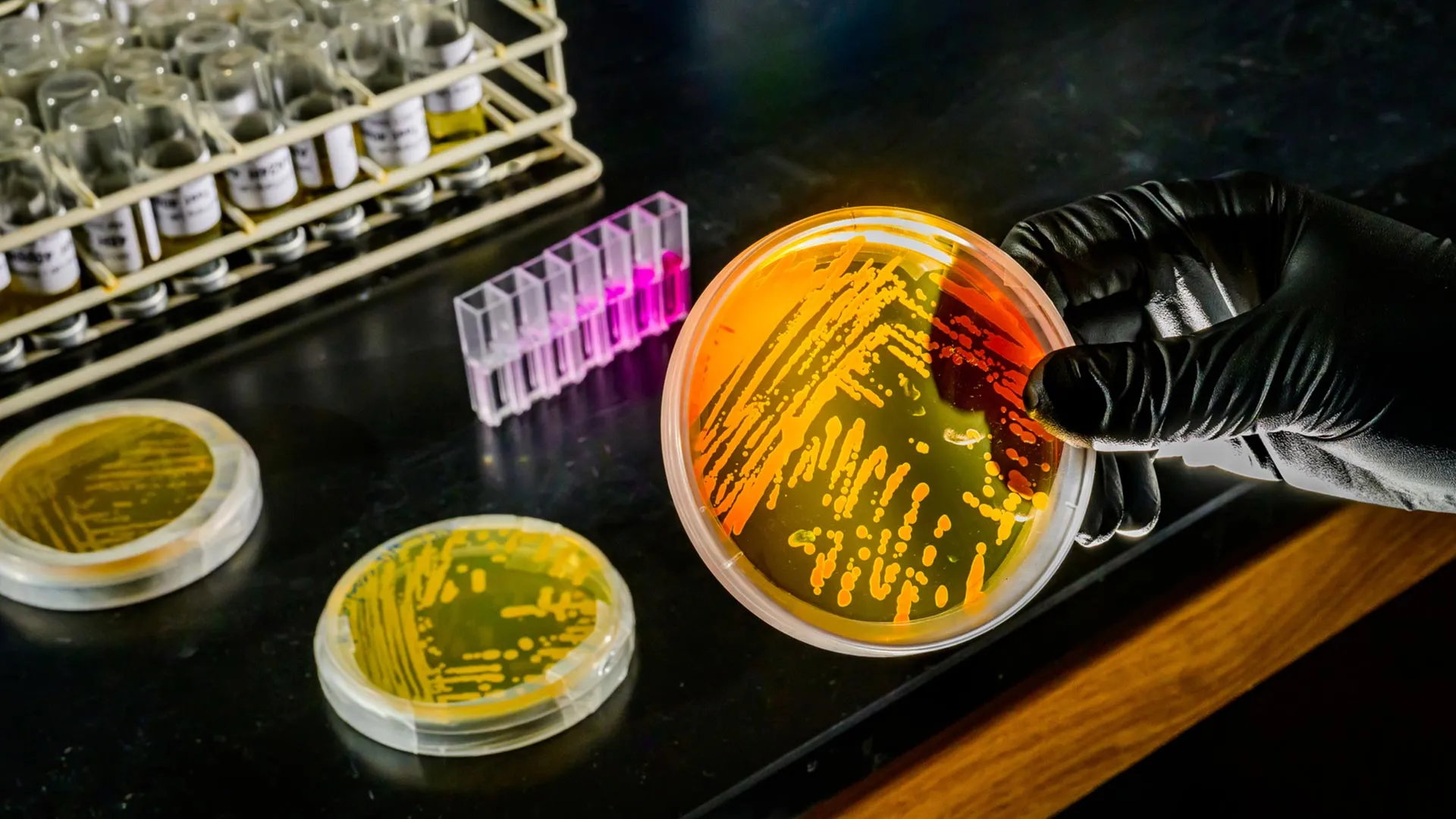
The research team, led by Qin and University of Southern California global change biology professor David Hutchins, conducted carefully controlled experiments designed to avoid trace metal contamination. They exposed pure cultures of Nitrosopumilus maritimus to different temperatures and varying levels of iron.

Their results showed that when temperatures increased under iron-limited conditions, the microbes required less iron and used it more efficiently. This finding indicates that the organisms can adjust their metabolism to cope with both higher temperatures and reduced iron availability.

Modeling Suggests a Larger Future Role in Ocean Chemistry

“We coupled these findings with global ocean biogeochemical modeling by Alessandro Tagliabue from the University of Liverpool,” Qin said. “The results suggest that deep-ocean archaeal communities may maintain or even enhance their role in nitrogen cycling and primary production support across vast iron-limited regions in a warming climate.”

Upcoming Ocean Expedition to Test Findings

Later this summer, Qin and Hutchins will serve as co-chief scientists on the research vessel Sikuliaq. The expedition will travel from Seattle to the Gulf of Alaska and then continue to the subtropical gyre, with a stop in Honolulu, Hawaii.

The voyage will include 20 additional researchers who will examine natural archaeal populations in the ocean. Their goal is to confirm the experimental results in real-world conditions and better understand how temperature changes and metal availability interact to shape microbial activity in the deep ocean.

Qin is also affiliated with the Carl R. Woese Institute for Genomic Biology.

The National Science Foundation, Simons Foundation, National Natural Science Foundation of China, University of Illinois Urbana-Champaign and the University of Oklahoma supported this research.

Share. Facebook Twitter Pinterest LinkedIn Tumblr Email
Previous ArticleNBCU Plans to Cut Dozens of Employees As Streamer Showmax Shuts Down
Next Article How to Design a Streaming Decision Agent with Partial Reasoning, Online Replanning, and Reactive Mid-Execution Adaptation in Dynamic Environments
primereports
  • Website

Related Posts

World

Analysis: Why clean energy will cut UK gas imports by more than North Sea drilling

March 12, 2026
World

Watchdog weighs action against countries missing UN climate plan

March 12, 2026
World

Australia politics live: Dennis Richardson says he was ‘way overpaid’ for work on royal commission into antisemitism | Australia news

March 11, 2026
Add A Comment
Leave A Reply Cancel Reply

Top Posts

Global Resources Outlook 2024 | UNEP

December 6, 20255 Views

The D Brief: DHS shutdown likely; US troops leave al-Tanf; CNO’s plea to industry; Crowded robot-boat market; And a bit more.

February 14, 20264 Views

German Chancellor Merz faces difficult mission to Israel – DW – 12/06/2025

December 6, 20254 Views
Stay In Touch
  • Facebook
  • YouTube
  • TikTok
  • WhatsApp
  • Twitter
  • Instagram
Latest Reviews

Subscribe to Updates

Get the latest tech news from FooBar about tech, design and biz.

PrimeReports.org
Independent global news, analysis & insights.

PrimeReports.org brings you in-depth coverage of geopolitics, markets, technology and risk – with context that helps you understand what really matters.

Editorially independent · Opinions are those of the authors and not investment advice.
Facebook X (Twitter) LinkedIn YouTube
Key Sections
  • World
  • Geopolitics
  • Popular Now
  • Artificial Intelligence
  • Cybersecurity
  • Crypto
All Categories
  • Artificial Intelligence
  • Climate Risks
  • Crypto
  • Cybersecurity
  • Defense
  • Economy
  • Geopolitics
  • Global Markets
  • Healthcare Innovation
  • Politics
  • Popular Now
  • Science
  • Technology
  • World
  • About Us
  • Contact Us
  • Privacy Policy
  • Terms & Conditions
  • Disclaimer
  • Cookie Policy
  • DMCA / Copyright Notice
  • Editorial Policy

Sign up for Prime Reports Briefing – essential stories and analysis in your inbox.

By subscribing you agree to our Privacy Policy. You can opt out anytime.
Latest Stories
  • Minister defends PM's handling of Mandelson appointment
  • HIMSS26: What Health Systems Need To Know About Microsoft Dragon Copilot
  • Google Play adds free game trials and a dedicated PC hub for gamers
© 2026 PrimeReports.org. All rights reserved.
Privacy Terms Contact

Type above and press Enter to search. Press Esc to cancel.