

For decades, scientists have chased the idea of a universal vaccine capable of protecting against virtually any infectious threat. That goal has often seemed almost mythical.
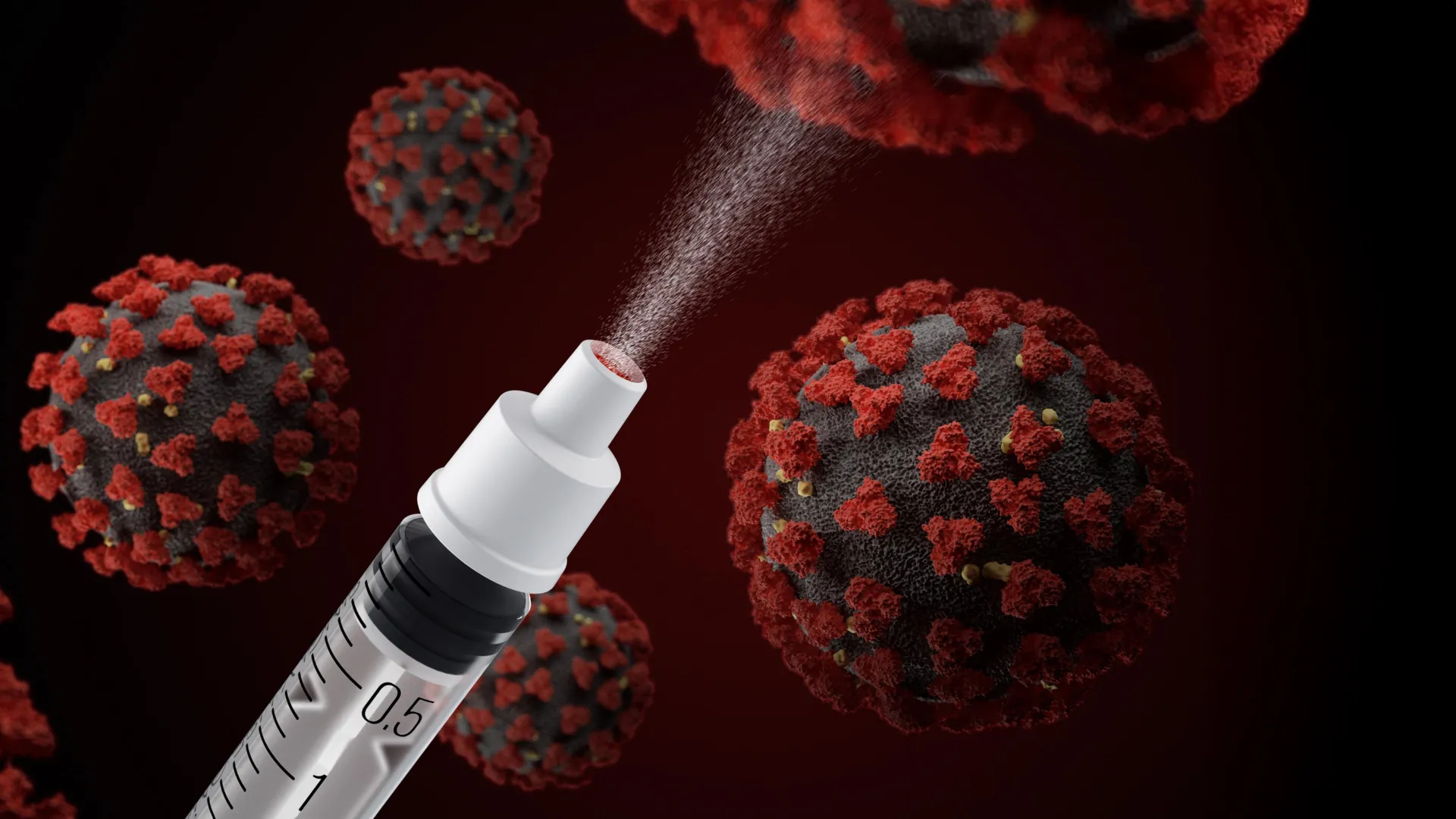
Now, researchers at Stanford Medicine and their collaborators report a major step toward that vision. In a new mouse study, they developed an experimental universal vaccine that shields against a broad range of respiratory viruses, bacteria, and even allergens. The vaccine is given intranasally — such as through a nasal spray — and provides wide ranging protection in the lungs that lasts for months.
The findings, published Feb. 19 in Science, show that vaccinated mice were protected from SARS-CoV-2 and other coronaviruses, Staphylococcus aureus and Acinetobacter baumannii (common hospital-acquired infections), as well as house dust mites (a common allergen). According to senior author Bali Pulendran, PhD, the Violetta L. Horton Professor II and professor of microbiology and immunology, the level of protection across so many respiratory threats exceeded expectations.
The study’s lead author is Haibo Zhang, PhD, a postdoctoral scholar in Pulendran’s lab.
If similar results are achieved in people, a single vaccine could potentially replace multiple yearly shots for seasonal respiratory illnesses and provide rapid protection if a new pandemic virus emerges.
Why Current Vaccines Need Updating
This experimental vaccine works very differently from traditional vaccines.
Since the late 1700s, when Edward Jenner introduced the term vaccination (from the Latin vacca for cow) after using cowpox to prevent smallpox, vaccines have relied on a common strategy known as antigen specificity. In simple terms, vaccines present the immune system with a recognizable piece of a pathogen — such as the spike protein on SARS-CoV-2 — so the body can quickly identify and attack the real virus later.
“That’s been the paradigm of vaccinology for the last 230 years,” Pulendran said.
The challenge is that many pathogens evolve quickly. When viruses change the structures on their surface, previously effective vaccines may lose potency. That is why updated COVID-19 boosters and annual flu shots are necessary.
“It’s becoming increasingly clear that many pathogens are able to quickly mutate. Like the proverbial leopard that changes its spots, a virus can change the antigens on its surface,” Pulendran said.
Most efforts to create broader vaccines have aimed to protect against an entire viral family, such as all coronaviruses or all influenza strains, by targeting viral components that mutate less frequently. The idea of one vaccine capable of defending against many unrelated pathogens has generally been viewed as unrealistic.
“We were interested in this idea because it sounded a bit outrageous,” Pulendran said. “I think nobody was seriously entertaining that something like this could ever be possible.”
A New Strategy That Activates Integrated Immunity
Instead of copying part of a virus or bacterium, this new vaccine imitates the communication signals immune cells exchange during infection. By doing so, it links the body’s two main defense systems — innate and adaptive immunity — into a coordinated and longer lasting response.
Most existing vaccines primarily stimulate the adaptive immune system, which produces antibodies and specialized T cells that target specific pathogens and retain memory for years. The innate immune system responds within minutes of infection and acts more broadly, deploying cells such as dendritic cells, neutrophils and macrophages that attack perceived threats. However, innate immunity typically fades within days.
Pulendran’s team focused on the innate system’s versatility.
“What’s remarkable about the innate system is that it can protect against a broad range of different microbes,” Pulendran said.
Although innate immunity is usually short lived, there have been hints that it can sometimes persist longer. One example is the Bacillus Calmette-Guerin tuberculosis vaccine, administered to roughly 100 million newborns annually. Studies have suggested it may lower infant deaths from other infections, implying extended cross protection, though the mechanism was unclear and results varied.
In 2023, Pulendran’s group clarified how that cross protection works in mice. The tuberculosis vaccine triggered both innate and adaptive responses, but unusually, the innate response remained active for months. The researchers found that T cells recruited to the lungs as part of the adaptive response were sending signals that kept innate immune cells switched on.
“Those T cells were providing a critical signal to keep the activation of the innate system, which typically lasts for a few days or a week, but in this case, it could last for three months,” Pulendran said.
As long as that heightened innate activity continued, mice were protected against SARS-CoV-2 and other coronaviruses. The team identified the T cell signals as cytokines that activate pathogen sensing receptors called toll-like receptors on innate immune cells.
“In that paper, we speculated that since we now know how the tuberculosis vaccine is mediating its cross-protective effects, it would be possible to make a synthetic vaccine, perhaps a nasal spray, that has the right combination of toll-like receptor stimuli and some antigen to get the T cells into the lungs,” Pulendran said.
“Fast forward two and a half years and we’ve shown that exactly what we had speculated is feasible in mice.”
How the Nasal Vaccine Works
The new formulation, currently called GLA-3M-052-LS+OVA, is designed to replicate the T cell signals that stimulate innate immune cells in the lungs. It also includes a harmless antigen, an egg protein known as ovalbumin or OVA, which draws T cells into the lungs and helps sustain the boosted innate response for weeks to months.
In the study, mice received the vaccine as droplets placed in their noses. Some animals were given multiple doses spaced one week apart. After vaccination, each mouse was exposed to a respiratory virus. With three doses, the mice remained protected from SARS-CoV-2 and other coronaviruses for at least three months.
Unvaccinated mice experienced severe weight loss — a sign of illness — and often died. Their lungs showed extensive inflammation and high levels of virus. In contrast, vaccinated mice lost far less weight, all survived, and their lungs contained little virus.
Pulendran described the effect as a “double whammy.” The sustained innate response reduced viral levels in the lungs by 700-fold. Any viruses that bypassed this first layer of defense were quickly confronted by a rapid adaptive response.
“The lung immune system is so ready and so alert that it can launch the typical adaptive responses — virus-specific T cells and antibodies — in as little as three days, which is an extraordinarily short length of time,” Pulendran said. “Normally, in an unvaccinated mouse, it takes two weeks.”
Protection Against Bacteria and Allergens
Encouraged by the results against viral infections, the researchers also tested the vaccine against bacterial respiratory pathogens, including Staphylococcus aureus and Acinetobacter baumannii. Vaccinated mice were protected from these infections for about three months as well.
“Then we thought, ‘What else could go in the lung?'” Pulendran said. “Allergens.”
To test that idea, the team exposed mice to a protein from house dust mites, a common cause of allergic asthma. Allergic reactions involve a type of immune response known as Th2 response. Unvaccinated mice developed a strong Th2 response and accumulated mucus in their airways. Vaccinated mice showed a much weaker Th2 response and maintained clear airways.
“I think what we have is a universal vaccine against diverse respiratory threats,” Pulendran said.
What Comes Next
The next step is human testing, beginning with a Phase I safety trial. If those results are positive, larger studies would follow, potentially including controlled exposure to infections. Pulendran estimates that two doses delivered as a nasal spray could be sufficient for people.
With adequate funding, he believes a universal respiratory vaccine could become available within five to seven years. Such a vaccine could strengthen defenses against future pandemics and simplify seasonal vaccination.
“Imagine getting a nasal spray in the fall months that protects you from all respiratory viruses including COVID-19, influenza, respiratory syncytial virus and the common cold, as well as bacterial pneumonia and early spring allergens,” Pulendran said. “That would transform medical practice.”
The research team included scientists from Emory University School of Medicine, the University of North Carolina at Chapel Hill, Utah State University and the University of Arizona.
Funding came from the National Institutes of Health (grant AI167966), the Violetta L. Horton Professor endowment, the Soffer Fund endowment and Open Philanthropy.
