


I used to make a basic mistake with meteor showers — I treated the zenith hourly rate (ZHR) like a timetable. If a shower were advertised at 20 meteors per hour, I’d go outside expecting something roughly every three minutes. After 10 quiet minutes, I’d start wondering what I was doing wrong. After half an hour, I’d start to doubt the whole idea of meteor showers.
The Northern and Southern Taurids cured me of all that. Two linked meteor showers that peak around Nov. 4-5 and Nov. 11-12 this year, they each manage only about five meteors per hour under ideal conditions. In reality, you may see fewer. You may spend a long time seeing none. So what’s the point?
I’ve come to regard their paucity of “shooting stars” as a feature, not a flaw, for the Taurids have taught me to stop counting meteors and instead just observe the sky. I go outside for Taurus, the Pleiades, Auriga, and whatever else happens to be visible. If a Taurid crosses the sky, excellent. If not, the evening hasn’t failed. The reason is that they are also known for occasionally producing very bright meteors, or fireballs — although “occasionally” is important. Don’t go outside expecting a procession of them.
What’s happening and when to look
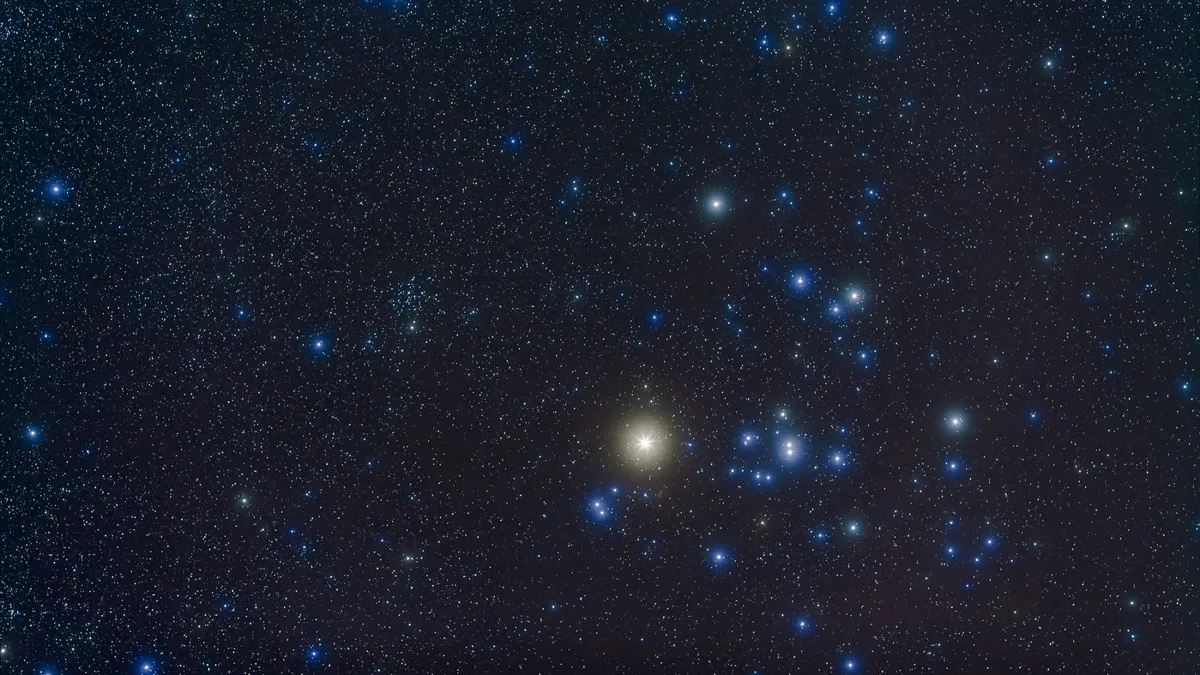
The Taurids hit Earth’s atmosphere at about 18 miles (29 kilometers) per second. That’s relatively slow for a meteor shower. It’s one reason Taurids can be more memorable than meteors from faster showers.
For observers across much of the Northern Hemisphere, Taurus rises in the east during the evening and becomes increasingly well placed as the night progresses. Later evening into the overnight hours is therefore the best time to watch.
I love looking at the night sky around Taurus, but you really don’t need to stare at it if you’re looking for Taurids. The radiant is indeed within Taurus (close to the Pleiades), but meteors can appear anywhere in the sky. Look roughly east or southeast, then watch as much sky as possible for an hour or so.
This year the moon helps out. The new moon falls on Nov. 9, leaving only a young waxing crescent around the shower’s peak. It sets during the evening, giving us properly dark skies later on.
How and when I’m watching it
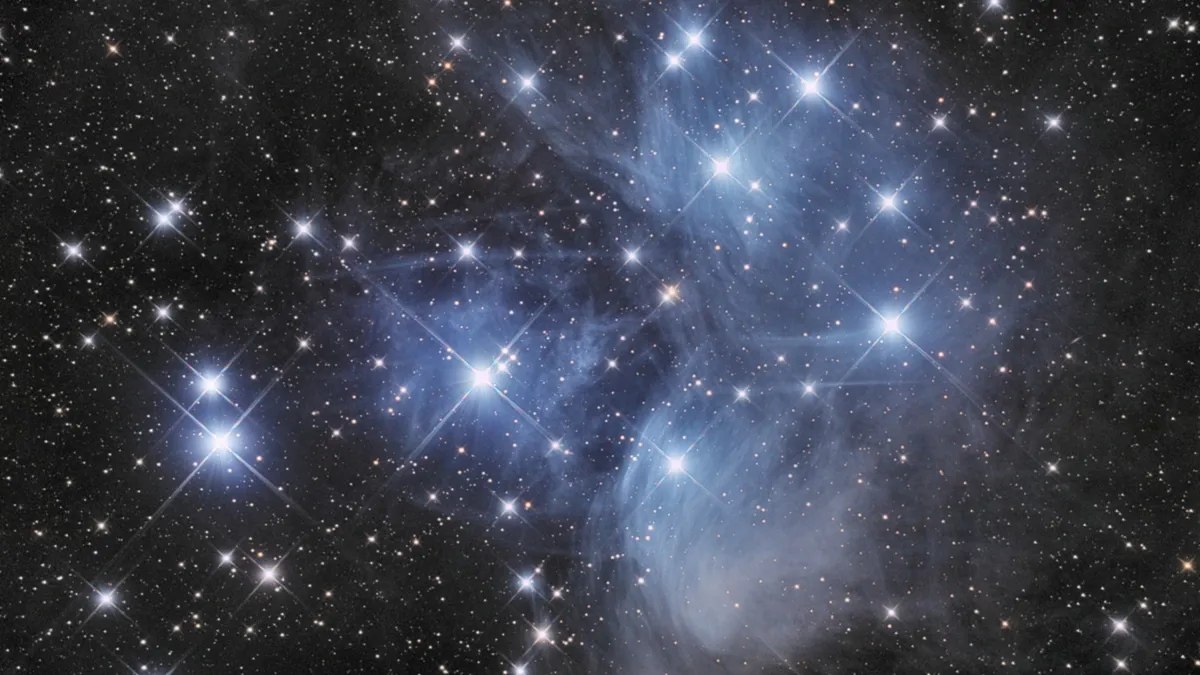
My Taurid observing strategy involves doing little direct meteor observing. I’ll likely head outside once Taurus is reasonably high in the eastern sky, probably sometime in the later evening, and give myself other things to look at. The Pleiades are an obvious target — it’s exciting to have this little open cluster back in the evening sky. So are the Hyades open cluster and bright orangey Aldebaran, also in Taurus. I’ll probably set my smart telescope on the Pleiades and leave it alone to build up a long integration while I spend as much time as I can taking in the whole sky. Meteors are a naked-eye event and demand your attention — the second you avert your gaze from the night sky, a “shooting star” will appear. All stargazers know that!
I won’t travel for hours to find perfect darkness. A darker location will reveal fainter meteors, for sure, but the Taurids’ occasional bright members can be seen from less-than-perfect skies. A backyard is fine for this one — make travel plans only for August’s Perseids and December’s Geminids (moon phases allowing).
Nor will I keep score. Meteor rates are statistical descriptions, not promises. Five per hour does not mean one meteor every 12 minutes. You could see two close together and then nothing at all for hours. We’re all so used to being told exactly what to expect, but the night sky doesn’t work like that — you need to be open to whatever it throws at you (or not). Once you stop expecting the sky to do what you want, meteor showers become more enjoyable.
Stargazer’s corner: Oct. 31-Nov. 5, 2026
The moon is moving out of the early evening sky this week, which is exactly what stargazers wait for at this time of year. It reaches third quarter around Nov. 1, rising later at night and leaving the evening dark. That gives us a useful 10-night window for observing before moonlight becomes an issue.
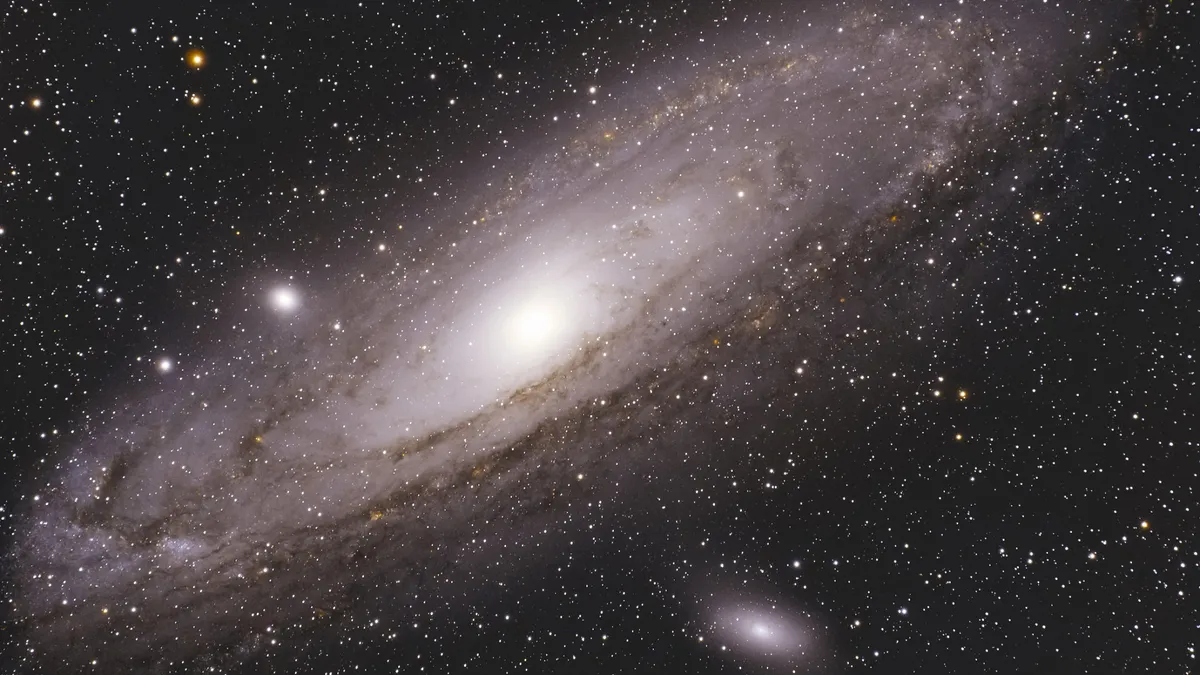
I’m planning to use it for the Andromeda galaxy. From a genuinely dark location, M31 can be spotted with the naked eye as a faint patch. From brighter suburban skies, binoculars make life much easier. The beginner mistake is expecting anything resembling the photographs. Through binoculars, I’m looking for a subtle misty glow, not spiral arms. If you want a more impressive view, get yourself a smart telescope — they do a wonderful job on M31.
There’s another practical change this weekend. Daylight saving time ends across most of the U.S. and Canada on Nov. 1. The stars haven’t changed their schedule, of course, but getting outside under a dark sky after dinner — and even before — suddenly becomes much easier.
Constellation of the week: Taurus
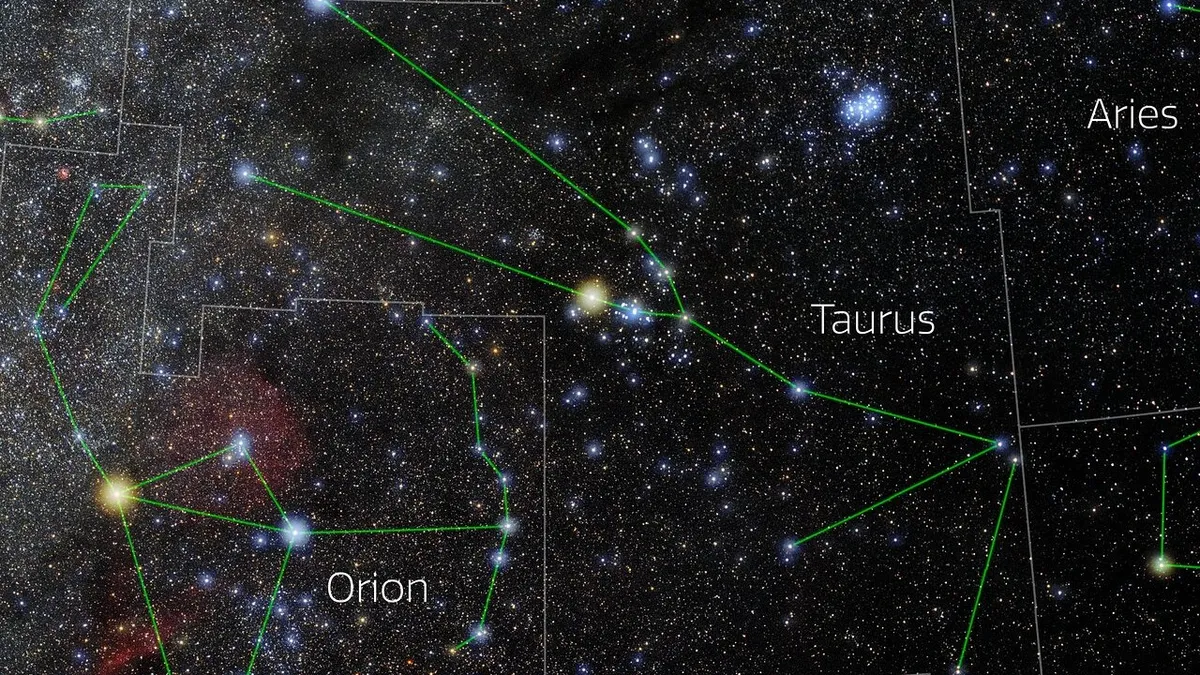
Although you don’t need to stare at Taurus, the Bull, to see Taurids, it’s an obvious target this week. It’s climbing into the eastern sky during the evening. Bright orange star Aldebaran — a red giant 67 light-years from the solar system (and the most luminous star within 100 light-years) — marks the bull’s eye. It appears to sit within a V-shape of stars that forms the bull’s face. This is the Hyades, the closest open cluster of stars to the solar system at just 150 light-years.
My latest stargazing obsession
The origin story of both Taurid meteor showers is genuinely awe-inspiring. They’re associated with debris left in the inner solar system by Comet 2P/Encke, which orbits the sun once every 3.25 years (1,200 days) — the shortest orbital period of any known comet in the solar system, according to NASA. The second comet ever discovered, Encke, was discovered in 1786 and spans about 3 miles (4.8 kilometers) in diameter. It last reached perihelion — its closest point to the sun — on Oct. 22, 2023, and is due to do so again on Feb. 10, 2027, but Earth encounters debris associated with the comet every year.
The picture is more complicated than a single comet trail. The Southern and Northern Taurids are part of the broader Taurid Meteoroid Complex, a vast swarm of interplanetary dust, rocks, comets and asteroids thought to be related to Encke. It’s thought that it originates from a much larger object that fragmented as it got close to the sun, perhaps just 5,000 to 6,000 years ago or as much as 20,000 years ago. Fears that huge, mile-wide “planet killer” asteroids may still reside in the Taurid Meteoroid Complex appear to have been ruled out. Phew.
Each fall, Earth passes through different parts of this sprawling stream, producing two overlapping meteor showers — and, occasionally, the larger fragments responsible for the Taurids’ famous fireballs.
