

What did the court ruling say?
The court ruled that Trump exceeded his authority and should have got congressional approval for the tariffs, which he announced on what he dubbed “liberation day” last April. The tariffs, set at varying rates, covered dozens of countries from war-torn Syria and impoverished Lesotho to the UK, China, Canada, Mexico, Japan and EU countries.
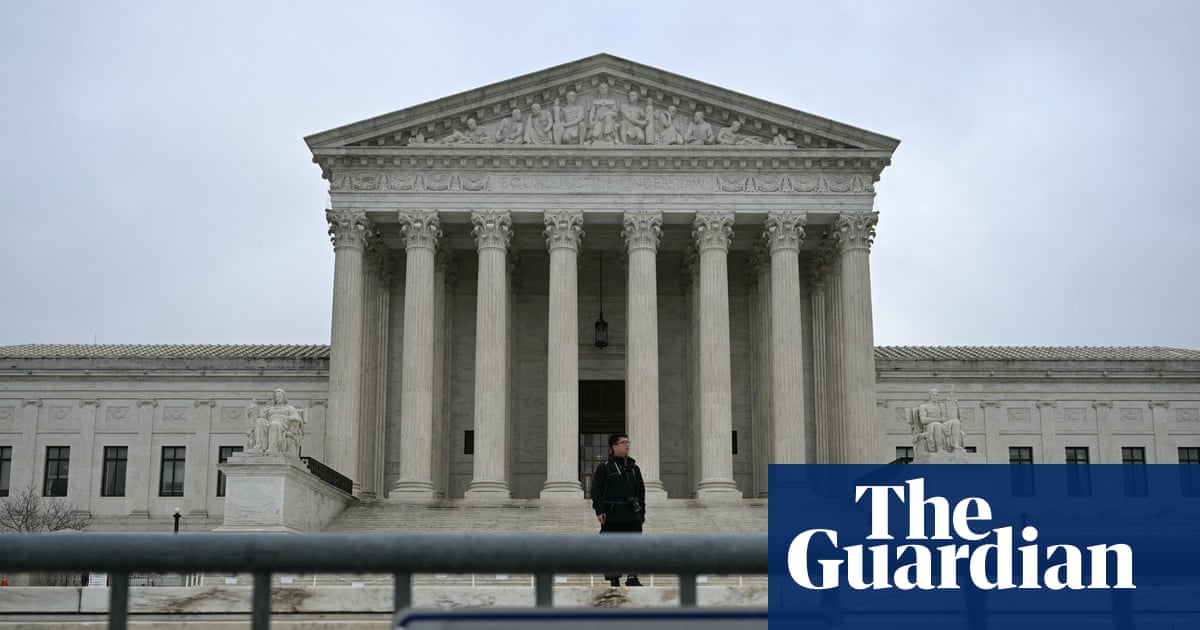
The conservative-majority court ruled six to three in the judgment, saying the International Emergency Economic Powers Act (IEEPA) – the 1977 law designed to address national emergencies Trump had used to implement them – “does not authorise the president to impose tariffs”.
The decision affirms earlier findings by lower courts that tariffs Trump imposed under the IEEPA were illegal.
Will Trump now abandon his tariff war?
Nope. Trump – who faces a backdrop of slowing economic growth – has made it clear that he is not backing down from his trade war.
Hours after the ruling, Trump held a press conference where he vowed to keep tariffs in place using a different law than the IEEPA.
He announced a new 10% global tariff and said that his administration would conduct additional “investigations” into unfair trading practices using the Trade Act of 1974. The US president said he felt emboldened to continue his trade war because the court curbed his powers under the IEEPA only.
“We have other ways, numerous other ways,” Trump said. “While I am sure that they did not mean to do so, the supreme court’s decision today made a president’s ability to both regulate trade and impose tariffs more powerful and more crystal clear, rather than less.”
The US treasury secretary, Scott Bessent, said that the administration planned to use sections of the Trade Act of 1974 to enact the new tariffs, which “will result in virtually unchanged tariff revenue in 2026”, according to treasury estimates.
While the White House has these other alternative routes to pass tariffs, there are more restrictions in the form of capped amounts and durations of tariffs, along with procedural prerequisites such as investigations and hearings.
The administration will pass a 10% global tariff under Section 122 of the Trade Act of 1974, which allows tariffs of up to 15% to address “fundamental international payments problems”. The law caps the tariff at 150 days while the president addresses alleged “large and serious” deficits in the country’s balance of payments.
Other sections of the Trade Act will require an investigation that determines whether the tariffs are necessary for national security or will remedy unfair trade practices.
Trump acknowledged that the White House would have to do more work but said, ultimately, that the tariffs would not stop.
“We’re using things that some people thought we should have used in the first place but it’s a little more complicated. The process takes a little more time, but the end result is going to get us more money,” he said.
When asked whether existing trade deals with foreign countries were affected by the ruling, Trump said: “Many of them stand. Some of them won’t, and they’ll be replaced with the other tariffs.”
Trump’s annual State of the Union address next week could further shed light on his next steps.
Companies that have invested significant time and money to adapt to America’s new import red tape will not adjust supply chains again until they know the long-term plan.
Richard Rumbelow, director of international business at Make UK, said: “As the situation continues to evolve, businesses now need clear, practical guidance on how the ruling will be implemented, alongside progress on resolving the remaining section 232 tariffs on UK steel and aluminium.”
Will the tariffs be paid back?
Tariff revenues for last year are estimated to have been between $240bn and $300bn, most of it owing to US manufacturers and consumers. The cost to the US government could be vast if it is forced to pay the money back to US importers.
McLaughlin says that “many studies show that US firms have paid 90% of that” with much of it passed on the consumer through price rises in shops.
Even if the US administration was forced to pay that back, it would “not be paid back soon”, she said. The supreme court justice Brett Kavanaugh said the refund process was likely to be a “mess”. Trump on Friday dismissed the idea of any refunds. “It’s not [being] discussed. We’ll end up being in court for the next five years.”
What have the UK and the EU said?
The UK’s Department for Business and Trade (DBT) said the ruling did not affect the preferential deal the UK negotiated on steel, automobiles (10% down from 27.5%) and pharma, which has zero tariffs compared with 15% in the EU.
“The UK enjoys the lowest reciprocal tariffs globally, and under any scenario we expect our privileged trading position with the US to continue. We will work with the administration to understand how the ruling will affect tariffs for the UK and the rest of the world,” said a spokesperson for the DBT.
The European Commission trade spokesperson, Olof Gill, said it was analysing the ruling “carefully”.
“Businesses on both sides of the Atlantic depend on stability and predictability in the trading relationship. We therefore continue to advocate for low tariffs and to work towards reducing them,” he added.
The German confederation of industries, BDI, said the ruling sent a “strong signal for the rules-based trade order”.
