

By Christopher M. Blanchard
Yemen is a conflict-afflicted nation along the strategic Bab al Mandab Strait, one of the world’s most active shipping lanes. Since 2015, a civil war has pitted the Iran-backed Houthi movement against Yemen’s internationally recognized government, the government’s foreign backers, and other anti-Houthi forces. The Houthis control most of northwestern Yemen, including the capital, Sana’a (Figure 1). Foreign intervention complicates the conflict, which has contributed to a longstanding and ongoing humanitarian crisis. An uneasy truce has frozen conflict lines since 2022.
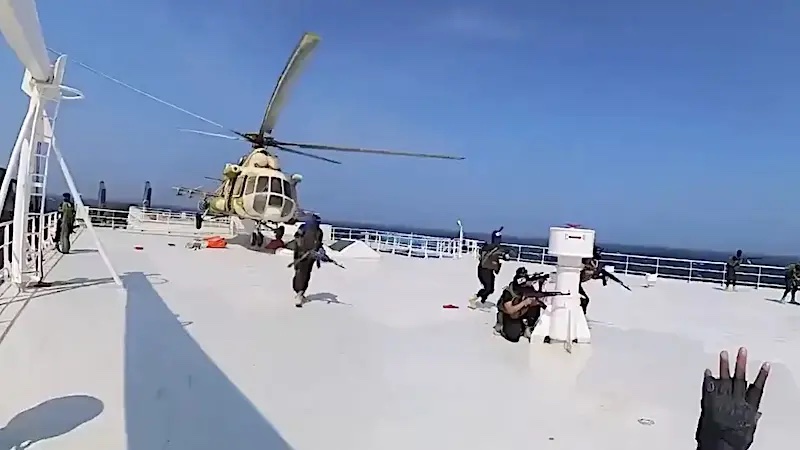
The Iran-backed Houthis launched numerous attacks on international shipping from October 2023 (after Hamas-led attacks on Israel sparked the war in Gaza) to December 2024, before pausing these attacks in early 2025. From March to May 2025, U.S. forces expanded strikes against the Houthis seeking to compel a lasting end to Houthi maritime attacks. The U.S. campaign ended under an agreement brokered by neighboring Oman in which the Houthis agreed to cease targeting U.S. vessels and the United States agreed to halt strikes on the Houthis. The Houthis renewed attacks on some non-U.S. ships in July 2025 and continued to launch long-range strikes against targets in Israel, ostensibly to compel Israel to end its war with Hamas. The Houthis suspended their attacks after the October 2025 Israel-Hamas ceasefire, but have signaled their willingness to relaunch attacks if war resumes in Gaza.
In December 2025 and January 2026, Saudi Arabia intervened militarily against the Yemeni separatist Southern Transitional Council (STC), reversing the STC’s seizure of Yemen’s eastern governorates and Aden, the seat of the internationally recognized government. Saudi Arabia accused the United Arab Emirates of providing military support to the STC, and remaining UAE forces left Yemen. Yemen’s underlying conflict is unresolved. The Houthis pose enduring threats to shipping and to U.S. partners.
Background and Key Stakeholders
Long-running Yemeni disputes over governance and energy resources have deepened since 2015 amid foreign influence and intervention. The Republic of Yemen was formed by a 1990 merger of the Sana’a-led Yemen Arab Republic (a former Ottoman province, then Zaydi Shia-ruled kingdom, “North Yemen”) and the Aden-led People’s Democratic Republic of Yemen (a former British colony and Marxist regime, “South Yemen”). North-south tensions and conflict have recurred since the 1960s, and the STC leveraged some southerners’ continuing demands for independence. Tribal networks and local actors are the most influential parties in many areas. The government and the Houthis manage complex ties with diverse groups to maintain power.
In 20212, Arab Spring-era protests and unrest prompted the president of the Republic of Yemen Government (ROYG) to resign. A UN-mediated transition and national dialogue sought to broker new governing arrangements. The Houthi movement (alt. Ansar Allah or Partisans of God), a north Yemen-based Zaydi Shia network, opposed UN-backed outcomes and resumed an insurgency. In 2014, the Houthis seized the capital, Sana’a, and later advanced on Aden. ROYG leaders fled and sought international intervention.
In March 2015, a coalition led by Saudi Arabia began a military campaign against the Houthis. Houthi attacks across Yemen’s borders grew in complexity and scope with deepening support over time from Iran. The United States provided logistical, intelligence, and advisory support to the coalition, but ended aerial refueling in 2018 and later curtailed some arms sales to Saudi Arabia in response to civilian casualties and congressional action.
Power-sharing agreements in 2020 and 2022 brought anti-Houthi forces together under a coalition. An STC offensive on ROYG-aligned forces in December 2025 and Saudi military intervention resulted in the STC’s dissolution and changes in the makeup of the ROYG’s eight-person Presidential Leadership Council (PLC). The ROYG also expanded and reshuffled its cabinet. Saudi Arabia is now the ROYG’s principal sponsor and security partner as the ROYG and former STC members consider next steps.
Conflict Status and U.S. Diplomacy
Since 2015, conflict has caused widespread humanitarian suffering and significant infrastructure damage in Yemen, long the Arab world’s poorest country. Foreign observers have denounced human rights violations attributed to all parties. Since 2022, violence has not returned to pre-truce levels, but intermittent cross-line fighting occurs. The STC’s dissolution is prompting a reorganization of anti-Houthi forces. The Houthis continue to consolidate control in the north having demonstrated their capacity to threaten international shipping, Israel, and other regional states.
The Trump Administration has taken military action against the Houthis and redesignated the group as a Foreign Terrorist Organization (FTO) in March 2025. The Trump Administration has supported the UN Security Council’s decision to end the UN Mission to Support the Hudaydah Agreement (UNMHA), a December 2018 ceasefire agreement that halted fighting over Yemen’s Houthi-held Red Sea ports. In January 2026, Deputy U.S. Representative to the UN Tammy Bruce said “the Security Council should concentrate its efforts on depriving the Houthis of resources to conduct their terrorist activities.”
Since February 2015, the U.S. Ambassador to Yemen and a Yemen Affairs Unit (YAU) have been based at the U.S. Embassy in Riyadh, Saudi Arabia. From October 2025 to January 2026, U.S. Ambassador to Yemen Steven Fagin also served as head of the Gaza-focused Civil-Military Coordination Center. UN Special Envoy for Yemen Hans Grundberg engages Yemeni and regional actors in efforts “aimed at advancing dialogue and de-escalation.”
Humanitarian Situation
The UN reports that 19.5 million Yemenis (more than half the population) need humanitarian assistance and protection. In December 2025, UN agencies reported that a “severe gap” in humanitarian funding during the year forced providers “to scale back critical services despite escalating needs.” The annual UN humanitarian funding appeal for Yemen sought $2.47 billion in 2025 to provide life-saving assistance to 10.5 million people and was 28.3% funded. Limits on movement and bureaucracy constrain humanitarian access and affect aid delivery, largely in Houthi-controlled areas, where the Houthis have detained UN and aid workers. The World Food Programme (WFP) reportedly is ending its operations in Houthi-controlled northern Yemen given security risks and funding cuts.
Counterterrorism
Insecurity in Yemen creates opportunities for an estimated 2-3,000 Yemen-based Al Qaeda members, who UN monitors report maintain a “covert pragmatic relationship” with the Houthis and an alliance with the Somalia-based Al Shabaab. According to UN monitors, the Houthis also have “limited collaboration” with Al Shabaab. Iran’s Islamic Revolutionary Guard Corps-Qods Force and Lebanon’s Hezbollah also have operated in Yemen.
Houthi Attacks and U.S. Responses
Following the October 7, 2023, Hamas-led attacks on Israel, and Israel’s military operations in Gaza, the Houthis began targeting Israeli territory as well as commercial ships transiting the Bab al Mandab Strait. Through 2024, U.S. forces intercepted Houthi-launched projectiles, prevented some attempted Houthi seizures of vessels, led coalition patrol operations, and struck Houthi targets in Yemen. On March 15, 2025, U.S. forces began a military campaign the Administration intended to compel the Houthis to end their attacks and eliminate their capability to threaten maritime transit. The Houthis resisted, attacked U.S. Navy ships, and shot down U.S. unmanned aircraft. A U.S.-Houthi truce has held since May 2025, but Houthi attacks on Israel were not suspended until October 2025. In June, U.S. CENTCOM stated that “only through a whole of government approach, of which military operations are a key component, will a sustained return of freedom of navigation be guaranteed.” UN Security Council Resolution 2722 (2024) demands the Houthis cease attacks, and, in January 2026, the Council extended related reporting provisions until July 2026.
Foreign support and accumulated expertise may allow the Houthis to pose enduring maritime security risks. U.S. sanctions target the group’s far-reaching networks. U.S. officials have described Iran’s efforts to supply the Houthis with weaponry, targeting information, and military advice. In July, U.S. officials announced that Yemeni forces had seized 750 tons of munitions and hardware intended for Houthi use.
Yemen and the 119th Congress
The 119th Congress may consider whether or how to respond to developments in Yemen, including intra-Yemen conflict or attacks by Houthi forces outside of Yemen. Members also may conduct oversight of related military or diplomatic initiatives by the Trump Administration. The 2026 National Defense Authorization Act (P.L. 119-60) authorizes the U.S. military to treat as U.S. stocks any weapon or materiel intended for the Houthis obtained by the United States in transit or otherwise and to use them for drawdown purposes, including transfer. In 2025, some Members questioned President Trump’s assertions of authority to direct military operations in Yemen.
- About the author: Christopher M. Blanchard, Specialist in Middle Eastern Affairs
- Source: This article was published by the Congressional Research Service (CRS)
