
LIVE NEWS
  • Iran oil shock stirs memories of 1997 Asian Financial Crisis — but here’s why history may not repeat itself
  • Visual Studio Code 1.115 introduces VS Code Agents app
  • Iran war analysis: How 60 nations have responded to the global energy crisis
  • Polanski claims Labour has offered just ‘toxic combination of chaos and cowardice’ – UK politics live | Politics
  • Your DNA has a secret “second code” that decides which genes get silenced
  • WireGuard VPN developer can’t ship software updates after Microsoft locks account
  • Stock Market News, April 8, 2026: Stocks Jump After U.S., Iran Walk Back From the Brink – WSJ
  • Contemplating Meta’s Homegrown MTIA Compute Engine Roadmap
Prime Reports
  • Home
  • Popular Now
  • Crypto
  • Cybersecurity
  • Economy
  • Geopolitics
  • Global Markets
  • Politics
  • See More
    • Artificial Intelligence
    • Climate Risks
    • Defense
    • Healthcare Innovation
    • Science
    • Technology
    • World
Prime Reports
  • Home
  • Popular Now
  • Crypto
  • Cybersecurity
  • Economy
  • Geopolitics
  • Global Markets
  • Politics
  • Artificial Intelligence
  • Climate Risks
  • Defense
  • Healthcare Innovation
  • Science
  • Technology
  • World
Home»Healthcare Innovation»Your DNA has a secret “second code” that decides which genes get silenced
Healthcare Innovation

Your DNA has a secret “second code” that decides which genes get silenced

primereportsBy primereportsApril 9, 2026No Comments3 Mins Read
Share Facebook Twitter Pinterest LinkedIn Tumblr Reddit Telegram Email
Your DNA has a secret “second code” that decides which genes get silenced
Share
Facebook Twitter LinkedIn Pinterest Email


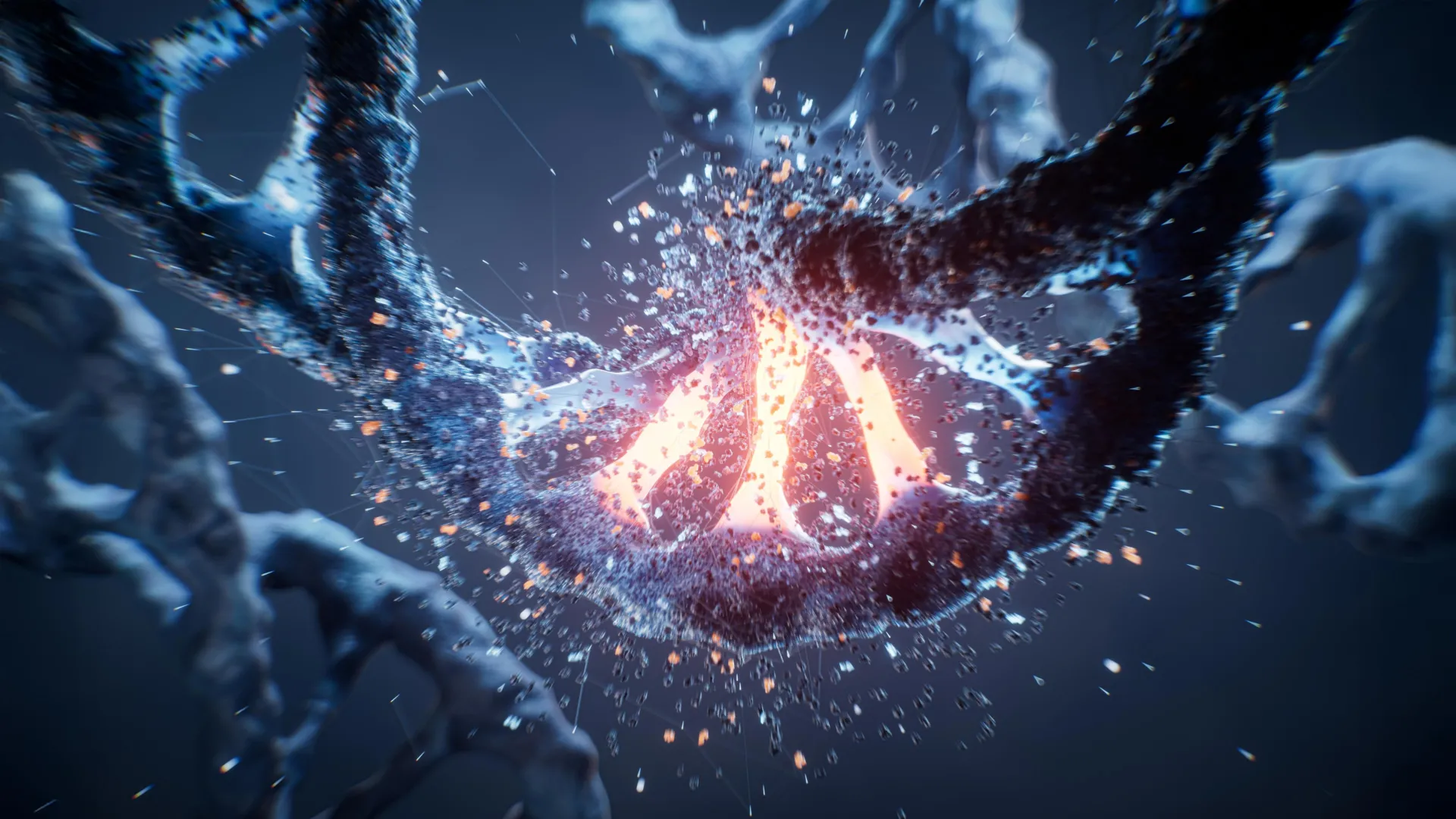
Human DNA is built from long sequences of three-letter units made up of four nucleotides. These units, known as codons, tell cells which amino acids to use when building proteins. While several different codons can code for the same amino acid, this has often been viewed as simple redundancy in the genetic system.

However, research is increasingly showing that these so-called synonymous codons are not truly equal. Some codons make mRNA molecules more stable and easier for cells to translate into proteins, making them more efficient. Others, considered non-optimal, lead to weaker translation and are more likely to be broken down. Until now, scientists have not fully understood how human cells recognize and respond to these less efficient codons.

Scientists Search for the Cell’s “Quality Control” System

To investigate this question, a research team from Kyoto University and RIKEN, led by Osamu Takeuchi and Takuhiro Ito, carried out a series of experiments aimed at uncovering how cells handle codon efficiency.

They began with a genome-wide CRISPR screening to identify factors involved in codon-dependent gene expression. This approach pointed to an RNA-binding protein called DHX29 as a key player. Follow-up RNA sequencing allowed the researchers to examine overall mRNA activity, revealing that when DHX29 is missing, mRNAs containing non-optimal codons increase in abundance.

How DHX29 Detects and Suppresses Weak Genetic Messages

Using cryo-electron microscopy, the team was able to observe how DHX29 physically interacts with the 80S ribosome, the cellular machinery responsible for protein production. Additional analysis using selective ribosome profiling showed that DHX29 is more likely to associate with ribosomes that are reading non-optimal codons.

Further proteomic studies revealed that DHX29 recruits the GIGYF2•4EHP protein complex. This complex acts to selectively suppress mRNAs that contain non-optimal codons, effectively reducing the production of inefficient genetic messages.

“Together, these findings reveal a direct molecular link between synonymous codon choice and the control of gene expression in human cells,” says co-corresponding author Masanori Yoshinaga.

A New Layer of Gene Regulation With Broad Implications

These findings change how scientists think about gene regulation, showing that codon choice itself plays a direct role in controlling gene expression in human cells. The DHX29-driven mechanism could influence important biological processes such as cell differentiation, maintaining cellular balance, and the development of cancer, suggesting wide-ranging significance.

The researchers plan to continue exploring how DHX29 affects gene activity in both health and disease.

“We have long been fascinated by how cells interpret the hidden layer of information embedded within the genetic code, so discovering the molecular factor that allows human cells to read and respond to this hidden code has been particularly rewarding,” says team leader Osamu Takeuchi.

Share. Facebook Twitter Pinterest LinkedIn Tumblr Email
Previous ArticleWireGuard VPN developer can’t ship software updates after Microsoft locks account
Next Article Polanski claims Labour has offered just ‘toxic combination of chaos and cowardice’ – UK politics live | Politics
primereports
  • Website

Related Posts

Healthcare Innovation

How Can More Efficient Data Sharing Improve Patient Care Plans?

April 9, 2026
Healthcare Innovation

To get people to lower blood pressure, study suggests team approach

April 9, 2026
Healthcare Innovation

Scientists map the brain’s hidden wiring using RNA barcodes in major breakthrough

April 8, 2026
Add A Comment
Leave A Reply Cancel Reply

Top Posts

Global Resources Outlook 2024 | UNEP

December 6, 20258 Views

The D Brief: DHS shutdown likely; US troops leave al-Tanf; CNO’s plea to industry; Crowded robot-boat market; And a bit more.

February 14, 20264 Views

German Chancellor Merz faces difficult mission to Israel – DW – 12/06/2025

December 6, 20254 Views
Stay In Touch
  • Facebook
  • YouTube
  • TikTok
  • WhatsApp
  • Twitter
  • Instagram
Latest Reviews

Subscribe to Updates

Get the latest tech news from FooBar about tech, design and biz.

PrimeReports.org
Independent global news, analysis & insights.

PrimeReports.org brings you in-depth coverage of geopolitics, markets, technology and risk – with context that helps you understand what really matters.

Editorially independent · Opinions are those of the authors and not investment advice.
Facebook X (Twitter) LinkedIn YouTube
Key Sections
  • World
  • Geopolitics
  • Popular Now
  • Artificial Intelligence
  • Cybersecurity
  • Crypto
All Categories
  • Artificial Intelligence
  • Climate Risks
  • Crypto
  • Cybersecurity
  • Defense
  • Economy
  • Geopolitics
  • Global Markets
  • Healthcare Innovation
  • Politics
  • Popular Now
  • Science
  • Technology
  • World
  • About Us
  • Contact Us
  • Privacy Policy
  • Terms & Conditions
  • Disclaimer
  • Cookie Policy
  • DMCA / Copyright Notice
  • Editorial Policy

Sign up for Prime Reports Briefing – essential stories and analysis in your inbox.

By subscribing you agree to our Privacy Policy. You can opt out anytime.
Latest Stories
  • Iran oil shock stirs memories of 1997 Asian Financial Crisis — but here’s why history may not repeat itself
  • Visual Studio Code 1.115 introduces VS Code Agents app
  • Iran war analysis: How 60 nations have responded to the global energy crisis
© 2026 PrimeReports.org. All rights reserved.
Privacy Terms Contact

Type above and press Enter to search. Press Esc to cancel.