
LIVE NEWS
  • Middle East crisis live: ships report attacks as Iran closes strait of Hormuz; Trump reportedly convenes Situation Room meeting | US-Israel war on Iran
  • 50,640 People Affected After Hackers Hit Healthcare Firm, Stealing Personal, Financial and Medical Data
  • [Webinar] Eliminate Ghost Identities Before They Expose Your Enterprise Data
  • The crisis of overfishing in Southeast Asia : The Picture Show : NPR
  • Mexico's Sheinbaum denies 'diplomatic crisis' with Spain after conquest row
  • Reeves rightly fears the bond market, but she can afford to ditch one unhelpful rule | Phillip Inman
  • Sovereign resilience starts in the north
  • Electric vehicle owners could earn thousands by supporting power grid
Prime Reports
  • Home
  • Popular Now
  • Crypto
  • Cybersecurity
  • Economy
  • Geopolitics
  • Global Markets
  • Politics
  • See More
    • Artificial Intelligence
    • Climate Risks
    • Defense
    • Healthcare Innovation
    • Science
    • Technology
    • World
Prime Reports
  • Home
  • Popular Now
  • Crypto
  • Cybersecurity
  • Economy
  • Geopolitics
  • Global Markets
  • Politics
  • Artificial Intelligence
  • Climate Risks
  • Defense
  • Healthcare Innovation
  • Science
  • Technology
  • World
Home»Science»AI helps archaeologists solve a Roman gaming mystery
Science

AI helps archaeologists solve a Roman gaming mystery

primereportsBy primereportsFebruary 10, 2026No Comments3 Mins Read
Share Facebook Twitter Pinterest LinkedIn Tumblr Reddit Telegram Email
AI helps archaeologists solve a Roman gaming mystery
Share
Facebook Twitter LinkedIn Pinterest Email

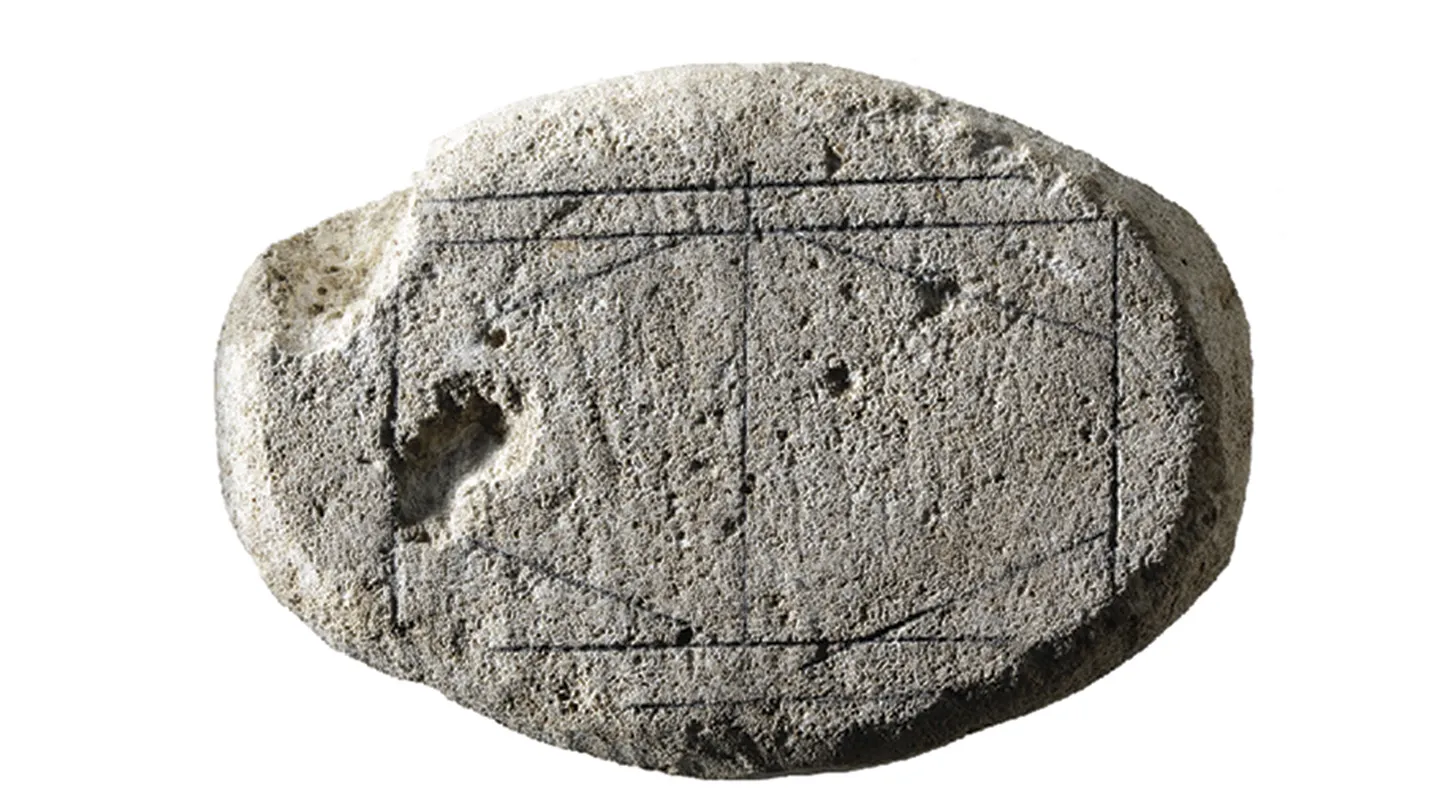
An old, flattened piece of limestone inscribed with a crisscross of grooves looks like the board for a game, but for nearly a century, no one knew how the game was played. Now, researchers have used artificial intelligence to reverse-engineer the rules, revealing the board was probably part of a “blocking” game played by the Romans.

The innovative approach to solving how the game was played had virtual game players run through more than 100 sets of possible rules. The researchers’ goal was to determine which set of rules best created the wear patterns on the limestone, Leiden University archaeologist Walter Crist and his colleagues report in the February Antiquity.

Sign up for our newsletter

We summarize the week’s scientific breakthroughs every Thursday.

Archaeologist Véronique Dasen of Switzerland’s University of Fribourg called the study “groundbreaking” and added that the technique could be used to investigate other “lost” games. “The research results invite [archaeologists] to reconsider the identification of Roman period graffiti that could be actual boards for a similar game not present in texts,” she says.

The board, just 20 centimeters across, was found in the Dutch city of Heerlen and put on display in a local museum. Heerlen sits atop the ruins of the Roman town of Coriovallum. The board’s archaeological context is unknown, and there are no records of such a game from Roman times, which lasted until the fifth century in this region.

Given the board’s size, the game probably had only two players. The researchers used the AI-driven Ludii game system to pit the two virtual players against each other in thousands of possible games, derived in part from the known rules of later games. Ludii uses a specialized “game description language” to drive its virtual players; in this case, the games were designed to test different configurations of pieces and moves so that the researchers could determine which rules might have produced the wear patterns.

“We tried many different kinds of combinations: three versus two pieces, or four versus two, or two against two … we wanted to test out which ones replicated the wear on the board,” Crist says. The game, called Ludus Coriovalli, or the “Coriovallum Game,” can now be played online against a computer.

The result suggests that, on limestone at least, one player took turns placing four pieces in the grooves against an opponent’s two. The winner was the player who avoided being blocked the longest.

Blocking games like this weren’t thought to have been played in Europe until the Middle Ages, Crist says. Go and Dominoes are modern blocking games, but Ludus Coriovalli doesn’t resemble either of those.

Some archaeologists of games say the study is the beginning of a breakthrough. “If more were known about the board’s context and potential game pieces, more interpretations could be made of how it functioned in past social life,” says University of North Florida anthropologist Jacqueline Meier, who was not involved in the research. 

Dasen also wasn’t involved but led the Locus Ludi project to study ancient Roman and Greek board games and other forms of play. She says blocking games were once popular in Europe and that their names in several languages indicate they were often likened to hunting. But there had been no evidence until now that the Romans knew of this type of game, she says. “Games can go on for centuries, and sometimes they appear and then disappear.”


Share. Facebook Twitter Pinterest LinkedIn Tumblr Email
Previous ArticleThe European Union has put €700 million into NanoIC
Next Article Japan Embraces Stability At Home, Proactiveness Abroad – Analysis – Eurasia Review
primereports
  • Website

Related Posts

Science

Electric vehicle owners could earn thousands by supporting power grid

April 18, 2026
Science

700-year-old mummy from Bolivia contains earliest confirmed evidence of strep throat bacteria in the Americas

April 18, 2026
Science

Science behind the scenes

April 18, 2026
Add A Comment
Leave A Reply Cancel Reply

Top Posts

Global Resources Outlook 2024 | UNEP

December 6, 20258 Views

The D Brief: DHS shutdown likely; US troops leave al-Tanf; CNO’s plea to industry; Crowded robot-boat market; And a bit more.

February 14, 20264 Views

German Chancellor Merz faces difficult mission to Israel – DW – 12/06/2025

December 6, 20254 Views
Stay In Touch
  • Facebook
  • YouTube
  • TikTok
  • WhatsApp
  • Twitter
  • Instagram
Latest Reviews

Subscribe to Updates

Get the latest tech news from FooBar about tech, design and biz.

PrimeReports.org
Independent global news, analysis & insights.

PrimeReports.org brings you in-depth coverage of geopolitics, markets, technology and risk – with context that helps you understand what really matters.

Editorially independent · Opinions are those of the authors and not investment advice.
Facebook X (Twitter) LinkedIn YouTube
Key Sections
  • World
  • Geopolitics
  • Cybersecurity
  • Popular Now
  • Crypto
  • Artificial Intelligence
All Categories
  • Artificial Intelligence
  • Climate Risks
  • Crypto
  • Cybersecurity
  • Defense
  • Economy
  • Geopolitics
  • Global Markets
  • Healthcare Innovation
  • Politics
  • Popular Now
  • Science
  • Technology
  • World
  • About Us
  • Contact Us
  • Privacy Policy
  • Terms & Conditions
  • Disclaimer
  • Cookie Policy
  • DMCA / Copyright Notice
  • Editorial Policy

Sign up for Prime Reports Briefing – essential stories and analysis in your inbox.

By subscribing you agree to our Privacy Policy. You can opt out anytime.
Latest Stories
  • Middle East crisis live: ships report attacks as Iran closes strait of Hormuz; Trump reportedly convenes Situation Room meeting | US-Israel war on Iran
  • 50,640 People Affected After Hackers Hit Healthcare Firm, Stealing Personal, Financial and Medical Data
  • [Webinar] Eliminate Ghost Identities Before They Expose Your Enterprise Data
© 2026 PrimeReports.org. All rights reserved.
Privacy Terms Contact

Type above and press Enter to search. Press Esc to cancel.