
LIVE NEWS
  • Dutch far-right party pays damages to court artist after changing image with AI | Netherlands
  • Smarter Summer Vacations: The Best AI Travel Gadgets to Pack This Year
  • European, island states seek clear future for global roadmap to cut fossil fuels
  • Trump privacy restrictions may reduce Census Bureau data : NPR
  • Can fasting fight gum disease? Scientists find surprising link
  • 5 Raspberry Pi projects I’m self-hosting this year instead of wasting money on monthly subscriptions
  • Women’s T20 World Cup: Danni Wyatt-Hodge on scoring ‘mummy’ hundred
  • Google unveils DiffusionGemma, an AI model that breaks free of left-to-right processing
Prime Reports
  • Home
  • Popular Now
  • Crypto
  • Cybersecurity
  • Economy
  • Geopolitics
  • Global Markets
  • Politics
  • See More
    • Artificial Intelligence
    • Climate Risks
    • Defense
    • Healthcare Innovation
    • Science
    • Technology
    • World
Prime Reports
  • Home
  • Popular Now
  • Crypto
  • Cybersecurity
  • Economy
  • Geopolitics
  • Global Markets
  • Politics
  • Artificial Intelligence
  • Climate Risks
  • Defense
  • Healthcare Innovation
  • Science
  • Technology
  • World
Home»Science»A secret to making a queen bee may lie in the wax around it
Science

A secret to making a queen bee may lie in the wax around it

primereportsBy primereportsJune 3, 2026No Comments3 Mins Read
Share Facebook Twitter Pinterest LinkedIn Tumblr Reddit Telegram Email
A secret to making a queen bee may lie in the wax around it
Share
Facebook Twitter LinkedIn Pinterest Email


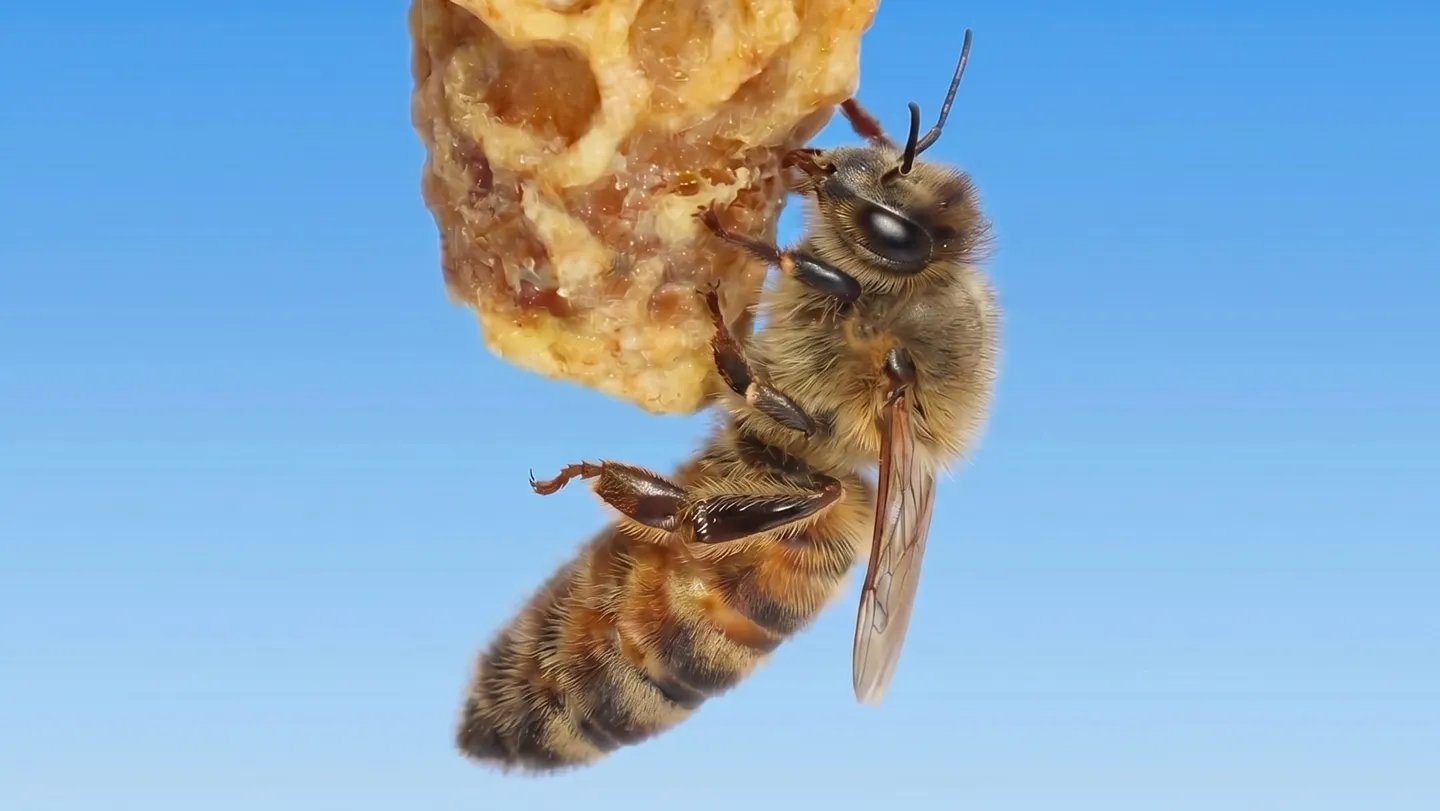
A queen bee may be shaped by more than its famous royal diet.

The wax of the peanut-shaped chamber where the queen develops has distinct physical and chemical properties that help steer its development, researchers report June 3 in Nature. By analyzing the chamber’s composition and the larvae it harbors, the team challenges the long-held notion that royal jelly alone — the queen-making food fed to select larvae — makes a queen.

“The discovery is very cool and thought-provoking,” says Thomas Seeley, a biologist at Cornell University who was not involved in the work. “To me, queen cells have long seemed important because odors from a developing queen may permeate the wax walls, marking them as very special spots that workers recognize and don’t accidentally damage.”

Sign up for our newsletter

We summarize the week’s scientific breakthroughs every Thursday.


But for entomologist Boris Baer, the cells posed a question born of years observing his own colonies. “Bees spend so much time and energy constructing these cells that it made little evolutionary sense if they were merely larger food containers,” says Baer, of the University of California, Riverside. “Could the cell itself contribute to queen development?”

Baer and colleagues studied western honeybees (Apis mellifera) and eastern honeybees (Apis cerana), comparing queen- and worker-cell wax, the workers that build the cells and how larvae fare in each wax environment.

The first clues came from the wax. Analyses showed that queen-cell wax is softer, less dense and chemically distinct from worker-cell wax.

The next finding came as a surprise, Baer says. The “royal nurses” building “royal cribs” for their future queens “spend longer [than worker cell builders] constructing these cells, run hotter than other bees and show distinct patterns of gene [activity],” suggesting they are specially adapted to modify the wax they work with.

But the strongest evidence came when the team let queen-destined larvae develop on royal jelly for four days, then replaced the caps on their artificial queen cells with wax from either queen or worker cells. Up to about two-thirds of larvae under worker-cell wax died, compared with roughly a third under queen-cell wax. They also developed into smaller pupae, while queens reared under queen-cell wax more closely resembled those left undisturbed in their natural cells.

“Everything was supporting the same conclusion,” Baer says. Bees do more than feed the queen — they “actively engineer them.”

Exactly how that engineering works remains unclear. Kai Wang, an apiologist at the Chinese Academy of Agricultural Sciences in Beijing, says the distinct chemical scents he and the team found inside the cells are especially intriguing. “Are they influencing the developing queen’s senses, preparing her for mating and life after emergence?” he wonders. “Are some produced by the larva herself? And could the future queen be actively communicating with the workers constructing her chamber?”

The researchers plan to trace when during development the wax environment exerts its effects. But the implications extend beyond queen development, Baer says. “These superorganisms mobilize specialized workers that collectively shape the next generation,” he says. “The division of labor in bees might be much more complex than we have acknowledged so far.”

Share. Facebook Twitter Pinterest LinkedIn Tumblr Email
Previous ArticleFour sentenced to death for killing worshippers at Catholic church in Nigeria
Next Article Army seeks US manufacturer to supply boots
primereports
  • Website

Related Posts

Science

A popular sunscreen ingredient can finally be sold in the United States

June 12, 2026
Science

These tiny holes could change how the world cleans water

June 12, 2026
Science

My quiet obsession with satellites — and how they’re ruining everything

June 12, 2026
Add A Comment
Leave A Reply Cancel Reply

Top Posts

Paxton’s win over Cornyn sets up high-stakes Texas clash with Talarico

May 28, 202616 Views

Global Resources Outlook 2024 | UNEP

December 6, 202510 Views

Texas Democrat Talarico claims voting laws are rigged ahead of Paxton race

May 28, 20269 Views
Stay In Touch
  • Facebook
  • YouTube
  • TikTok
  • WhatsApp
  • Twitter
  • Instagram
Latest Reviews

Subscribe to Updates

Get the latest tech news from FooBar about tech, design and biz.

PrimeReports.org
Independent global news, analysis & insights.

PrimeReports.org brings you in-depth coverage of geopolitics, markets, technology and risk – with context that helps you understand what really matters.

Editorially independent · Opinions are those of the authors and not investment advice.
Facebook X (Twitter) LinkedIn YouTube
Key Sections
  • World
  • Geopolitics
  • Popular Now
  • Artificial Intelligence
  • Cybersecurity
  • Crypto
All Categories
  • Artificial Intelligence
  • Climate Risks
  • Crypto
  • Cybersecurity
  • Defense
  • Economy
  • Geopolitics
  • Global Markets
  • Healthcare Innovation
  • Politics
  • Popular Now
  • Science
  • Technology
  • World
  • About Us
  • Contact Us
  • Privacy Policy
  • Terms & Conditions
  • Disclaimer
  • Cookie Policy
  • DMCA / Copyright Notice
  • Editorial Policy

Sign up for Prime Reports Briefing – essential stories and analysis in your inbox.

By subscribing you agree to our Privacy Policy. You can opt out anytime.
Latest Stories
  • Dutch far-right party pays damages to court artist after changing image with AI | Netherlands
  • Smarter Summer Vacations: The Best AI Travel Gadgets to Pack This Year
  • European, island states seek clear future for global roadmap to cut fossil fuels
© 2026 PrimeReports.org. All rights reserved.
Privacy Terms Contact

Type above and press Enter to search. Press Esc to cancel.