

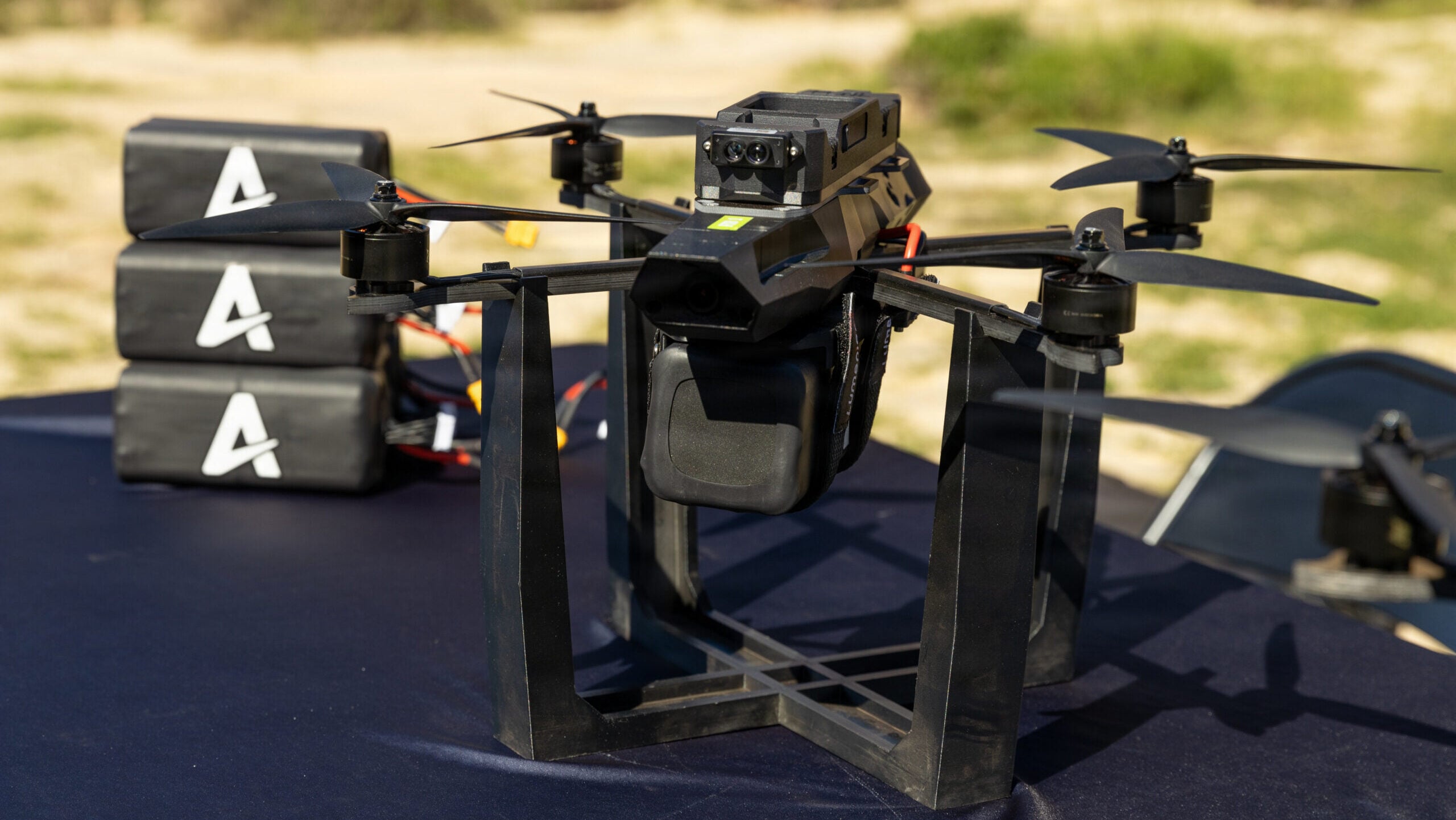
As US and allied partners push to develop, produce and field military technologies for the modern battlefield, they are leaning into lessons learned from Ukraine and other recent global conflicts. Unmanned and autonomous systems are a major focus, and to have lasting impact must fit seamlessly into how wars are fought and sustained.
When it comes to unmanned systems, the US military does not have a technology problem — there are dozens of viable options in existence that would improve our capabilities to deter and wage wars. Rather, we have a technology adoption problem. The challenge lies in how these technologies fit into the ways our military operates and wages war, and trust by human operators in both the technology and the application must be created if those technologies are to be successfully accepted, produced and fielded in appreciable quantities.
In developing these systems, government leaders should recognize that experience and expertise from their industry partners is just as important for securing military advantage as the technology being provided. The buzziest technology won’t matter if warfighters don’t trust it, or if a start-up is unable to produce the systems at scale.
Simply put, autonomy and unmanned systems only create real advantage when tied to hard-fought experience in hardware production, industrial capacity, and the associated specialized expertise that comes with real-world experience.
If warfighters are to trust and widely adopt such systems, these machines must successfully do their intended job, on time, every time. Experience is required to reduce risk and ensure that high quality hardware is produced at scale, and able to be readily used and supported on the battlefield without substantial external assistance.
It is companies with experience providing scaled quantities of military hardware that is reliable, maintainable, and effective, done at a reasonable cost, which are best positioned to provide the backbone onto which new autonomous capabilities and enabling software can be added.
There is significant risk as to whether companies without such experience, particularly those which strive to be fully vertically integrated autonomy software and hardware providers, can perform when needed, fit seamlessly into military operations, and be supported under austere conditions.
That doesn’t mean new entrants should not be part of the industrial base solution. In fact, there are several options for how to combine these new firms — which often come armed with great new ideas — with experienced members of the defense industrial base.
A recent surge of teaming combinations between traditional aerospace and defense hardware providers and new technology software firms suggests a better path, marrying traditional original equipment manufacturer abilities with innovative specialized software technologies. For example, the unmanned systems market has seen a number of industrial partnerships joining traditional providers with a range of AI-enabled software vendors offering advanced computer vision and perception systems, as well as mission-focused autonomy. What is required are core vehicle autonomy systems ready to accept specialized AI-enabled technologies through open architecture approaches.
Another new business model being explored is through partnerships that leverage commercial mass production capabilities, offering large volume production capacity at lower costs. For example, several unmanned surface vessel makers have teamed up with existing boatbuilders and shipyards, joining existing platform construction knowhow and capacity with new unmanned and autonomy technologies. Such arrangements were the rare exception a decade ago.
Companies with deep military experience offer another vital advantage: high quality data on which to train AI models. With defense moving to AI-enabled everything, and those models only as good as their training data, having large amounts of data from autonomous and unmanned operations in real world threat environments is vital.
For example, several companies operate drones on a contractor-owned and -operated model and have collected data from millions of hours of unmanned operations, generally in real world threat environments supporting US and allied global operational deployments. The domain specific insight provided by this data is difficult to obtain and can be applied to a wide range of unmanned and autonomy solutions, including training specific AI applications such as target recognition models and improved predictive maintenance.
Warfighters are relying on autonomous and unmanned systems at ever increasing rates. They need companies which know how to develop and build machines and do so in a manner that best fits how the US military will fight and sustain them on the battlefield.
At the end of the day, we are talking about the security of the United States. And for that, experience still matters.
Sara Willett is Vice President of Uncrewed Land and Air Systems at Textron Systems.
