

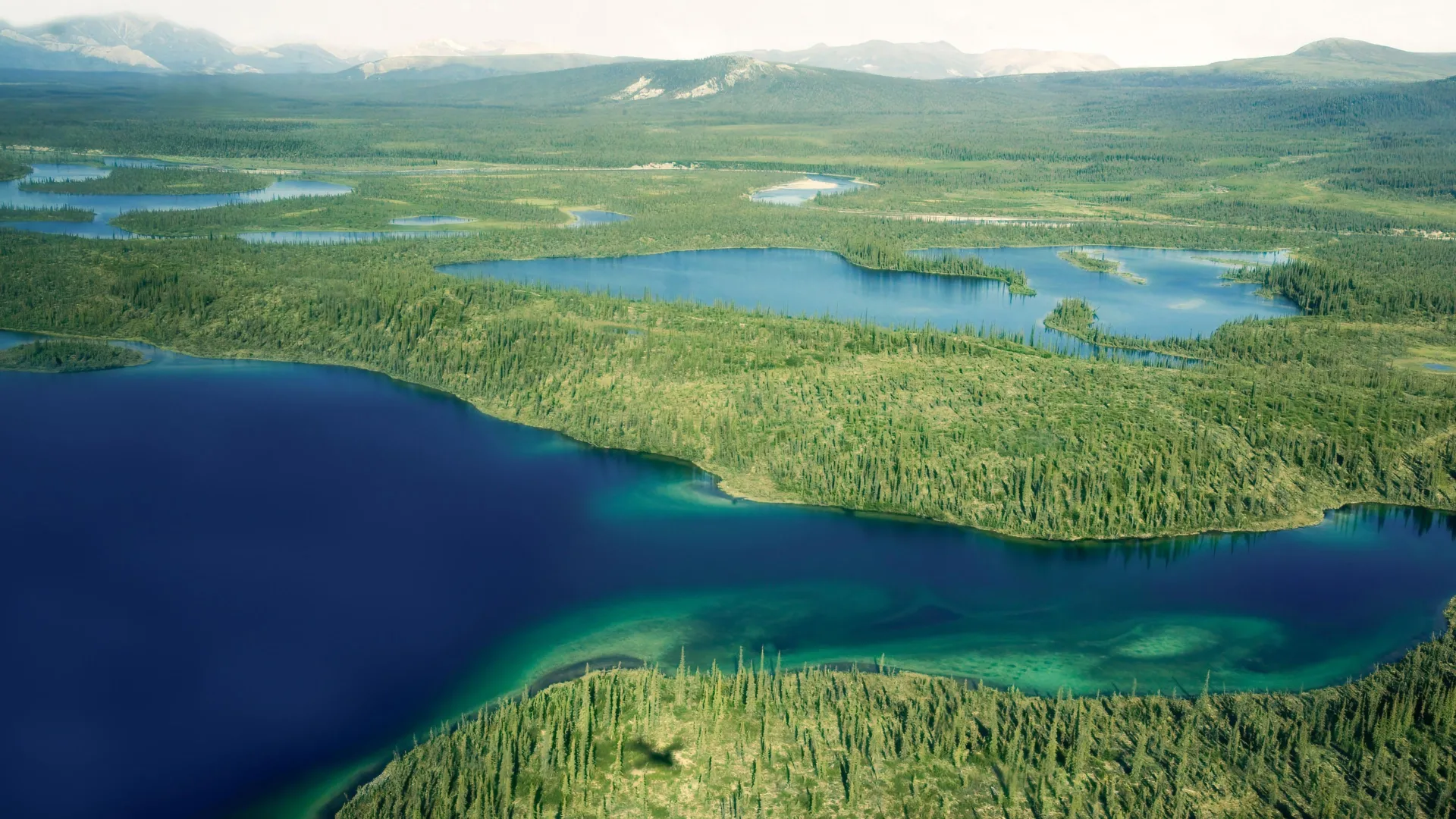
In their natural condition, peatlands rank among the planet’s most important carbon reservoirs. The soil is saturated with water and contains very little oxygen, which slows the breakdown of dead plants. Instead of fully decomposing, plant material builds up layer upon layer over thousands of years, forming deep deposits of peat that lock away carbon for the long term.
That balance changes when peatlands are drained for farming. Lowering the water table allows oxygen to enter the soil, speeding up microbial activity. As microbes break down the previously preserved plant matter, carbon that has been stored for centuries is released into the atmosphere as carbon dioxide (CO2).
Northern Peatlands Remain Understudied
Large areas of peatland across Europe and the Nordic region have been drained since the 1600s. Scientists have closely examined how drainage and shifting water levels affect greenhouse gas emissions in many of these regions.
Far less is known about the northernmost peatlands used for agriculture. These areas experience cold temperatures, short growing seasons, and extended daylight during summer months.
“From studies in warmer regions, we know that raising the groundwater level in drained and cultivated peatland often reduces CO2 emissions, because the peat decomposes more slowly,” explains NIBIO researcher Junbin Zhao.
“At the same time, wetter and low-oxygen conditions can increase methane, since the microbes that produce methane thrive when there is almost no oxygen in the soil.”
Nitrous oxide can also increase under certain moisture conditions. When soil is damp but not completely waterlogged, nitrogen breakdown may stop midway, producing nitrous oxide instead of harmless nitrogen gas.
“Because each greenhouse gas reacts differently to changes in water level, one gas can go down while another goes up. That’s why it’s important to look at the overall gas balance,” says Zhao.
“We need to measure CO2, methane, and nitrous oxide at the same time and throughout the whole season to understand the real net effect in the northernmost agricultural areas.”
Two Year Arctic Field Study in Northern Norway
To answer these questions, Zhao and his colleagues carried out a two year field study in 2022 and 2023 at NIBIO’s Svanhovd research station in the Pasvik Valley of Northern Norway. Automated chambers tracked CO2, methane, and nitrous oxide emissions multiple times per day throughout the growing season.
“The experiment included five plots that together reflected typical management conditions found in a drained agricultural field — with different groundwater levels, different amounts of fertiliser, and different numbers of harvests per season,” Zhao explains.
The team focused on three key questions:
- Can raising the groundwater level make a cultivated Arctic peatland close to climate-neutral?
- Does the water level affect soil CO2 emissions more than it affects plant CO2 uptake?
- How do fertilization and harvesting influence the total climate balance?
Higher Groundwater Levels Cut CO2 Emissions
When the Pasvik peatland was heavily drained, it released large amounts of CO2, comparable to cultivated peatlands farther south. But when researchers raised the groundwater to between 25 and 50 cm below the surface, emissions dropped sharply.
“At these higher water levels, methane and nitrous oxide emissions were also low, giving a much better overall gas balance. Under such conditions, the field even absorbed slightly more CO2 than it released,” says Zhao.
This suggests that maintaining higher groundwater levels in Arctic farmland could serve as an effective climate strategy.
“Our findings are especially interesting because emissions were measured continuously around the clock. This meant we captured short spikes of unusually high emissions and natural daily fluctuations, details often missed when measurements are taken only occasionally.”
Why Cold Arctic Climates Amplify the Effect
Raising the water table makes the soil wetter and reduces oxygen around plant roots. Plants become somewhat less active and absorb less CO2 under these conditions.
Even so, overall CO2 emissions from the field decline.
“This is because wet conditions mean that the field needs less light before it starts to absorb more CO2 than it releases. When this threshold is reached earlier in the day, you get more hours with net carbon uptake,” Zhao explains.
“Our calculations show that this effect is especially strong in the north, due to the long, light summer nights. These provide many extra hours where the system remains on the positive side, which can increase total CO2 uptake significantly.”
Temperature turned out to be another crucial factor. Once soil temperatures climbed above about 12°C, microbial activity intensified.
“At higher temperatures, microorganisms break down organic material faster, and both CO2 and methane emissions rise,” says Zhao.
“This means that the effect of high water levels is greatest in cool climates — and that future warming could reduce the benefit. In practice, this means water levels must be considered together with temperature and local conditions.”
Fertilization and Harvesting Shape the Carbon Balance
Farm management practices also played a role. Adding more fertilizer boosted grass growth.
“More fertilizer produced more biomass but did not lead to noticeable changes in CO2 or methane emissions in our experiment,” says Zhao.
Harvesting had a clearer impact. When grass was cut and removed, the carbon stored in plant material left the system.
“If harvesting is very frequent, more carbon can be taken out than is built up again over time. The peat layer may gradually lose carbon even when water levels are kept high,” Zhao explains.
For that reason, Zhao emphasizes that water management, fertilizer use, and harvesting schedules must be evaluated together. Steps that lower emissions in the short term could reduce long term carbon storage, potentially weakening soil quality.
“One solution could be paludiculture, i.e. growing plant species that tolerate wet conditions so that biomass can be produced without keeping the soil dry.”
Local Differences Matter for Climate Accounting
The researchers also observed significant variation within the same field. Some areas absorbed CO2, while nearby sections released substantial amounts.
“Such local variation can greatly influence national climate accounting and how measures are designed, because one standard emission factor may not reflect reality everywhere,” Zhao says.
“The results from our study show a clear need for more detailed measurements and more precise water-level management in practice, especially where soils and farming conditions vary significantly between locations.”
