

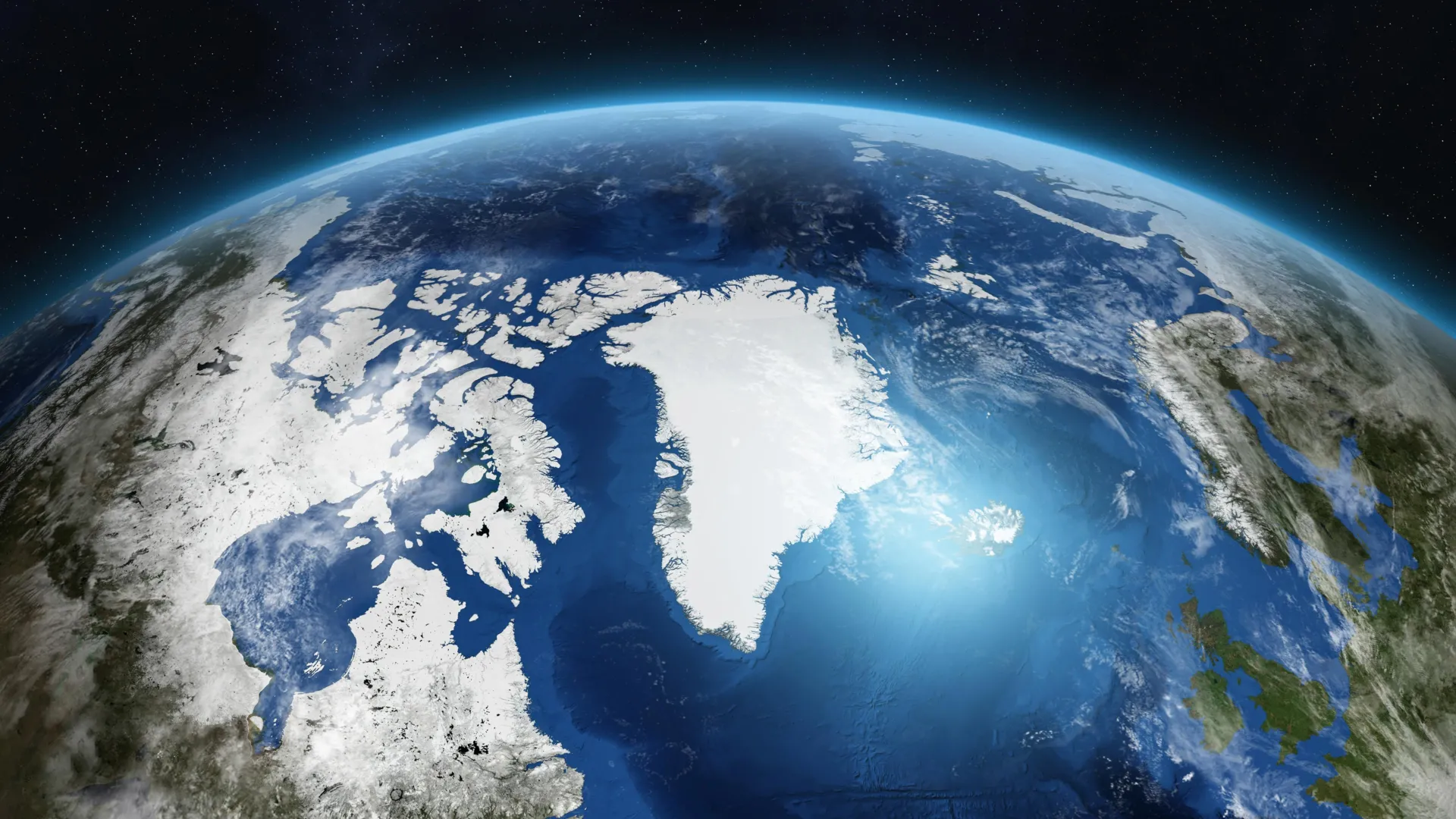
For decades, assessments from the United Nations’ Intergovernmental Panel on Climate Change (IPCC) have tracked how Earth’s climate is shifting and have helped shape policies aimed at slowing global warming.
Those assessments draw on extensive climate records, including annual measurements of autumn snow cover in the Northern Hemisphere collected by the U.S. National Oceanic and Atmospheric Administration (NOAA) since the 1960s.
Why Snow Cover Matters for Climate Change
Snow cover measures how much of Earth’s land surface is blanketed in snow. It plays a major role in regulating temperature because snow reflects a large portion of incoming energy back into space. While bare ground and vegetation reflect less than 50 percent of the energy that reaches them, snow reflects about 80 percent.
“Snow cover is important because it’s a positive climate feedback mechanism,” explains Aleksandra Elias Chereque, a PhD student in the Faculty of Arts & Science’s Department of Physics.
“This is referred to as the snow-albedo effect — albedo meaning reflectivity. Snow loss leads to a decrease in albedo which leads to higher energy absorption which, in turn, leads to enhanced snow loss. This is a contributing factor to a phenomenon known as ‘Arctic amplification’ and it’s why we observe a disproportionate amount of heating in the Arctic.”
In simple terms, when snow disappears, darker land absorbs more heat. That extra heat melts even more snow, accelerating warming in the Arctic faster than in many other parts of the world.
Questions About NOAA Snow Data
For years, some climate researchers have questioned how reliable NOAA’s snow cover data might be. They noted that the trends in the dataset did not align well with other observations and cautioned that the findings should be interpreted carefully.
Elias Chereque and her colleagues revisited the NOAA records to investigate these discrepancies. Their new analysis suggests that the earlier concerns were justified.
According to the original NOAA data, autumn snow cover in the Northern Hemisphere appeared to increase by about 1.5 million square kilometers per decade, roughly the size of one and a half Ontarios. However, the updated analysis finds the opposite trend. Snow cover has actually been shrinking by about half a million square kilometres per decade, or about half the area of Ontario.
How Satellite Improvements Skewed the Record
The team determined that changes in satellite instruments and data collection techniques over time made the system more sensitive to thin layers of snow. As detection improved, satellites began identifying lighter snow cover that earlier instruments would have missed. That shift created the false impression that overall snow extent was expanding.
“It’s as if the satellite’s ‘eye glasses’ got better and better over that period,” says Elias Chereque. “It looks like there’s more snow now than there used to be but that’s only because the satellite kept getting better ‘prescriptions for its glasses.’ It looked like there was more snow but that’s not what was happening.”
Elias Chereque is the lead author of the study, ‘Determining the cause of inconsistent onset-season trends in the Northern Hemisphere snow cover extent record’, published in Science Advances. Her University of Toronto co-author is atmospheric physicist Paul Kushner, chair of the Department of Physics. Additional collaborators are from the Climate Research Division of Environment and Climate Change Canada.
Clearer Evidence of Arctic Snow Decline
The revised findings strengthen the conclusion that snow cover is declining throughout the year and increase confidence in that trend. According to Elias Chereque, “We know snow loss is influenced by anthropogenic warming and snow loss also creates more potential for warming through the snow-albedo feedback, so we’ve gained a better understanding of this important mechanism of Arctic amplification.”
She adds, “Showing how and why the snow cover trend was wrong helps us learn how to use this data set properly when we’re estimating past conditions and future trends. And that helps in understanding whether climate models are accurate.
“Developing tools like this helps us better understand climate and helps us make better predictions about the future.”
