
LIVE NEWS
  • Middle East crisis live: Iranian missiles intercepted over Turkey, Qatar and UAE as Israel resumes strikes across Tehran and Beirut | US-Israel war on Iran
  • Institutional Investors Pour $619,000,000 Into Bitcoin and Crypto Assets in One Week: CoinShares
  • How AI Assistants are Moving the Security Goalposts – Krebs on Security
  • Oil Price Spike: What Countries Are Telling People to Do
  • The D Brief: US toll rises to 8; Iran’s new leader; Building military-specific AI; Counting the rationales for war; And a bit more.
  • Sugar Prices Jump as Crude Oil Surges
  • Anthropic sues Trump administration seeking to undo ‘supply chain risk’ designation
  • Wildfire season is shifting, but its new time windows vary across Canada and the US drought-prone West
Prime Reports
  • Home
  • Popular Now
  • Crypto
  • Cybersecurity
  • Economy
  • Geopolitics
  • Global Markets
  • Politics
  • See More
    • Artificial Intelligence
    • Climate Risks
    • Defense
    • Healthcare Innovation
    • Science
    • Technology
    • World
Prime Reports
  • Home
  • Popular Now
  • Crypto
  • Cybersecurity
  • Economy
  • Geopolitics
  • Global Markets
  • Politics
  • Artificial Intelligence
  • Climate Risks
  • Defense
  • Healthcare Innovation
  • Science
  • Technology
  • World
Home»World»Antarctica has a strange gravity hole and scientists finally know why
World

Antarctica has a strange gravity hole and scientists finally know why

primereportsBy primereportsMarch 9, 2026No Comments4 Mins Read
Share Facebook Twitter Pinterest LinkedIn Tumblr Reddit Telegram Email
Antarctica has a strange gravity hole and scientists finally know why
Share
Facebook Twitter LinkedIn Pinterest Email


Gravity often feels dependable and unchanging. It seems steady enough that we rarely question it. But the real picture is more surprising.

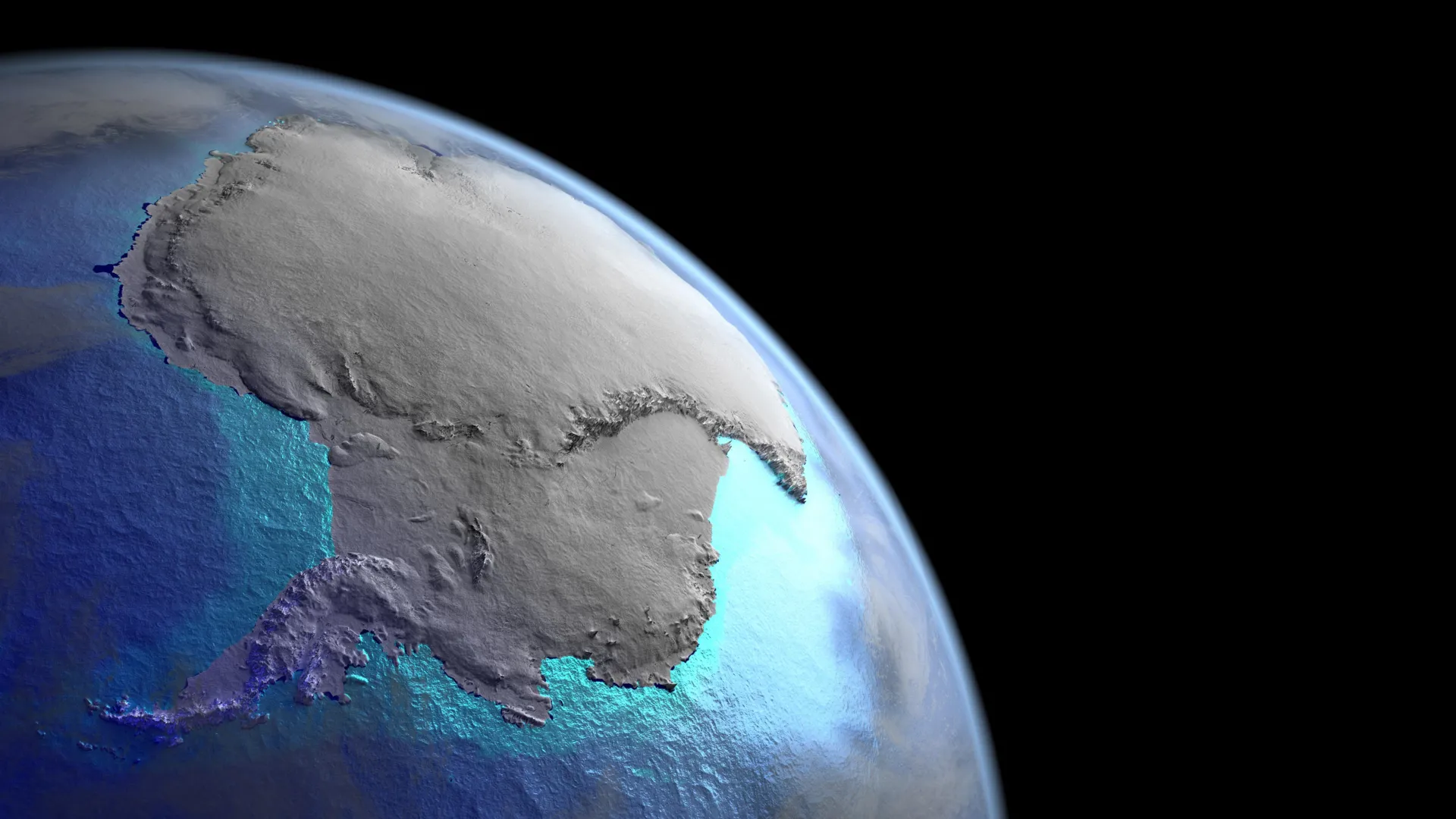
In reality, gravity does not have exactly the same strength everywhere on Earth. Its pull varies slightly across the planet’s surface. After accounting for the effects of Earth’s rotation, the weakest gravity is found beneath Antarctica.

Deep Earth Movements Created Antarctica’s Gravity Hole

A new study shows that extremely slow shifts of rock deep inside the planet helped produce the gravity anomaly beneath Antarctica. These movements occurred over tens of millions of years and gradually formed what scientists call the Antarctic gravity hole. The research also points out that changes in this gravity low happened during the same period as major shifts in Antarctica’s climate. Future studies may reveal whether these gravity changes helped encourage the development of the continent’s vast ice sheets.

“If we can better understand how Earth’s interior shapes gravity and sea levels, we gain insight into factors that may matter for the growth and stability of large ice sheets,” said Alessandro Forte, Ph.D., a professor of geophysics at the University of Florida and co-author of the new study recreating the Antarctic gravity hole’s past.

The differences in gravity come from variations in the density of rocks far beneath Earth’s surface. While the changes in gravitational strength are small, they can influence the oceans in noticeable ways. In regions where gravity is weaker, seawater tends to flow toward areas where the pull is stronger. As a result, the ocean surface in those weaker gravity zones sits slightly lower relative to Earth’s center. Because of the gravity hole beneath Antarctica, sea-surface height around the continent is measurably lower than it would otherwise be.

Using Earthquakes to Map the Planet’s Interior

The research, published recently in Scientific Reports, was conducted by Forte and Petar Glišović, Ph.D., of the Paris Institute of Earth Physics. The scientists mapped the Antarctic gravity hole and reconstructed how it evolved over millions of years. Their work relied on a global scientific effort that combined earthquake recordings from around the world with physics-based computer models. Together, these tools helped reveal the three dimensional structure hidden inside Earth.

“Imagine doing a CT scan of the whole Earth, but we don’t have X-rays like we do in a medical office. We have earthquakes. Earthquake waves provide the ‘light’ that illuminates the interior of the planet,” Forte said.

By analyzing how earthquake waves traveled through the planet and combining those data with physics-based modeling, the researchers created a detailed gravitational map of Earth. The results closely matched highly accurate satellite measurements of Earth’s gravity field. This agreement helped confirm that their models realistically captured the planet’s internal structure.

Rewinding Earth’s Geological History

The next step involved looking back in time to understand how the gravity hole developed. Using advanced computer simulations, the scientists reversed the slow movement of rocks inside the planet. Their models traced these changes back roughly 70 million years, to the era of the dinosaurs.

These reconstructed snapshots showed that the Antarctic gravity hole was initially weaker. Between about 50 and 30 million years ago, however, the anomaly began to grow stronger. That period coincides with major changes in Antarctica’s climate system, including the beginning of widespread glaciation.

Looking ahead, Forte hopes to explore whether the strengthening gravity anomaly played a role in shaping Antarctica’s ice sheets. Future models will examine how gravity, sea level, and changes in continental elevation interact.

Ultimately, the researchers want to answer a larger question about Earth’s systems. As Forte explained, the goal is to understand “How does our climate connect to what’s going on inside our planet?”

Share. Facebook Twitter Pinterest LinkedIn Tumblr Email
Previous ArticleFact-checking Trump’s comments that a 2015 deal gave Iran the right to nuclear weapons
Next Article City Union Bank launches AI centre to support banking operations
primereports
  • Website

Related Posts

World

Middle East crisis live: Iranian missiles intercepted over Turkey, Qatar and UAE as Israel resumes strikes across Tehran and Beirut | US-Israel war on Iran

March 9, 2026
World

India offered sanctuary to Iranian ship three days before US sank it

March 9, 2026
World

Negative emissions technologies and practices could challenge global resource supply and environmental limits

March 9, 2026
Add A Comment
Leave A Reply Cancel Reply

Top Posts

Global Resources Outlook 2024 | UNEP

December 6, 20255 Views

The D Brief: DHS shutdown likely; US troops leave al-Tanf; CNO’s plea to industry; Crowded robot-boat market; And a bit more.

February 14, 20264 Views

German Chancellor Merz faces difficult mission to Israel – DW – 12/06/2025

December 6, 20254 Views
Stay In Touch
  • Facebook
  • YouTube
  • TikTok
  • WhatsApp
  • Twitter
  • Instagram
Latest Reviews

Subscribe to Updates

Get the latest tech news from FooBar about tech, design and biz.

PrimeReports.org
Independent global news, analysis & insights.

PrimeReports.org brings you in-depth coverage of geopolitics, markets, technology and risk – with context that helps you understand what really matters.

Editorially independent · Opinions are those of the authors and not investment advice.
Facebook X (Twitter) LinkedIn YouTube
Key Sections
  • World
  • Geopolitics
  • Popular Now
  • Artificial Intelligence
  • Cybersecurity
  • Crypto
All Categories
  • Artificial Intelligence
  • Climate Risks
  • Crypto
  • Cybersecurity
  • Defense
  • Economy
  • Geopolitics
  • Global Markets
  • Healthcare Innovation
  • Politics
  • Popular Now
  • Science
  • Technology
  • World
  • About Us
  • Contact Us
  • Privacy Policy
  • Terms & Conditions
  • Disclaimer
  • Cookie Policy
  • DMCA / Copyright Notice
  • Editorial Policy

Sign up for Prime Reports Briefing – essential stories and analysis in your inbox.

By subscribing you agree to our Privacy Policy. You can opt out anytime.
Latest Stories
  • Middle East crisis live: Iranian missiles intercepted over Turkey, Qatar and UAE as Israel resumes strikes across Tehran and Beirut | US-Israel war on Iran
  • Institutional Investors Pour $619,000,000 Into Bitcoin and Crypto Assets in One Week: CoinShares
  • How AI Assistants are Moving the Security Goalposts – Krebs on Security
© 2026 PrimeReports.org. All rights reserved.
Privacy Terms Contact

Type above and press Enter to search. Press Esc to cancel.