

It’s a holy grail of UK energy policy – de-linking gas and electricity prices. After all, we’ve been told endlessly that one reason why our energy bills are so high is because “gas sets the price of electricity”. And here it comes: “decisive action” from the government to “break the link”. So, tell us, by how much can we expect bills to fall?
Energy secretary Ed Miliband and colleagues didn’t offer even a tentative answer. The big announcement was a prediction-free zone on bills for two reasons.
First, because the outcome won’t be clear until older wind and solar projects with legacy subsidies, the target of the reform, have been shuffled on to fixed-price contracts next year with a prod from the chancellor in the form of a higher rate of windfall tax if they stay on their current set-up.
Second – and more pertinently – the absence of forecasts is surely because the savings for consumers probably won’t be much to shout about.
The plan is a heavily diluted version of a more radical proposal known as “pot zero”. That one would have attempted a full-blown renegotiation of the legacy subsidy scheme known as the “renewables obligation” (RO), enjoyed by wind and solar farms commissioned before 2017.
Under “pot zero”, projects would have been cajoled on to today’s fixed-price “contracts for difference,” or CfDs. But the government’s intended “voluntary” idea is aiming only at a limited reset.
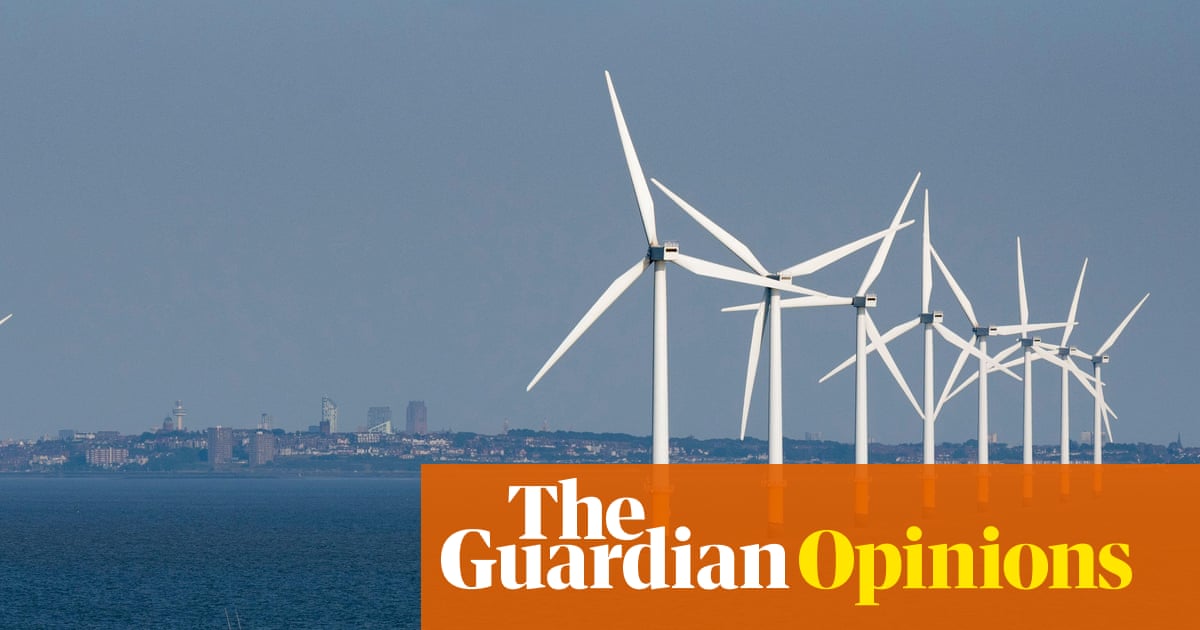
Consider the economics of an older offshore windfarm that operates under the RO scheme. For its generation, it is paid about £130 a MW/h via RO plus the wholesale price for electricity, which has been about £70 in the past year. Call that £200 a MW/h in total – much higher than £91 at which the new offshore projects got post-2017 fixed-price CfDs in last year’s auction.
A full-blown renegotiation of the RO model would offer a big win for consumers if the gap between £200 and £91 could somehow be closed.
But, critically, that is not the aim. Rather, the government said older renewables generators will continue to receive support via the RO “in the way they do now – with only their wholesale revenues being exchanged for a fixed-price CfD”.
The wholesale element is the piece that can explode when the gas price spikes. So a switch to fixed prices will bring greater stability in periods such as now. In that sense, there is a “de-linking” gain. But, if the variable rate of £70-ish under normal conditions only becomes, say, a fixed-rate of £50, the overall gain in bills for consumers will not be gamechanging. Maybe the haircuts will be bigger, but it’s not obvious why they would be.
The RO scheme was necessarily generous to get the industry up and running in its early years. One can’t decry its existence, even if the rewards have been higher than original developers expected. But those generous subsidies only start to roll off from next year and will take a decade to disappear. It is one reason why bills are so hard to shift. The projects still account for 30% of UK electricity generation.
Here’s a rounded view of Tuesday’s plan from Callum MacIver of Strathclyde University, also a researcher for UK Energy Research Centre, which produced the more radical “pot zero” idea in 2022: “While the measures are very welcome, my personal view is that the near-term impact could be relatively modest. With good take-up, they have the potential to insulate electricity prices further from the impact of continued or future gas price shocks, which should be regarded as a win in its own right.
“However, the failure to include the RO element feels like a potential missed opportunity for concrete bill reductions in the near term – particularly for businesses who didn’t benefit in the same way as households from the recent shift of 75% of RO costs from bills to general taxation.”
Yes, that’s fair: the government is really only putting in place protection against spikes by injecting more certainty on prices. To really move the dial on bills, somebody has to be paid less. In this case, it seems, the government fears bad signals to investors if it were to kill the expensive RO scheme before it expires naturally.
The more important announcement in Tuesday’s long list may turn out to be the intention to accelerate the take-up of electric vehicles and heat pumps. That is necessary because, even as the UK has added wind and solar farms, the adoption of electric technology has been achingly slow. As a trio of energy bosses put it this week, the government needs “a clear plan not just for how we produce energy, but how we use it too.”
As for the North Sea, it was hard to tell what Miliband was trying to indicate. He said he doesn’t agree with those who would turn off the taps immediately or with those who would drill “every last drop”, a form of words that leaves a very wide range between producing nothing and producing everything.
His real approach will only become clearer when he (eventually) makes a decision on whether to approve the Jackdaw gasfield and the Rosebank oilfield. Current best guess: the former looks more likely than the latter.
