

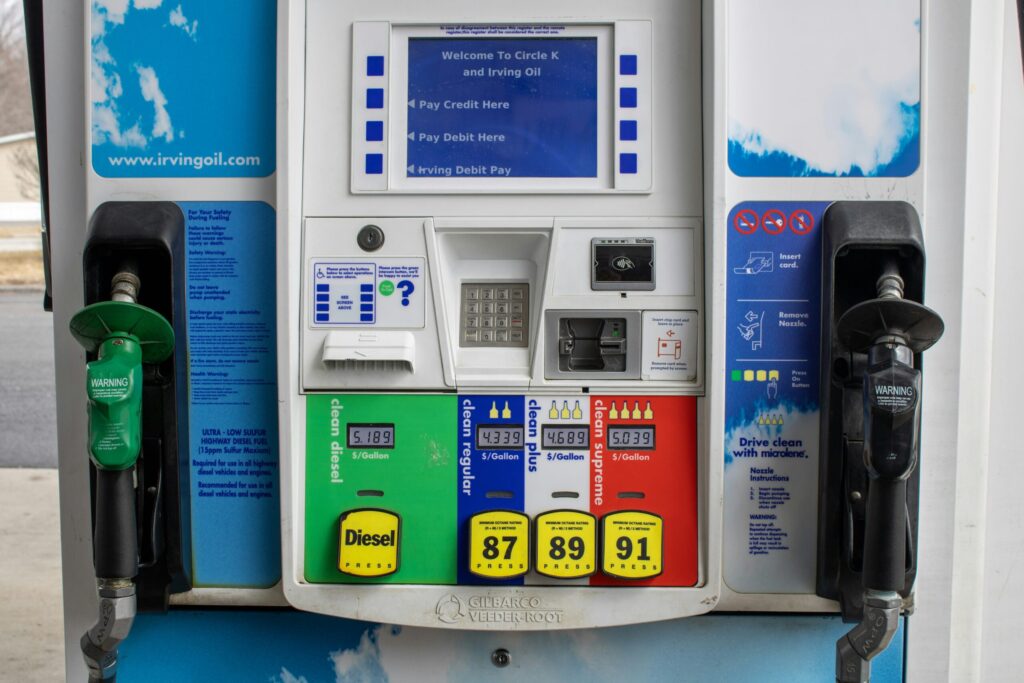

In March, US Energy Secretary Chris Wright ruled out a White House move to restrict crude oil or petroleum product exports. Interior Secretary Doug Burgum has called the idea of an export ban “bad on all accounts.” Still, the Strait of Hormuz has been effectively closed for more than ninety days and it remains uncertain when the standoff will end. To date, drastic global inventory drawdowns and market adjustments have kept a lid on oil prices. Yet if the strait remains closed while stocks decline and other buffers are worn away, a sharp increase in oil prices and US gasoline prices is possible. In advance of elections this November, policymakers could reconsider a crude oil or petroleum product export ban. It is worth analyzing the potential consequences for US energy prices and the global oil market.
From oil import dependence to export powerhouse
From 2004 to 2007, the United States imported an average of 10 million barrels per day (b/d) of crude oil, and ever-growing oil and gas imports seemed inevitable. But the shale oil and gas revolution turned these expectations on their head, delivering the most rapid production increase in the history of the oil industry. From 2009 to 2019, US crude oil production grew by nearly 7 million b/d—adding almost twice the production volume of the United Arab Emirates in just a decade. After a robust debate, in December 2015 the US Congress repealed a ban on crude oil exports.

Today, the United States is the world’s largest oil and gas producer and its largest liquefied natural gas (LNG) exporter, as well as a major exporter of petroleum products and natural gas liquids. Last year, US crude and product exports averaged 10.7 million b/d—more than Saudi Arabia or Russia. And in recent months, US exports surged as buyers sought to replace lost output from the Middle East. In the first half of May, the US exported 13.1 million b/d, according to weekly data from the US Energy Information Administration.
Optimizing for domestic and international markets
As companies built the infrastructure to deliver oil and gas to domestic and international markets, they encountered some challenges, especially the crude quality mismatch between production volumes and refinery configurations. Most shale production in the United States consists of light, sweet crude, but many US refineries are optimized to run heavier, sour crudes, especially in the Midwest and the Gulf Coast. As US shale production grew and the refining complex exhausted its capacity to process light crude, all additional production eventually had to be exported. To do so, companies built new crude oil export terminals along the Gulf Coast.
These changes created a complex but efficient system. The United States is a net petroleum exporter but still imports crude oil, including more than 3.5 million b/d from Canada that is largely delivered to Midwest refineries, as well as heavy crude from Latin America processed by some Gulf Coast refineries. The United States exports more than 3 million b/d in refined products, but it also imports petroleum products, especially to the East Coast and West Coast. Perhaps this is not surprising, since many US population centers are far from producing regions. Markets work, and this system has been optimized.
The downside of restricting oil exports
So, would cutting US oil exports lower domestic gasoline or diesel prices? On the face of it, this seems intuitive: keep more supply at home, and the price should drop. But there are several reasons why this would be ineffective.
Restricting exports of light, sweet US crude would presumably lower the price of West Texas Intermediate (WTI), the dominant US crude oil benchmark. This could initially help domestic refiners who process light crude. But petroleum product prices in the United States reflect global market conditions, and gasoline and diesel prices are based on differentials to international benchmarks. The practical limitation to “energy independence” is that as long as the United States imports crude and products, it cannot decouple itself from the global market. In the event of a ban on US exports of crude oil but not petroleum products, the result could be high product prices domestically—thanks to lower crude supply on the global market—but continued incentives for US refiners to keep exporting. Oil production shut-ins would follow. If shale producers are unable to reach export markets, they would have to restrict output. This would harm US producers as well as global consumers. Natural gas produced alongside crude oil could also be shut in, curtailing feedgas for LNG exports. Finally, restricting crude oil exports could worsen the trade deficit.
A ban on product exports is more likely than a crude oil export ban—but would fail to help US consumers. Restricting 3 million b/d of finished petroleum products or 3 million b/d of natural gas liquids would greatly harm global market fundamentals, which would be reflected in headline crude prices and therefore in US product prices. And the underlying assumption that cutting exports would lead to a domestic glut of products, driving prices down, is incorrect. Product prices may fall initially, especially in the Gulf Coast region and possibly the Midwest. But many export-oriented refineries are located far from consuming centers. The suspension of the Jones Act would help by allowing more efficient transport of products from the Gulf Coast to the East and West Coasts, but the continued availability and cost of tankers are uncertain. Most importantly, domestic refiners without access to export markets would need to cut refinery runs. Lower output of gasoline, diesel, jet fuel, and other products would have the exact opposite effect of the original intent: higher prices for consumers.
To be clear, an oil export ban seems unlikely at this point—but this idea should remain off the table. Curtailing US oil exports would likely backfire, failing to cut domestic energy prices while causing unintended consequences that would harm global energy security. In a time of stress and uncertainty for the oil market, there are good reasons to maximize US supply and let markets work.
about the author

stay connected
Sign up for PowerPlay, the Atlantic Council’s bimonthly newsletter keeping you up to date on all facets of the energy transition
related work
our work

The Global Energy Center develops and promotes pragmatic and nonpartisan policy solutions designed to advance global energy security, enhance economic opportunity, and accelerate pathways to net-zero emissions.
Image: GG, Unsplash, (https://unsplash.com/photos/a-close-up-of-a-gas-pump-at-a-gas-station-P9XVJiqdA5k)
