Science news this week: Ötzi the Iceman used to make sourdough, Italian teenagers discover Roman villa under school, Google plans to release 64 million mosquitos, and RIP to NASA’s Maven probe
First discovered in Italy’s Ötztal Alps in September 1991, Ötzi was a prehistoric man who died, likely by murder, some 5,300 years ago before being mummified naturally inside glacier ice. But bad news for Ötzi was good news for four strains of cold-adapted glacier yeasts, which infiltrated his body shortly after his death and may still be active today. In fact, some of these yeasts are just right for baking bread — the scientists used it to make a sourdough they described as “very very good.”
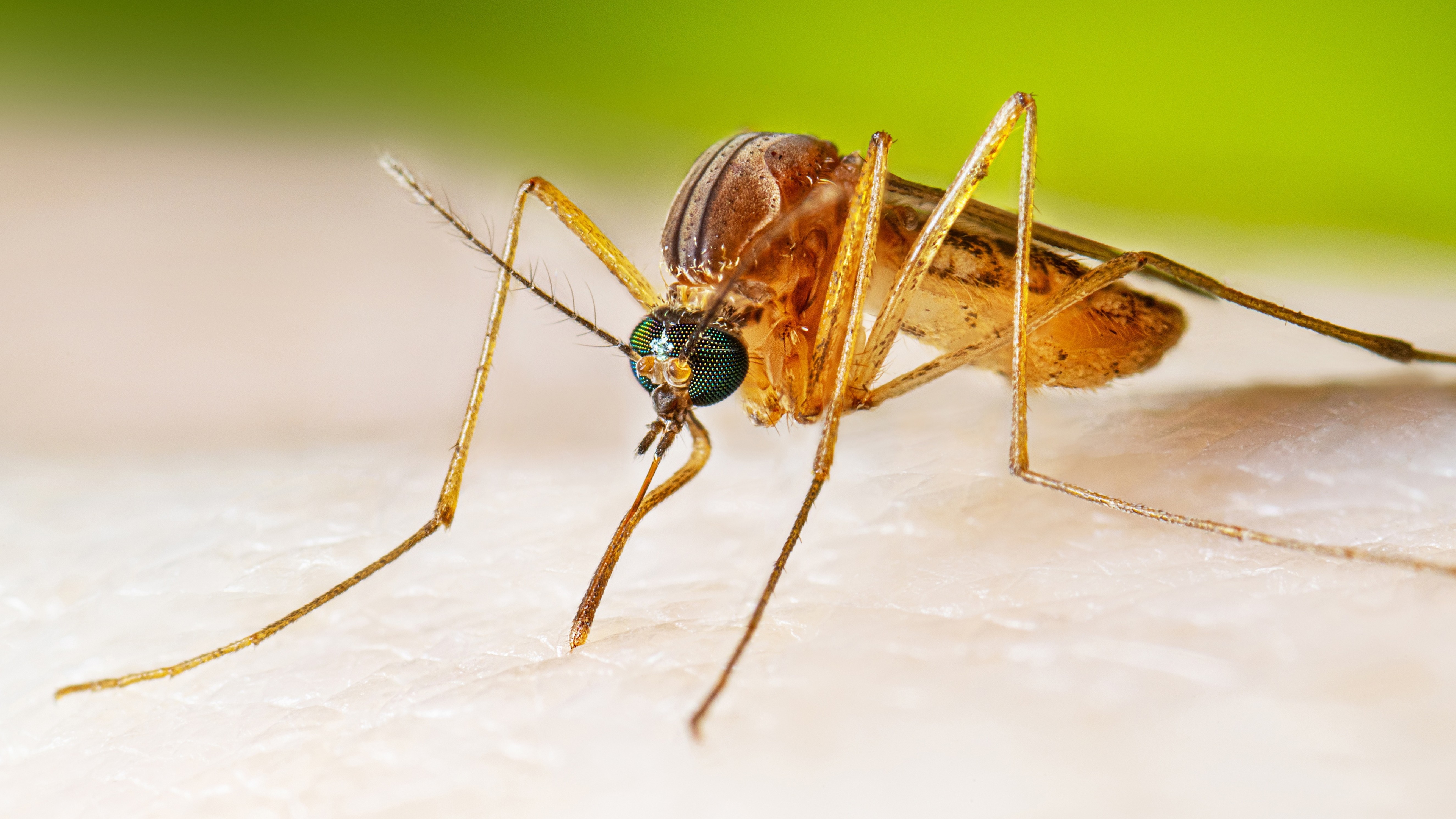
Southern house mosquitoes spread West Nile virus and other diseases.
(Image credit: Smith Collection/Gado/Getty Images)
When is a tech company conspiring to release 64 million bacteria-riddled mosquitoes across the U.S. good news? This week, it turns out, with an application made by Google to the Environmental Protection Agency (EPA) for an experimental mosquito release permit.
The mosquitoes in question are non-biting male southern house mosquitoes (Culex quinquefasciatus) — a species whose females transmit diseases like West Nile virus and St. Louis encephalitis in humans. Infected with a bacterium called Wolbachia pipientis, the released males will prevent any females they mate with from having offspring, thereby slashing mosquito populations and disease rates over time.
The EPA has deemed Google’s request to be of potential regional and national significance. The agency will make a final decision whether to grant the permit following a public comment period that ended on June 5.
Get the world’s most fascinating discoveries delivered straight to your inbox.
Scientists have a general idea about how strong gravity is, but they don’t yet have a precise value for this fundamental force.
(Image credit: AscentXmedia via Getty Images)
Of the four fundamental forces, gravity is the one we experience most immediately throughout our lives. Yet it also remains the most mysterious — being a major confounding factor for any successful theory of everything. In fact, we can’t even figure out exactly how strong Earth’s gravity is. But why is it so hard to measure?
An artist’s concept of NASA’s MAVEN spacecraft at Mars. NASA lost contact with MAVEN in Dec. 2025, and determined it to be “unrecoverable” on June 3, 2026.
(Image credit: NASA/GSFC)
NASA announced a final farewell for its Mars Atmosphere and Volatile Evolution (MAVEN) spacecraft this week — the probe is officially dead after 11 years of studying the Red Planet from orbit.
NASA lost contact with the probe in December of last year when it swung behind Mars on a regular orbit, only to go dark at the time of its reemergence. After convening a review board in February, the agency has now shared its findings that the craft appears to be dead for good. The culprit remains, thus far, a mystery; but a fragment of telemetry data hints that the spacecraft’s unusually rapid rotation depleted its battery power.
The “extinct” Methana volcano, near Athens, was once quiet for nearly 110,000 before awakening and erupting energetically.
(Image credit: Posnov via Getty Images)
When is a dead volcano just taking a nap? The disquieting answer may be more often than we thought, following the discovery by volcanologists that the extinct volcanoes surrounding us might actually just be going through a growth period before they roar back to life.
That’s according to a new analysis of the formerly-extinct volcano Methana, near Athens, Greece, which has been found to have slept for 110,000 years before returning to activity. To figure out what this means for the other sleeping giants that surround us, Live Science contributor Chris Simms investigated.
Something for the weekend
If you’re looking for things to keep you busy over the weekend, here are some of the best news analyses, crosswords, interviews and opinion pieces published this week.
The Long March 12B is a reusable, commercial rocket that will help China to build its own satellite megaconstellations.
(Image credit: VCG/VCG via Getty Images)
An almighty roar and a vapor trail was about as much advance warning as the world got ahead of the maiden launch of China‘s Long March 12B rocket, which reportedly took off without any advance airspace notices on Monday (June 1).
The rocket is China’s rival to SpaceX‘s Falcon 9 — a reusable, commercially-ran rocket that will be used to cost-effectively launch China’s megaconstellation satellites into low Earth orbit.
The surprise launch came as China ramps up its rocket launches as part of a new space race with the U.S. But if you’re able to tune out all the geopolitical posturing, the flight sure made for some cool photos.