

For decades after the end of the Cold War in 1989, defense was not a high priority for European leaders.
Military spending was slashed, armed forces were downsized, and equipment stockpiles depleted, resulting in diminished combat readiness.
Russia’s full-scale invasion of Ukraine in February 2022, however, served as a wake-up call and prompted European governments to reverse course and focus on defense.
Growing uncertainty about US security commitments under President Donald Trump accelerated the trend.
Germany even amended its constitution to remove borrowing limits for defense, giving Berlin free rein over military spending.
Last year, the 29 European members of the North Atlantic Treaty Organization (NATO) together spent as much as $559 billion (€487 billion) on defense, according to the Stockholm International Peace Research Institute (SIPRI), a think tank.
Germany alone spent $114 billion on its military, a 24% rise from the year before, it said.
Strengthening the defense industry
Europe has also sought to strengthen its defense industry to ensure self-sufficiency and supply chain security in critical weapons systems.
To that end, many countries have joined forces to execute advanced military projects such as the development of next-generation fighter jets.
Per Erik Solli, senior defense analyst at the Norwegian Institute of International Affairs (NUPI), highlighted several key airpower initiatives in Europe, such as the GCAP program run jointly by the UK, Italy and Japan, or Sweden’s developing ecosystem around its Gripen fighter jet and drones.
European arms manufacturers such as Rheinmetall, Thales, and Leonardo have benefited from the spending boom, with their order books filling up.
But a significant gap persists between ambition and outcomes, with many weapons makers struggling to accelerate production.
Their underwhelming revenue and profit figures in the first quarter of 2026 raised investor concern and doubts about the firms’ ability to translate orders into earnings.
Fragmentation and diverging national interests
Europe’s defense sector also faces structural challenges such as scale disadvantage compared to US companies and national fragmentation, resulting in duplication and coordination issues.
Joint initiatives often face severe delays due to diverging national priorities.
The Franco-German Future Combat Air System (FCAS) fighter jet initiative is a case in point.
The project was recently scrapped due to disagreements between France’s Dassault Aviation and Germany’s Airbus Defense and Space, dealing a heavy blow to European efforts to cooperate more closely on defense.
The FCAS program was meant to develop a diverse next-generation airpower system with manned aircraft, unmanned drones and a combat cloud for information connectivity, said Solli. Even though the companies will no longer co‑develop the manned aircraft, he said, the fate of the drones and combat cloud remains uncertain.
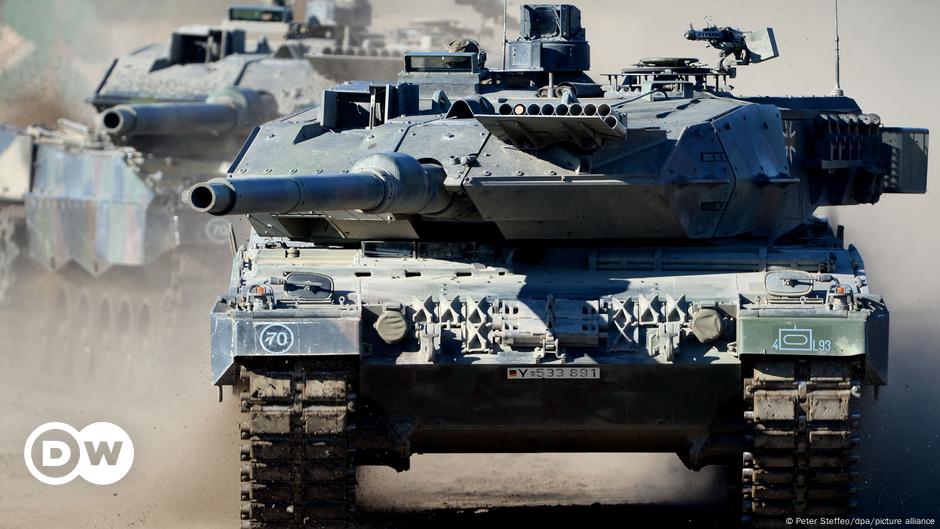
There’s also uncertainty over the future of a long-delayed French and German joint initiative to develop a next-generation tank.
Multinational projects among European states work when governments align priorities and coordinate, Emil Archambault, an expert on security and defense policy at the German Council on Foreign Relations, told DW.
He cited the Airbus A400M Atlas military transport aircraft as an example of a successful collaborative European defense program.
But whenever governments don’t coordinate well, it leads to fragmentation, he noted, pointing to Germany, France and Poland adopting separate pathways to acquiring land-based rocket artillery systems similar to the US HIMARS.
“It’s not a problem of [defense] industry. It’s a problem of state coordination,” he said.
Procurement a major challenge
Defense procurement also remains a major bottleneck, hindering innovation and collaboration and speedy acquisition, say experts.
“Europe’s Achilles heel is no longer financial, it is institutional,” concluded a report published by NUPI recently.
The authors argue that defense procurement in European countries is driven by “national protectionism, risk-aversion, and slow, consensus-bound decision-making — exactly the opposite of what is needed now.”
They have called for forming coalitions of like-minded partners to ensure cooperation, speed and flexibility.
Archambault has a similar view. The EU has a strong role in setting standards, but coordinating procurement across many members remains challenging, he said.
A way forward is by forging “minilateral systems” — three or four like-minded countries joining forces to develop and procure weapons systems, and opening them to others, which would offer both flexibility and the benefits of scale and standardization, the expert underlined.
There is also a strong bias towards large, domestic manufacturers in procurement, experts say.
Defense procurement in many European countries is “primarily directed at the top-ten companies,” said a report published by the Brussels-based economic think tank Bruegel in March 2026.
“The top ten contractors account for between 67 percent and 90 percent of military procurement in Germany, Poland and the UK,” it said.
The study underscored the need for authorities to embrace startups and small firms to boost innovation and meet modern military needs.
Boosting economy and jobs with defense spending?
There are also growing concerns about how long European governments can sustain high defense spending as public finances come under increasing strain amid persistent economic weakness.
It has already hit the stock values of major European defense firms, with the Stoxx Europe Targeted Defense index falling over 15% since January, according to the Financial Times.
While some fear governments will likely prioritize other areas like health and social welfare over defense, Archambault said, “it is not an easy, either-or choice.”
Many European governments see defense spending not just as security policy, but also as a means to boost economic activity and create jobs, he stressed.
Countries like Germany and the United Kingdom “are hoping to create and sustain heavy industry through defense spending, and then ultimately through exports,” he said.
But there are regional variations in military spending and threat perception, Archambault added, explaining that defense remains a top priority for countries closer to Russia, while in several other places, it’s seen as competing with other priorities like social welfare.
Still, there has to be more spending in defense “to secure critical infrastructure, to secure social goods against threats like drone incursions or sabotage and hybrid attacks,” the expert stressed. “That is something that is necessary for all European countries.”
Edited by: Andreas Becker
