
LIVE NEWS
  • Fintech firm Mercury hits $5.2 billion valuation after funding round
  • Tea’s Future Depends on Its Farmers — Global Issues
  • Countries With the Highest and Lowest Birth Rates, Ranked
  • More risk and cost: de-scoped Collins LOTE strengthens case for looking to Japan
  • How to scout a safe summer swimming hole
  • Tesla Cybertruck driver arrested after driving into lake to use 'wade mode', police say
  • CLARITY Act puts CFTC crypto capacity to the test
  • Quantum Bridge Raises $8 Million for Quantum-Safe Key Distribution Solution
Prime Reports
  • Home
  • Popular Now
  • Crypto
  • Cybersecurity
  • Economy
  • Geopolitics
  • Global Markets
  • Politics
  • See More
    • Artificial Intelligence
    • Climate Risks
    • Defense
    • Healthcare Innovation
    • Science
    • Technology
    • World
Prime Reports
  • Home
  • Popular Now
  • Crypto
  • Cybersecurity
  • Economy
  • Geopolitics
  • Global Markets
  • Politics
  • Artificial Intelligence
  • Climate Risks
  • Defense
  • Healthcare Innovation
  • Science
  • Technology
  • World
Home»Healthcare Innovation»AI Wearables for Remote Patient Monitoring
Healthcare Innovation

AI Wearables for Remote Patient Monitoring

primereportsBy primereportsMay 5, 2026No Comments3 Mins Read
Share Facebook Twitter Pinterest LinkedIn Tumblr Reddit Telegram Email
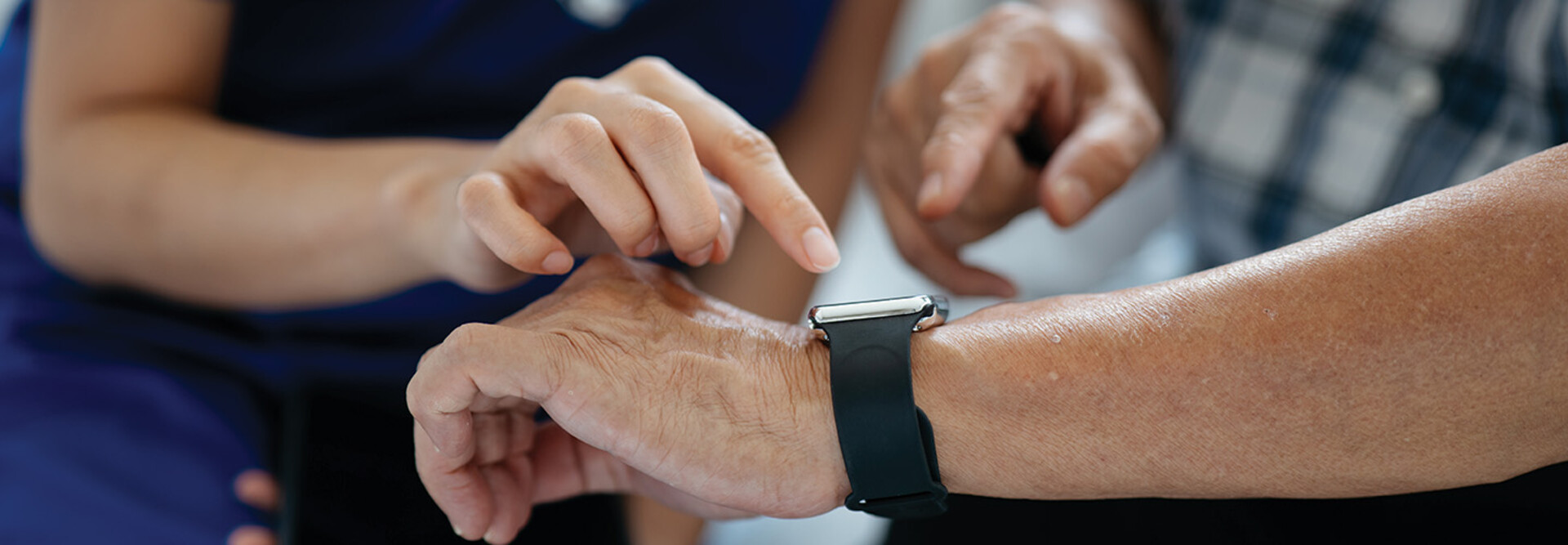
AI Wearables for Remote Patient Monitoring
Share
Facebook Twitter LinkedIn Pinterest Email


Real-Time Data Delivery in Remote Patient Monitoring

David Ebert, chief AI and data science officer at the University of Arizona, also uses the term “big-picture view” to describe what AI and wearables can do for RPM. The true power, he says, comes from the processing capabilities embedded in today’s wearables and implantable devices.

Several years ago, a patient with a pacemaker needed a purpose-built home monitor. Now, pacemakers have Bluetooth sensors that connect to smartphones, aggregate data and send notifications to a patient’s care team.

“We’re taking advantage of the capabilities that people are carrying around on a chip,” Ebert says. “We can do machine learning and predictive analytics on the device.”

There are two keys to making this work. One is continued focus on the efficiency of AI models. Data compression will save bandwidth, and the ability to “pull out the signals” will make a device’s output more valuable to clinicians who don’t have time to look at raw data.

“We don’t want AI models to drain the battery or take up a lot of processing time,” Ebert says. “We don’t want to have bandwidth challenges that exacerbate the digital divide.”

The other important step is integrating streams of data and insights from devices into electronic health record and clinical alerting systems. Otherwise, he notes, clinics will need additional equipment and the resources necessary to set it up.

DISCOVER: Here are the wearable technology trends shaping healthcare.

How to Implement and Scale RPM With AI and Wearables    

Mahajan says that ease of integration is important. “The solutions that tend to be effective and adopted as seamlessly as possible don’t create unnecessary work for clinicians.”

Getting this right may require upgraded data ingestion pipelines that can accommodate high-frequency data streams, Mahajan notes, along with tools that normalize data as it’s aggregated. “Organizations have to shift from systems built for episodes to systems built for continuous data,” he says.

Ebert says another consideration is using devices that have evolved from application programming interfaces to agentic AI interfaces. That way, devices can be deployed, monitored and updated using software instead of specialized hardware, which comes with an upfront cost and need for specialized skills that pose a barrier to adoption. “That’s a game changer for rural hospitals,” he says.

Another common obstacle, says Mahajan, is the single-use predictive model or clinical decision support tool: “Health systems aren’t willing to take on 100 different tools. They’re looking for platforms or systems.”

Of course, there’s also the concern that AI models will replace clinicians. That’s not an issue for Dr. Sairam Parthasarathy, director of the Center for Sleep and Circadian Sciences at the University of Arizona.

Licensed providers are few and far between, he says, and “there are so many people who need our help. People shouldn’t have to get sick before we give them health advice,” and data from wearables and insights from AI models can ensure that won’t happen.

Share. Facebook Twitter Pinterest LinkedIn Tumblr Email
Previous ArticleIntel swipes Qualcomm veteran of 25 years to lead client computing — Alex Katouzian jumps ship to oversee consumer CPUs and physical AI
Next Article Oilers, Islanders and Blackhawks have been among the biggest winners in the NHL lottery’s history
primereports
  • Website

Related Posts

Healthcare Innovation

Scientists discover strange link between vitamin D and pain

May 20, 2026
Healthcare Innovation

Q&A: Advocate Health CNIO on AI Implementation Best Practices for Nursing

May 20, 2026
Healthcare Innovation

Marc Tessier-Lavigne responds to allegations raised in a new book

May 20, 2026
Add A Comment
Leave A Reply Cancel Reply

Top Posts

Global Resources Outlook 2024 | UNEP

December 6, 20258 Views

The D Brief: DHS shutdown likely; US troops leave al-Tanf; CNO’s plea to industry; Crowded robot-boat market; And a bit more.

February 14, 20265 Views

German Chancellor Merz faces difficult mission to Israel – DW – 12/06/2025

December 6, 20254 Views
Stay In Touch
  • Facebook
  • YouTube
  • TikTok
  • WhatsApp
  • Twitter
  • Instagram
Latest Reviews

Subscribe to Updates

Get the latest tech news from FooBar about tech, design and biz.

PrimeReports.org
Independent global news, analysis & insights.

PrimeReports.org brings you in-depth coverage of geopolitics, markets, technology and risk – with context that helps you understand what really matters.

Editorially independent · Opinions are those of the authors and not investment advice.
Facebook X (Twitter) LinkedIn YouTube
Key Sections
  • World
  • Geopolitics
  • Popular Now
  • Artificial Intelligence
  • Cybersecurity
  • Crypto
All Categories
  • Artificial Intelligence
  • Climate Risks
  • Crypto
  • Cybersecurity
  • Defense
  • Economy
  • Geopolitics
  • Global Markets
  • Healthcare Innovation
  • Politics
  • Popular Now
  • Science
  • Technology
  • World
  • About Us
  • Contact Us
  • Privacy Policy
  • Terms & Conditions
  • Disclaimer
  • Cookie Policy
  • DMCA / Copyright Notice
  • Editorial Policy

Sign up for Prime Reports Briefing – essential stories and analysis in your inbox.

By subscribing you agree to our Privacy Policy. You can opt out anytime.
Latest Stories
  • Fintech firm Mercury hits $5.2 billion valuation after funding round
  • Tea’s Future Depends on Its Farmers — Global Issues
  • Countries With the Highest and Lowest Birth Rates, Ranked
© 2026 PrimeReports.org. All rights reserved.
Privacy Terms Contact

Type above and press Enter to search. Press Esc to cancel.