

WARSAW, Poland — The United States government has flagged possible delays linked to the Iran war in deliveries of weapons and ammunition to the three Baltic States, the prime ministers of Estonia and Lithuania announced during an April 17 joint press conference.
“Yes, the U.S. has informed us of the situation, and we understand the reasoning and the circumstances. And we are in close contact with them … [for] discussions [on] how to address these supply challenges,” Estonia’s Prime Minister Kristen Michal said. “And the U.S. remains our biggest ally. The troops are here, connections are strong.”
Lithuanian Prime Minister Inga Ruginienė stated at the conference that, while her government does not see “a big problem so far” with regard to the planned deliveries of U.S. military gear to Lithuania, Vilnius has also been informed of changes to supply schedules.
“We understand that some of the … deadlines, they are moving,” Ruginienė said at the conference.
Latvian Prime Minister Evika Siliņa commented that her Cabinet has “not been officially informed yet” by the U.S. of any changes to the delivery schedule of the contracted gear.
“But, sure, we all can read news, and we are looking very closely [at] what’s going on,” Siliņa said.
The prime ministers’ statements follow recent reports of potential delays in U.S. weapon deliveries to several European countries, including allies in the Baltic region and Scandinavia, as reported by Reuters.
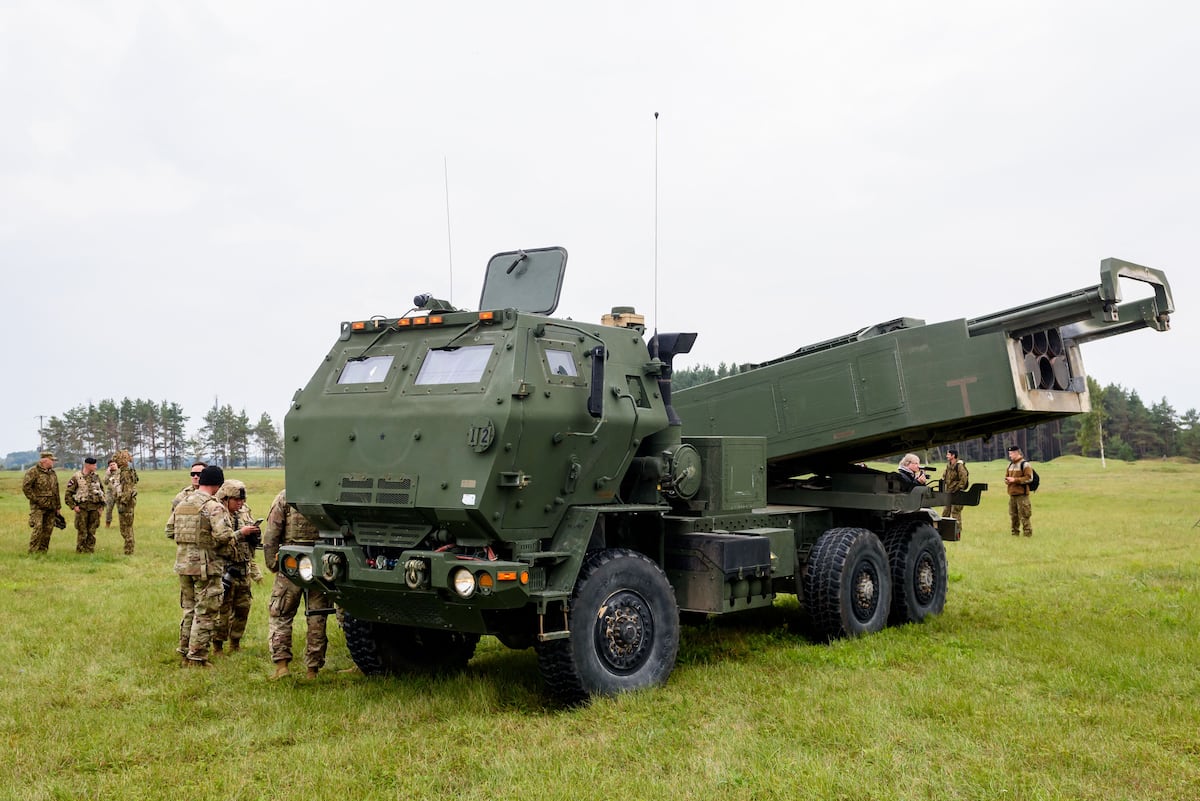
On April 18, Estonian Defense Minister Hanno Pevkur told local broadcaster ERR his country’s main concern is related to possible delays in the procurement of ammunition for the M142 High Mobility Artillery Rocket Systems, or HIMARS. In April 2025, the Estonian Defence Forces received the first six HIMARS the country ordered in 2022. Earlier this month, Tallinn placed an order for a further three systems made by Lockheed Martin, with deliveries scheduled for 2027.
“What we do know is that ammunition deliveries have been put on hold, and we will try to gather as much information as possible and see whether this affects all allies and will remain in force for all of them, or whether, for example, exceptions will be made,” Pevkur said.
“If they are delayed for a longer period, then what are the alternatives or backup options? Even in the case of HIMARS, it is theoretically possible to use ammunition from other manufacturers, but that would again require permission from Lockheed Martin and the U.S. government, so that other ammunition could also be used in it,” the minister stated.
Alongside Estonia, Latvia and Lithuania have also purchased HIMARS for their respective militaries.
Jaroslaw Adamowski is the Poland correspondent for Defense News.
