

The patient: A 63-year-old woman in Massachusetts
The symptoms: The patient went to the emergency department after experiencing nausea and vomiting for about a month, along with decreased appetite. She told doctors that she’d also experienced a burning pain in her upper abdomen and right side of her torso, which wrapped around to her back. She’d tried treating these symptoms with two common over-the-counter medications for acid reflux, but the treatments didn’t help.
In the year prior, the patient had started taking semaglutide, a type of drug known as a GLP-1 receptor agonist — the same class of drug as Ozempic. These injected drugs are used to treat type 2 diabetes and assist in chronic weight management; in this case, the woman had a history of type 2 diabetes and obesity. Since starting the medication, she’d lost about 40 pounds (18 kilograms), but notably, that weight loss had accelerated over the previous month, she noted.
What happened next: Doctors took a CT scan of the patient’s abdomen and pelvis. This revealed that the bile ducts, which move bile from the liver to the gallbladder and small intestine, were slightly dilated. The woman also had “heavy stool burden” but no signs of obstructions in her bowels, and her stomach was slightly stretched out due to carrying “semisolid material.”
To take a closer look, the medical team then used magnetic resonance cholangiopancreatography, a noninvasive scan that examines the bile ducts, gallbladder, pancreas and pancreatic ducts. The scan confirmed that the bile ducts were dilated and revealed a mass in the stomach that appeared to be trapped air. The doctors then examined the upper digestive tract, from the esophagus to the top of the small intestine, with an endoscope.
The diagnosis: The endoscopy revealed a large mass in the woman’s stomach, known as a gastric bezoar. These masses are tightly packed blobs of partially digested or undigested materials.
The treatment: Semaglutide and other GLP-1 agonists typically cause delayed gastric emptying, which means they slow the rate at which the stomach empties its contents into the intestines. The woman was taken off that medication upon hospital admission.
Get the world’s most fascinating discoveries delivered straight to your inbox.
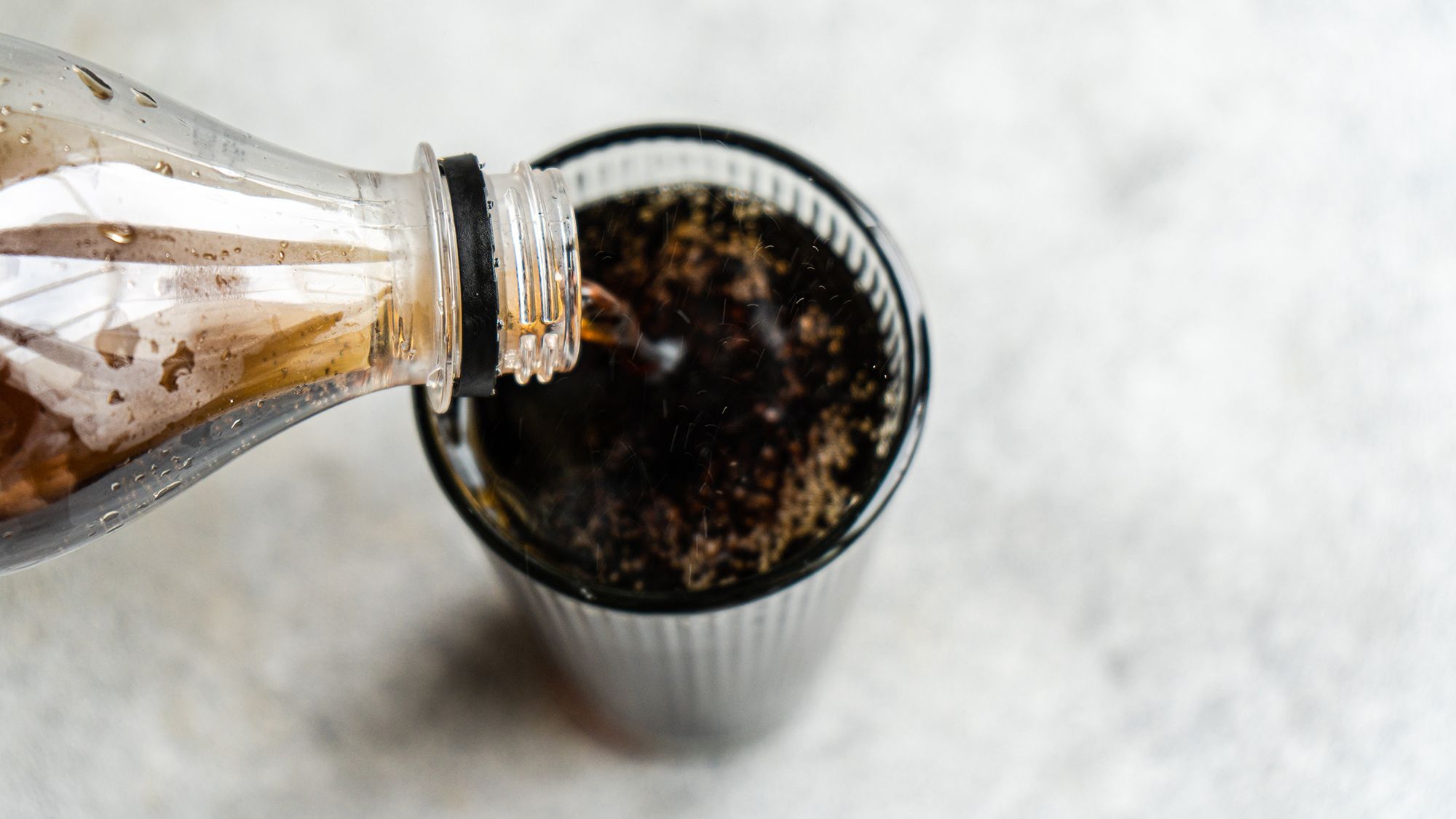
The next step with a bezoar is to try and dissolve the mass while it’s still in the stomach — and evidence suggests a good way to do this is to give the patient soda.
“Existing evidence, largely from case series and anecdotal experiences, supports the administration of 3 liters [0.8 gallons] of cola, either orally or through a nasogastric tube, within a 12-hour window,” doctors noted in a report of the case. “It is not well understood whether acidity, carbonation, or another mechanism accounts for dissolution of the bezoar.”
Due to the patient’s history of diabetes, she was given diet cola. She also didn’t enjoy carbonated beverages, so the typical prescription of 3 liters of soda was cut down to 1.5 liters (0.4 gallons). On the second day after starting this treatment, the patient noted a “tugging” sensation in her abdomen followed by relief of her nausea and abdominal discomfort. An endoscopic exam revealed that the bezoar was no longer stuck in her stomach.
The woman then transitioned to a typical diet in the hospital, and by the time she was discharged, she had no nausea, vomiting or abdominal pain. She did not restart semaglutide but was prescribed acid reflux medication to take daily. She reported that her appetite increased after hospital discharge and her weight rebounded a bit over the following months. Her abdominal symptoms had not returned within a few months of discharge.
What makes the case unique: Gastric bezoars are fairly rare, the report noted. They are found in less than 0.5% of endoscopies of the upper digestive tract. Common symptoms of the condition, such as pain, nausea, vomiting and abdominal discomfort, also appear in many more-common disorders, so they don’t necessarily point to the presence of a bezoar in all cases.
The most common type of gastric bezoar is formed of plant fibers and called a “phytobezoar.” Eating lots of certain foods, such as persimmons, pineapples, raisins or celery, can raise the risk of phytobezoars because the plants contain a high concentration of indigestible components, such as cellulose, lignins and certain tannins.
However, various medical conditions, procedures and drugs can also raise the risk of bezoars. These include anatomical changes related to bariatric or other gastric surgeries, autonomic nerve damage, and medications that cause delayed gastric emptying, such as GLP-1s. In the woman’s case, semaglutide was likely to blame for her bezoar, and discontinuing the treatment helped resolve the problem.
The cola she consumed also helped. Although that course of treatment sounds strange on paper, it is the preferred first-line treatment over using a scope to physically break up the bezoar in the patient’s stomach.
“Bezoars formed from food material may be initially managed with oral administration of cola in patients in a clinically stable condition,” the report said. “This intervention is generally cost-effective and is associated with a lower risk of complications than invasive procedures.”
For more intriguing medical cases, check out our Diagnostic Dilemma archives.
This article is for informational purposes only and is not meant to offer medical advice.
This article was first published Oct. 15, 2025.
TOPICS
