
LIVE NEWS
  • Glasswing Secured the Code. The Rest is on You
  • Justice Department drops inquiry into Fed Chair Jerome Powell : NPR
  • No Kings? Meet King Don and King John Part 2 of 3 — Global Issues
  • Who Is Jaafar Jackson? Michael Jackson’s Nephew Is the Star of ‘Michael’
  • US Navy ordered to ‘shoot and kill’ alleged Iranian mine-laying boats amid ceasefire
  • Famous asteroid Ryugu may have been bombarded by a swarm of tiny space rocks 1,000 years ago
  • Who is making decisions in Iran?
  • Chainlink data services go live on AWS Marketplace to bridge cloud and blockchain
Prime Reports
  • Home
  • Popular Now
  • Crypto
  • Cybersecurity
  • Economy
  • Geopolitics
  • Global Markets
  • Politics
  • See More
    • Artificial Intelligence
    • Climate Risks
    • Defense
    • Healthcare Innovation
    • Science
    • Technology
    • World
Prime Reports
  • Home
  • Popular Now
  • Crypto
  • Cybersecurity
  • Economy
  • Geopolitics
  • Global Markets
  • Politics
  • Artificial Intelligence
  • Climate Risks
  • Defense
  • Healthcare Innovation
  • Science
  • Technology
  • World
Home»Science»Famous asteroid Ryugu may have been bombarded by a swarm of tiny space rocks 1,000 years ago
Science

Famous asteroid Ryugu may have been bombarded by a swarm of tiny space rocks 1,000 years ago

primereportsBy primereportsApril 24, 2026No Comments3 Mins Read
Share Facebook Twitter Pinterest LinkedIn Tumblr Reddit Telegram Email
Famous asteroid Ryugu may have been bombarded by a swarm of tiny space rocks 1,000 years ago
Share
Facebook Twitter LinkedIn Pinterest Email


In 2020, Japan’s Hayabusa2 spacecraft brought samples of an asteroid named Ryugu to Earth — and now, scientists examining those samples found that the object bears the scars of a recent encounter with tiny space rocks.

The reason the research team believes Ryugu was bombarded by micrometeorites is due to a fine layer of sodium, just 10 nanometers thick, on the surface of the asteroid‘s fragments. This kind of build-up is unusual because volatile elements like sodium, which can get exposed after an object is blasted with micrometeorites, are usually later depleted by solar winds blowing from the sun and the general influence of space.

Based on the volume of sodium observed by the researchers, they estimate that Ryugu’s passage through a dense cloud of micrometeorites must have occurred around 1,000 years ago. That’s an extremely recent event considering the asteroid formed 4.6 billion years ago, while planets like Earth were still taking shape around our infant sun.


You may like

“Over the past thousand years, the asteroid has passed through a particularly intense swarm that has profoundly altered the chemical properties of its surface. We were able to detect these changes by analyzing two millimeter-thin fragments of Ryugu, using techniques capable of studying the morphology and chemistry of layers just a few billionths of a meter thick,” lead researcher Ernesto Palomba of the Italian National Institute for Astrophysics (INAF) said in a statement translated from Italian. “In this context, finding an accumulation of sodium on particles collected on the surface and exposed to external agents is a puzzle we needed to solve.”

“Experiments show sodium depletion of up to 50% over very rapid timescales, on the order of a few hundred years,” Palomba added. “Based on these data, we considered a maximum time window of a thousand years, beyond which the sodium should have been completely released, making it impossible to observe any accumulation.”
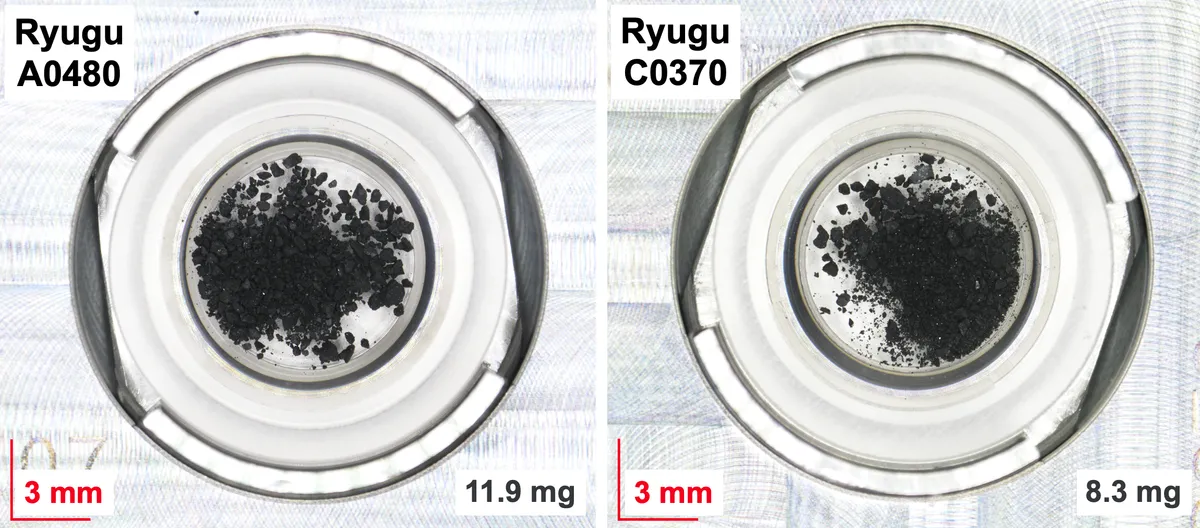
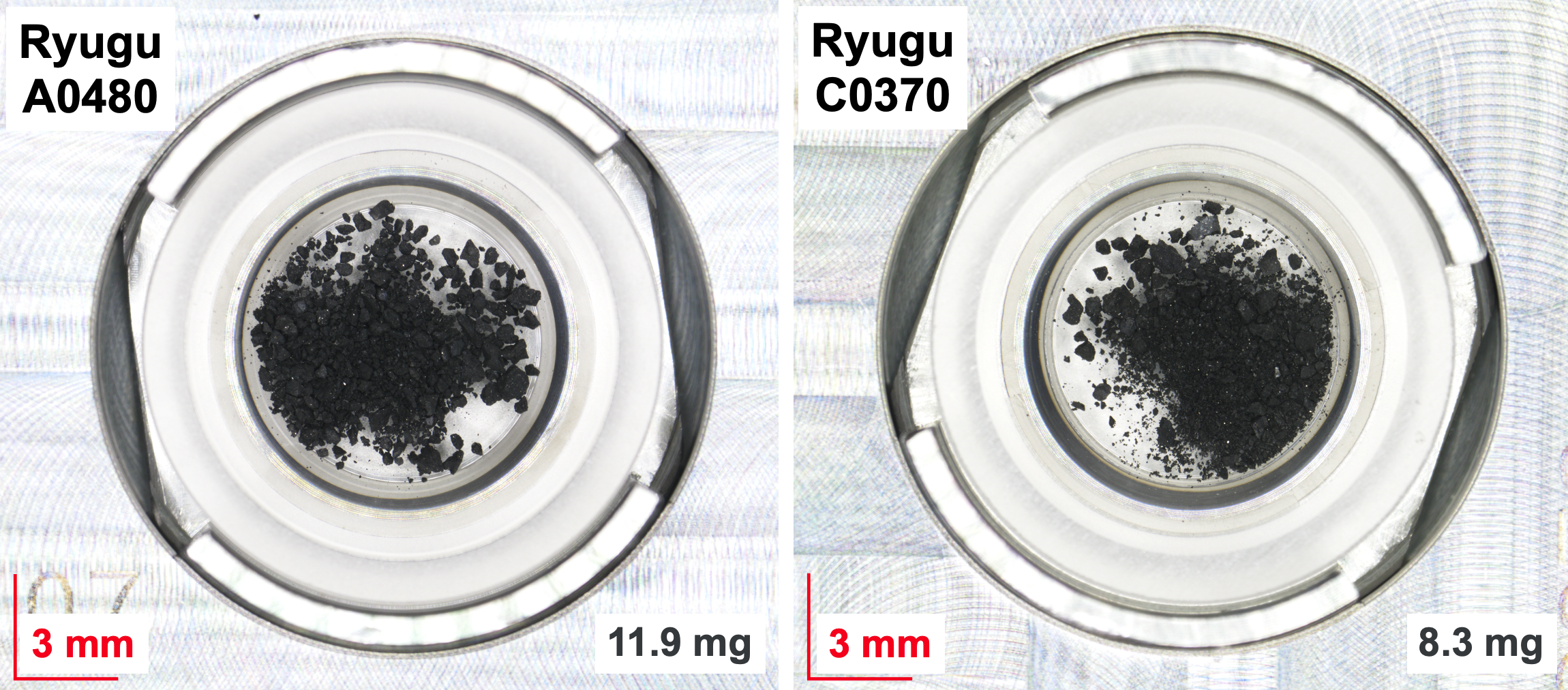
Two views of a container (from above) where it looks like tiny black specks are in a glass bottle.

Samples of asteroid Ryugu brought back to Earth. (Image credit: JAXA/JAMSTEC)

The team also discovered evidence of micrometorite impacts in the form of glassy formations, or tiny impact craters, and lattice-like microstructures created by interactions with the solar wind.

“The iron enrichment found in the particle collected on the surface can be traced back to interaction with the solar wind and continuous microimpacts,” Palomba said. “This trend, already observed in previous studies, confirms once again that the exposed particle has undergone a more marked alteration than the one that remained protected underground.”

Breaking space news, the latest updates on rocket launches, skywatching events and more!

The team’s findings demonstrate how near-Earth asteroids close to our planet encounter swarms of meteoroids that are capable of altering their surface properties.

“This, in a sense, is what happens to our planet: in the case of Earth, the atmosphere protects us and allows encounters with these swarms to become a beautiful spectacle that periodically lights up our sky, as in the case of the Perseids or the Geminids,” Palomba said. “For bodies without an atmosphere like the asteroid Ryugu, however, the outcome is different.”

The INAF researcher said the team’s next goal will be to conduct specific experiments on chemicals present on the asteroid Ryugu, to reproduce observations of the asteroid’s surface chemistry.

The team’s research was published on April 16 in the journal The Astrophysical Journal Letters.

Share. Facebook Twitter Pinterest LinkedIn Tumblr Email
Previous ArticleWho is making decisions in Iran?
Next Article US Navy ordered to ‘shoot and kill’ alleged Iranian mine-laying boats amid ceasefire
primereports
  • Website

Related Posts

Science

Week in wildlife: a tiny harvest mouse, bagel cats and a rhino out for a stroll

April 24, 2026
Science

Meet the 19-metre octopus that prowled the ancient seas

April 23, 2026
Science

98 per cent of meat and dairy sustainability pledges are greenwashing

April 23, 2026
Add A Comment
Leave A Reply Cancel Reply

Top Posts

Global Resources Outlook 2024 | UNEP

December 6, 20258 Views

The D Brief: DHS shutdown likely; US troops leave al-Tanf; CNO’s plea to industry; Crowded robot-boat market; And a bit more.

February 14, 20265 Views

German Chancellor Merz faces difficult mission to Israel – DW – 12/06/2025

December 6, 20254 Views
Stay In Touch
  • Facebook
  • YouTube
  • TikTok
  • WhatsApp
  • Twitter
  • Instagram
Latest Reviews

Subscribe to Updates

Get the latest tech news from FooBar about tech, design and biz.

PrimeReports.org
Independent global news, analysis & insights.

PrimeReports.org brings you in-depth coverage of geopolitics, markets, technology and risk – with context that helps you understand what really matters.

Editorially independent · Opinions are those of the authors and not investment advice.
Facebook X (Twitter) LinkedIn YouTube
Key Sections
  • World
  • Geopolitics
  • Popular Now
  • Artificial Intelligence
  • Cybersecurity
  • Crypto
All Categories
  • Artificial Intelligence
  • Climate Risks
  • Crypto
  • Cybersecurity
  • Defense
  • Economy
  • Geopolitics
  • Global Markets
  • Healthcare Innovation
  • Politics
  • Popular Now
  • Science
  • Technology
  • World
  • About Us
  • Contact Us
  • Privacy Policy
  • Terms & Conditions
  • Disclaimer
  • Cookie Policy
  • DMCA / Copyright Notice
  • Editorial Policy

Sign up for Prime Reports Briefing – essential stories and analysis in your inbox.

By subscribing you agree to our Privacy Policy. You can opt out anytime.
Latest Stories
  • Glasswing Secured the Code. The Rest is on You
  • Justice Department drops inquiry into Fed Chair Jerome Powell : NPR
  • No Kings? Meet King Don and King John Part 2 of 3 — Global Issues
© 2026 PrimeReports.org. All rights reserved.
Privacy Terms Contact

Type above and press Enter to search. Press Esc to cancel.